

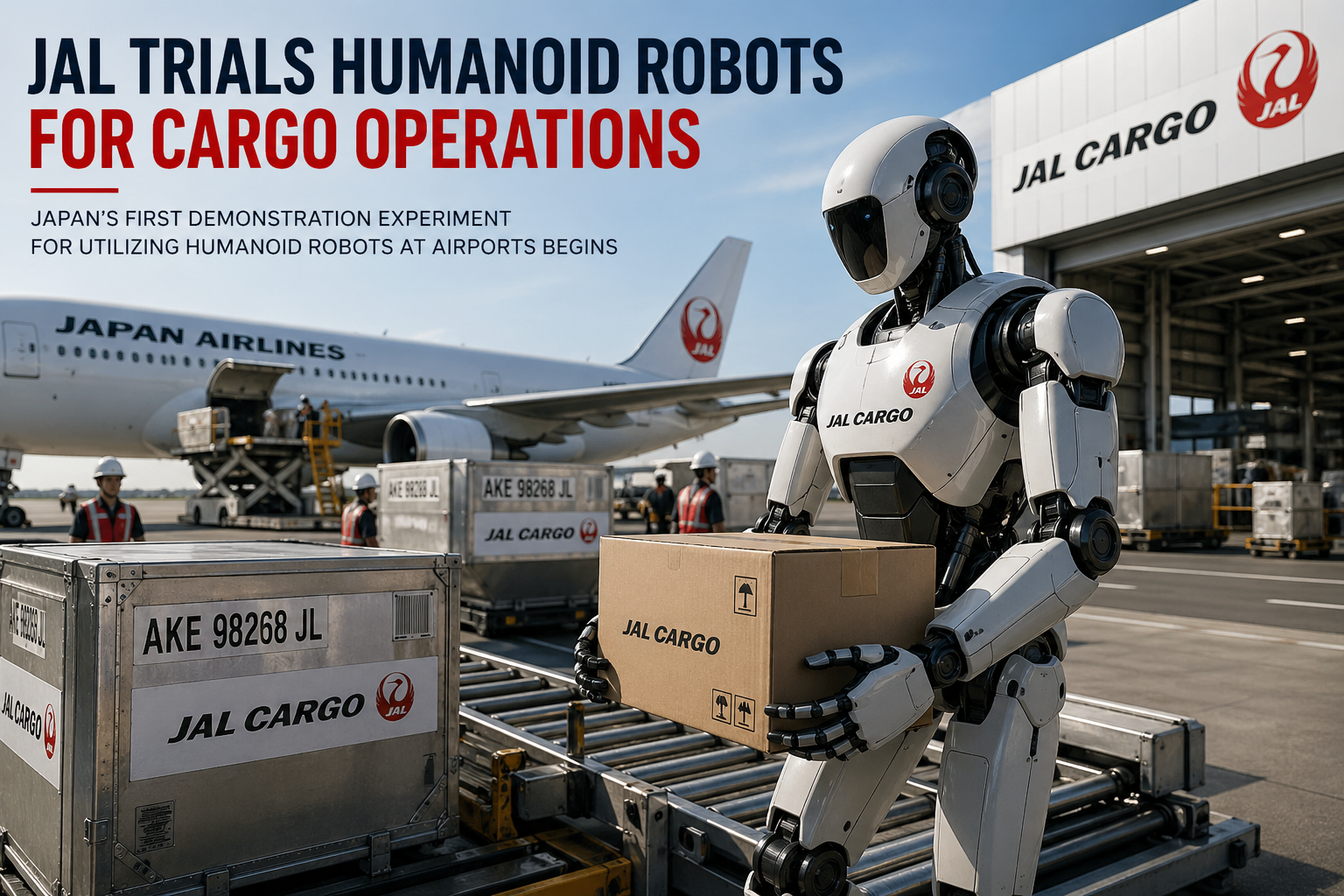
In a significant leap toward the future of aviation logistics, Japan Airlines (JAL) has launched Japan’s first-ever demonstration experiment using humanoid robots for airport cargo handling. The initiative aims to address labor shortages, improve efficiency, and modernize ground operations at airports across the country.
The trial marks a milestone in the integration of robotics into aviation infrastructure, positioning Japan at the forefront of next-generation airport automation.
Why JAL Is Turning to Humanoid Robots
Like many industries worldwide, aviation is grappling with workforce shortages—particularly in physically demanding roles such as cargo handling. JAL’s move to test humanoid robots reflects a strategic push to:
- Reduce reliance on manual labor
- Improve operational efficiency and speed
- Enhance workplace safety
- Maintain consistent performance in demanding environments
Humanoid robots are uniquely suited for these tasks because they can operate in spaces designed for humans, using tools and interacting with existing infrastructure without requiring major modifications.
Inside the Demonstration Experiment
The trial involves advanced humanoid robots designed to perform essential cargo-handling tasks such as:
- Loading and unloading freight containers
- Transporting cargo within airport facilities
- Assisting ground crew with repetitive physical tasks
The robots are equipped with AI-driven vision systems and sensors, enabling them to navigate complex airport environments safely and efficiently. Early testing is focused on controlled environments before expanding to live operational settings.
A First for Japan’s Aviation Sector
This initiative represents Japan’s first real-world application of humanoid robots in airport cargo operations. While automation has already been introduced in areas like baggage sorting and check-in kiosks, the use of humanoid robots in physically intensive roles is a major advancement.
Japan has long been a global leader in robotics, and this project further reinforces its commitment to integrating cutting-edge technology into everyday operations.
Potential Impact on Global Aviation
If successful, JAL’s robot trial could set a precedent for airports worldwide. Airlines and airport operators are increasingly exploring automation to:
- Cut operational costs
- Address staffing challenges
- Improve turnaround times
- Enhance reliability
The adoption of humanoid robots could revolutionize cargo logistics, particularly at major international hubs where efficiency is critical.
Challenges and Considerations
Despite its promise, the deployment of humanoid robots comes with challenges:
- High initial investment costs
- Technical reliability in dynamic environments
- Integration with human workers
- Regulatory and safety approvals
JAL will closely monitor the trial’s outcomes to determine scalability and long-term viability.
The Future of Airport Automation
The aviation industry is entering a new era where robotics and artificial intelligence will play a central role. From autonomous vehicles on the tarmac to AI-powered traffic management systems, innovation is reshaping how airports operate.
JAL’s humanoid robot trial is a glimpse into that future—one where humans and machines collaborate to create safer, faster, and more efficient air transport systems.
Conclusion
With this pioneering initiative, Japan Airlines is not only addressing immediate operational challenges but also laying the groundwork for the future of airport logistics. As the trial progresses, the aviation world will be watching closely to see whether humanoid robots become a standard feature in cargo operations.
 Priyanshu Gautam
  Olive Arthur