

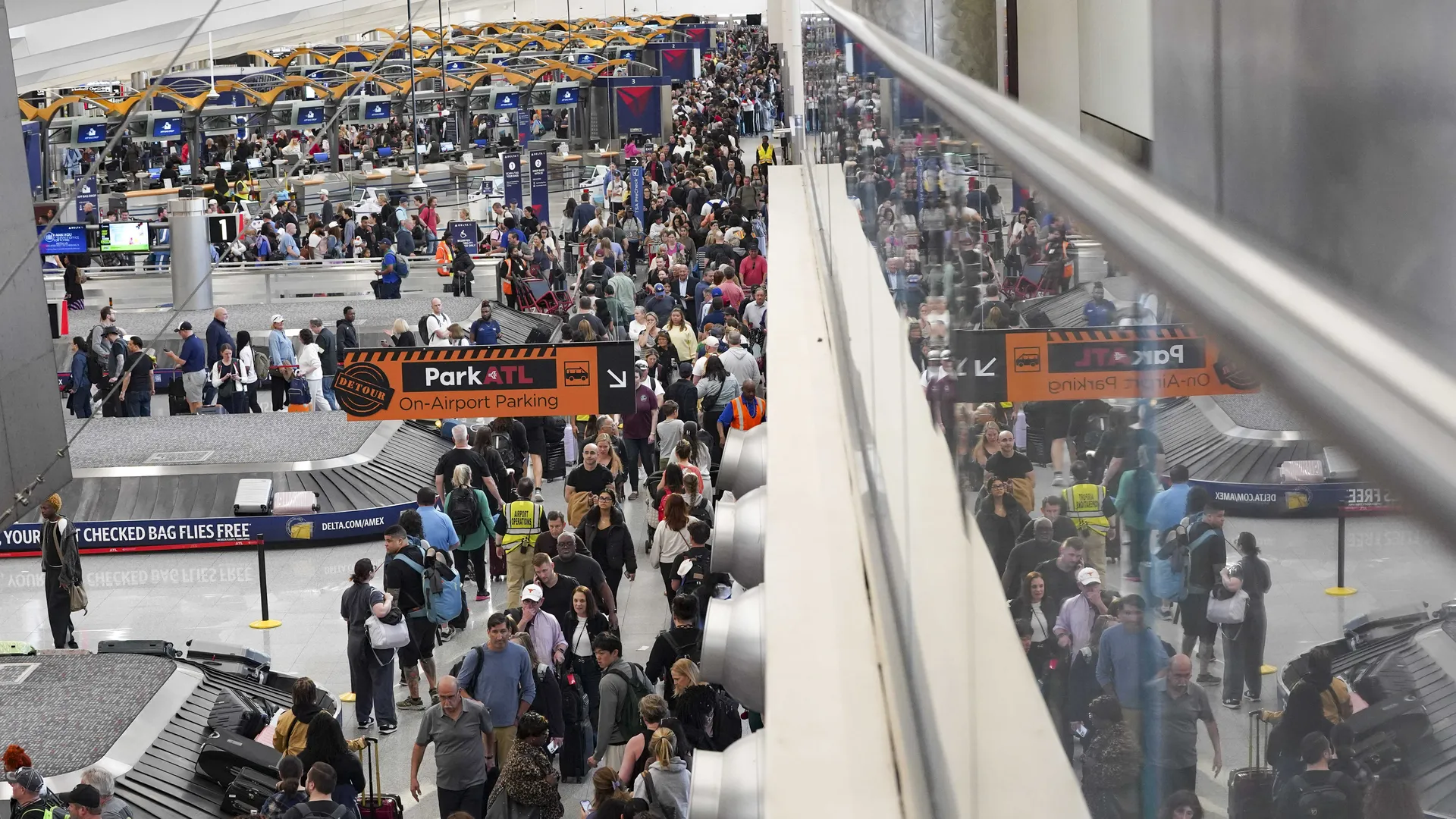
Las Vegas, Nevada | April 11, 2026 — Hundreds of travelers found themselves stranded at Harry Reid International Airport (LAS) on April 11, 2026, as a wave of flight disruptions swept through one of the United States’ busiest leisure aviation hubs. Flight-tracking data recorded 251 delayed departures and arrivals alongside two outright cancellations, making it one of the most disruptive operational days the Las Vegas gateway has seen outside of a major weather emergency.
The disruptions affected a broad range of carriers — including Delta Air Lines, United Airlines, American Airlines, Southwest Airlines, and several low-cost and regional operators — and rippled across both domestic and international routes connecting Las Vegas to cities such as Los Angeles, Chicago, Denver, New York, and Toronto.
Scale of the Disruption: By the Numbers
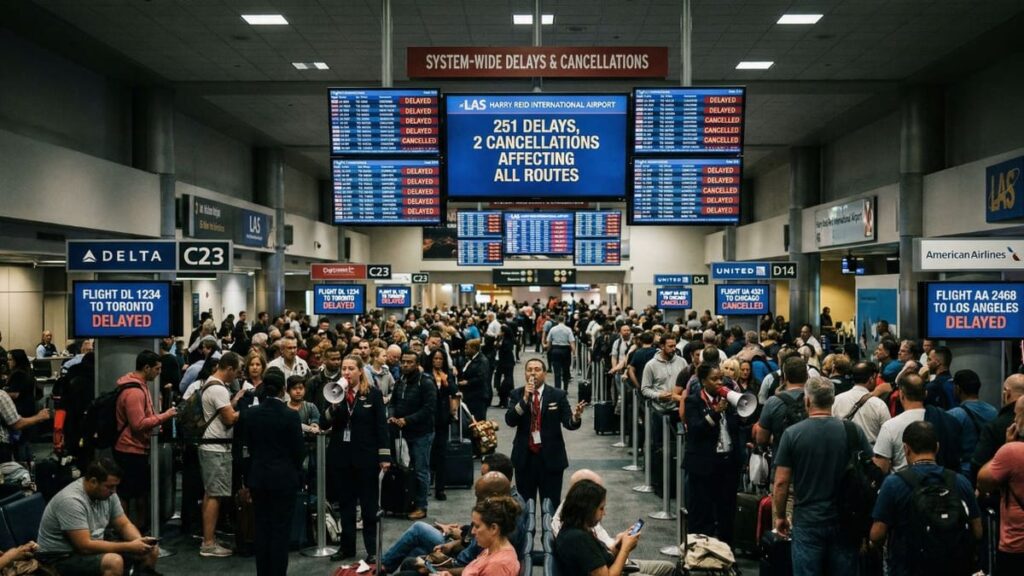
The sheer volume of delayed flights — 251 in a single day — placed Harry Reid International Airport among the most affected hubs in the country on April 11. While two formal cancellations may appear modest at first glance, the broader picture of hundreds of delayed services tells the real story of travel chaos. Gate areas filled with frustrated passengers, rebooking queues snaked through terminals, and departure boards scrolled through an unbroken stream of updated — and repeatedly pushed-back — departure times.
For many travelers, delays that began as minor schedule slippages of 20 to 30 minutes compounded throughout the day. By late afternoon, some departures had been pushed back well beyond standard turnaround buffers, triggering missed connections at onward hubs and forcing airlines to reassign aircraft and reposition crews in real time.
Which Airlines Were Affected?
The disruption was not isolated to a single carrier. Public flight data and media reports confirmed that the following airlines all experienced operational impacts at LAS:
- Delta Air Lines — one of the largest carriers at Harry Reid, with connections to its Atlanta and Minneapolis hubs affected
- United Airlines — services to Denver, Chicago O’Hare, and Newark among those delayed
- American Airlines — routes to Los Angeles, Dallas, and New York impacted
- Southwest Airlines — historically the highest-volume carrier at LAS, with multiple delayed departures throughout the day
- Low-cost and regional carriers — additional operators contributing to the overall delay count
International connections were also disrupted, with routes linking Las Vegas to Toronto and other cross-border destinations facing scheduling complications.
Routes Hit Hardest
The city pairs most affected by the April 11 disruptions at Harry Reid International Airport include some of the airport’s busiest and most commercially important corridors:
- Las Vegas – Los Angeles (LAX): One of the highest-frequency short-haul routes in the western United States
- Las Vegas – Chicago (ORD/MDW): A major transcontinental link for both leisure and business passengers
- Las Vegas – Denver (DEN): A key connecting hub for Rocky Mountain and Great Plains destinations
- Las Vegas – New York (JFK/EWR/LGA): Long-haul services critical to East Coast leisure travel
- Las Vegas – Toronto (YYZ): The primary international route affected, impacting Canadian travelers
Why Did So Many Flights Get Delayed?
Understanding why 251 flights were delayed at a single airport in a single day requires stepping back to look at the wider U.S. aviation system. Several interconnected factors appear to have contributed:
1. Nationwide Network Strain
Aviation analysts have noted that a significant disruption wave affected more than 3,000 flights across major U.S. hubs — including Atlanta, Denver, Houston, and Phoenix — in the days leading up to April 11. When aircraft and flight crews are delayed or repositioned across the national network, downstream airports like Las Vegas absorb the consequences even when local weather conditions are clear.
2. Aircraft Out of Position
Modern airline schedules operate with minimal slack. A single aircraft typically completes multiple rotations per day. When an inbound flight from Chicago or New York arrives late, the aircraft intended for the next departure — and the crew assigned to it — may be out of position or approaching duty-hour limits, cascading delays into subsequent flights.
3. Air Traffic Management Factors
The Federal Aviation Administration (FAA) monitors and manages traffic flow across U.S. airspace. During periods of high congestion or weather-related restrictions elsewhere in the national airspace system, the FAA can implement ground delay programs or metered arrivals that affect airports across the country, including Harry Reid International.
4. High Passenger Demand
Las Vegas is consistently among the top leisure travel destinations in North America, drawing millions of visitors each year for entertainment, conventions, and special events. Near-full aircraft loads leave airlines with little room to absorb delays through load redistribution or spare capacity.
5. Spring Travel Surge
April 2026 has seen a broader surge in travel demand, with spring break travel, Easter holiday traffic, and convention season all converging. Elevated passenger volumes put pressure on check-in systems, security checkpoints, and gate operations — all of which can contribute to missed pushback times.
How Passengers Were Affected on the Ground
Inside the terminals at Harry Reid International, the impact of 251 delayed flights was visceral and immediate. Travelers described:
- Crowded gate areas and limited seating as passengers from multiple delayed flights waited in the same concourse sections
- Long queues at airline customer service desks as passengers sought rebooking options for missed connections
- Repeated and sometimes conflicting departure time updates on digital boards
- Food court and retail areas strained by an unusually high number of waiting passengers
- Families with children, elderly travelers, and those with medical needs among the most visibly impacted groups
Passengers connecting through Las Vegas to secondary markets faced particularly difficult decisions: whether to wait for a delayed onward connection, rebook through an alternate hub, or accept an overnight stay.
What Airlines Are Doing
In response to widespread disruptions, several carriers activated travel waivers — policies that allow affected passengers to change their flights without incurring standard change fees. These waivers, common during large-scale disruption events, give travelers flexibility to rebook on the next available service or choose an alternative routing.
Airlines including Delta and Southwest urged passengers to monitor official apps and airline websites for the most current departure information. Gate agents and telephone customer service teams were managing unusually high volumes of rebooking requests throughout the day.
For passengers whose delays crossed into overnight territory, some carriers offered accommodation assistance depending on the cause of the disruption and the airline’s own policies.
Harry Reid International Airport: A Hub Under Pressure
Harry Reid International Airport, operated by the Clark County Department of Aviation and located in Paradise, Nevada, is the primary air gateway serving the Las Vegas metropolitan area. The airport handles tens of millions of passengers annually, with peak periods coinciding with major events, holidays, and Las Vegas’s year-round convention calendar.
The April 11 disruption is the latest in a pattern of operational stress at LAS in 2026. Earlier incidents this year have included:
- February 2026: 82 delays and 11 cancellations affecting Delta, American, and Southwest
- March 18, 2026: Six cancellations and rolling delays on Southwest and Delta routes, including services to Phoenix, Burbank, and international connections via Frankfurt
- March 30, 2026: Over 170 delays and at least one cancellation disrupting services across major carriers
- April 4, 2026: 208 delays and 12 cancellations linked in part to winter storm disruptions at eastern hubs
- April 5, 2026: 124 delays and 7 cancellations
- April 11, 2026: 251 delays and 2 cancellations — the most severe disruption day in this recent sequence
This pattern suggests that Harry Reid International is operating in an environment of sustained pressure, with limited schedule recovery time between disruption events during a peak demand period.
The Ripple Effect Beyond Las Vegas
Flight disruptions at Harry Reid International do not stay within Nevada’s borders. Because Las Vegas functions both as a destination airport and as a connecting point for certain transcontinental and international itineraries, schedule slippage at LAS creates downstream problems at connecting hubs.
Travelers booked on tight connections through Atlanta, Chicago, Denver, or Dallas may find their onward flights have already departed by the time their delayed Las Vegas service lands. Airlines must then reroute these passengers, consuming available seats on subsequent services and potentially creating additional capacity pressure at the receiving airports.
For international travelers — particularly those connecting to cross-border services to Toronto or transatlantic routes — the complications multiply. Rebooking on international itineraries involves coordination across multiple airline systems and can result in overnight stays or multi-day delays.
Practical Guidance for Travelers Flying Through Las Vegas
Whether you are flying through Harry Reid International Airport now or planning a future trip, the following best practices can help minimize the impact of flight disruptions:
Before You Travel
- Sign up for flight status alerts through your airline’s app — notifications are the fastest way to learn about departure changes
- Check the FAA’s National Airspace System Status pages for any active delay programs affecting Las Vegas or your connecting hub
- Consider travel insurance that includes trip delay coverage, particularly for multi-leg international itineraries
At the Airport
- Arrive earlier than your airline’s standard recommendation during high-traffic periods
- Locate your airline’s customer service desk on arrival — in a large disruption, queues form quickly
- Use the airline app rather than the gate queue for initial rebooking requests when possible; app interfaces are often faster for straightforward changes
- If your connection is at risk, speak to a gate agent proactively rather than waiting for a formal announcement
Know Your Rights
- U.S. airlines are required to offer refunds for canceled flights if you choose not to rebook
- For significant delays caused by factors within the airline’s control, many carriers offer meal vouchers, accommodation, or travel credits — ask directly
- Keep all receipts for out-of-pocket expenses incurred during a delay; these may support future compensation claims
Looking Ahead: Aviation Challenges Heading Into Summer 2026
The April 11 disruption at Harry Reid International Airport is a snapshot of broader challenges facing U.S. aviation as the industry heads into peak summer travel season. Aviation analysts have flagged a combination of strong demand, tight aircraft and crew availability, and ongoing weather unpredictability as factors likely to keep disruption rates elevated through the coming months.
For airports like Las Vegas — where nearly every departure operates at high load factors and the margin for schedule recovery is thin — even a modest regional disruption can cascade rapidly into a full-day operational challenge.
Airport authorities and airlines have both indicated ongoing investment in digital communication tools, enhanced ground operations, and improved passenger information systems as long-term measures to reduce the impact of inevitable disruptions. Real-time security wait time data, gate change alerts, and improved connection management systems are among the tools being deployed to give travelers more control when schedules break down.
Final Takeaway
The April 11, 2026 flight disruption at Harry Reid International Airport — 251 delays and 2 cancellations affecting Delta, United, American, Southwest, and other carriers across routes to Los Angeles, Chicago, Denver, New York, and Toronto — is a reminder of how quickly a high-demand aviation hub can tip from routine operations into widespread disruption.
For travelers, the key lessons remain consistent: stay informed, act early, know your options, and build flexibility into itineraries whenever possible. For the aviation industry, the recurring pattern of disruptions at LAS this spring underscores the importance of systemic resilience — not just for individual flights, but for the entire network of passengers, airlines, and airports that depend on smooth operations at America’s entertainment capital.
Keywords: Harry Reid International Airport delays, Las Vegas airport flights canceled, LAS airport disruption April 2026, Delta United American Airlines delays Las Vegas, flight delays Las Vegas today, Harry Reid Airport news, Las Vegas airport travel advisory
FAQ: Harry Reid International Airport Flight Disruptions — April 11, 2026
Q1. How many flights were delayed or canceled at Harry Reid Airport on April 11, 2026? A total of 251 flights were delayed and 2 flights were canceled at Harry Reid International Airport (LAS) on April 11, 2026, making it one of the most disruptive days the airport has seen in recent months.
Q2. Which airlines were affected? The disruptions hit Delta Air Lines, United Airlines, American Airlines, Southwest Airlines, and several regional and low-cost carriers. International partner airlines connecting through Las Vegas were also impacted.
Q3. Which routes were hit the hardest? The most affected routes were Las Vegas to Los Angeles, Chicago, Denver, New York, and Toronto. These are among the busiest corridors at LAS and carry large volumes of both leisure and connecting passengers.
Q4. Why did so many flights get delayed? A combination of factors was responsible — a nationwide disruption wave had already affected 3,000+ flights across hubs like Atlanta, Denver, and Phoenix in the days prior. Aircraft and crews were out of position across the national network, cascading delays into Las Vegas even when local skies were clear. High spring travel demand and tight airline schedules left little room to recover.
Q5. Can passengers get a refund or compensation? Yes. U.S. airlines must offer full refunds for canceled flights if you choose not to rebook. For significant delays caused by factors within the airline’s control, carriers often provide meal vouchers, hotel stays, or travel credits. Keep all receipts for expenses incurred during the delay to support any future compensation claim.
Q6. What is a travel waiver? A travel waiver is an airline policy activated during major disruptions that lets affected passengers change their flight without paying standard change fees. Delta, Southwest, and other carriers activated waivers during the April 11 event, allowing travelers to rebook freely.
Q7. Is this a one-off event or part of a pattern? It is part of a clear pattern in 2026. Harry Reid Airport recorded 82 delays in February, 170+ in late March, 208 delays on April 4, 124 delays on April 5, and 251 on April 11. The airport has been under sustained pressure throughout the spring travel season.
Q8. Does bad weather in Las Vegas cause these delays? Not always. Many delays happen even when the Nevada desert skies are perfectly clear. The real cause is often weather or congestion at distant hubs like Chicago, Atlanta, or Denver, which pushes aircraft and crews out of position nationwide. Las Vegas absorbs the downstream impact.
Q9. What should I do if I am stranded at Harry Reid Airport? Use your airline’s app to check for updates and start a rebooking request — it is usually faster than the gate-agent queue. Ask about travel waivers for fee-free changes. If your delay runs overnight due to an airline-caused issue, request hotel and meal assistance. Keep all receipts and speak to an agent proactively if a connection is at risk.
Q10. Where can I check real-time flight status? Check your airline’s official app or website, the Harry Reid International Airport official website for security wait times, the FAA’s National Airspace System Status page, or flight tracking platforms like FlightAware and Flightradar24 for live updates.
Q11. Will disruptions continue through summer 2026? Aviation analysts warn that strong travel demand, tight aircraft availability, and unpredictable weather are likely to keep disruption rates elevated through the summer peak. Travellers are advised to build buffer time into itineraries and consider purchasing trip-delay travel insurance.
 Priyanshu Gautam
  Aastha Choudhary