

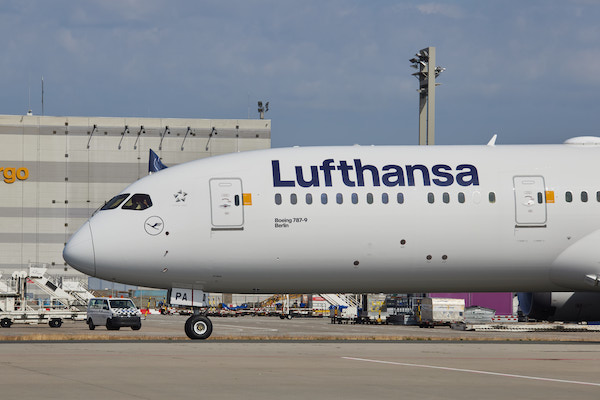
There is a particular kind of aviation incident that doesn’t make immediate sense, one where the chain of events is so mundane, so rooted in ordinary human movement, that the catastrophic outcome feels almost impossible. The LATAM Airlines Boeing 787-9 Dreamliner incident over the Tasman Sea is exactly that kind of story. A meal service. A crowded cockpit. An unsecured switch cap. And within seconds, a wide-body jet carrying 263 people plunged violently from cruise altitude, sending passengers who had unbuckled their seatbelts hurtling toward the cabin ceiling.
Understanding what happened on that March 11, 2024 flight from Sydney to Auckland and what the official investigation ultimately confirmed matters far beyond LATAM Airlines. It matters because it reveals something uncomfortable about how layers of systemic failure can accumulate quietly, invisibly, until the moment a single unintended touch turns routine into disaster.
The Flight, the Moment, the Fall
LATAM flight LA800 was operating normally at approximately 41,000 feet, cruising across the Tasman Sea, when the aircraft experienced what the airline initially described with deliberate vagueness as “a technical event during the flight which caused a strong movement.” Passengers who survived it described something considerably less clinical.
The Boeing 787-9 Dreamliner, registration CC-BGG, pitched nose-down without warning. People not wearing seatbelts, many of whom had unbuckled during the long cruise phase, entirely reasonably were launched from their seats. Some struck the cabin ceiling. Others were thrown into the aisles. Flight attendants, standing and moving through the cabin during meal service, had no time to brace. When the aircraft finally recovered and landed safely in Auckland, emergency services found around 50 people requiring medical attention. Three two passengers and one crew member were classified as seriously injured and hospitalised.
The pilot, in the immediate aftermath, told at least one passenger that his instruments had momentarily “gone blank.” That statement, once it circulated in media reports, suggested an entirely different and deeply alarming aircraft fault on Boeing’s flagship long-haul jet, a manufacturer already under intense scrutiny following the Alaska Airlines 737 MAX door plug blowout just weeks earlier.
But the investigation told a different story. A more human one.
The Switch That Changed Everything
As Chilean aviation investigators from the JIA and New Zealand’s Transport Accident Investigation Commission examined the evidence, the picture that emerged centred not on a Boeing manufacturing defect but on something far more specific and in many ways far more troubling.
Following the meal service, the cabin manager had entered the flight deck while one of the pilots was present. A second flight attendant entered shortly after to collect service trays. In the process of moving through the confined cockpit space, that flight attendant brushed against the upper rear section of the captain’s seat. The contact, light as it almost certainly was, activated a rocker switch controlling the seat’s motorised movement. The seat lurched forward. The captain, pushed suddenly and forcefully into the flight controls, applied inadvertent nose-down input. The Dreamliner plunged.
The rocker switch that triggered this sequence had a cap a small protective cover designed specifically to prevent accidental activation. That cap, investigators found, had not been properly secured with adhesive. Documentation from Ipeco, the seat manufacturer, dating back at least seven years before the incident, had specifically recommended that the cap be bonded in place with adhesive to prevent exactly this kind of inadvertent contact. Boeing had issued a corresponding service bulletin to operators reinforcing this guidance. Neither recommendation had been applied to the captain’s seat aboard CC-BGG on the day of the incident.
A Warning That Went Unheeded
The most difficult detail in this entire account is not the accident itself. Accidents, however terrible, happen. The most difficult detail is the timeline of the warnings that preceded it.
The cap adhesive recommendation from Ipeco predated the LATAM incident by nearly a decade. Boeing’s guidance to operators reinforcing that recommendation had been circulating since at least 2017 seven years before the Dreamliner over the Tasman Sea lurched into its terrifying descent. In the intervening years, the service bulletin existed, the recommendation was documented, and the fix was straightforward. On the specific aircraft involved in the LATAM incident, it simply had not been done.
Following the event, the United States Federal Aviation Administration moved swiftly. An urgent airworthiness directive was published requiring implementation of the additional service bulletins across affected Boeing 787 fleets. The FAA disclosed it had received further reports of uncommanded pilot seat movement beyond the LATAM incident with at least three additional cases linked to loose or unbonded rocker switch caps, and two more still under investigation at the time of the directive’s publication in August 2024. The regulator was explicit in its language: uncommanded horizontal seat movement during flight, it stated, could cause “a rapid descent of the airplane and serious injury to passengers and crew.”
That language describes, with clinical precision, exactly what 263 people experienced over the Tasman Sea.
Beyond LATAM: The Systemic Question
It would be convenient to frame this as a LATAM Airlines maintenance failure, and leave it there. But that framing misses what makes this incident genuinely significant for the broader aviation industry.
The LATAM flight is not an isolated case of a single operator overlooking a service bulletin. It is an example of how safety guidance even when well-intentioned, properly documented, and formally communicated can fail to translate into action across complex global fleets managed by dozens of operators, maintenance contractors, and oversight bodies. The Ipeco recommendation existed. The Boeing service bulletin existed. The FAA’s 2017 guidance existed. And yet the cap was unsecured, the switch was exposed, and a flight attendant’s brush against a seat back sent a wide-body jet into a violent dive at 41,000 feet.
American Airlines Captain Dennis Tajer, commenting on the FAA’s eventual airworthiness directive, captured the frustration that many in the industry felt about the timeline: the incident that could have turned fatal occurred in March, and the formal regulatory directive arrived in August. In the intervening months, additional uncommanded seat movements were reported. The window between knowing about a hazard and mandating its correction, he argued, was far too wide.
What Changed, and What Must
In the aftermath of the LATAM incident, Boeing issued a Multi-Operator Message to all 787 operators, recommending immediate inspection and maintenance of cockpit seat switches. The FAA convened a board of safety experts. Airlines around the world scheduled seat inspections. The fixes, where they hadn’t already been applied, were implemented.
But the harder conversation about how a documented safety recommendation goes unimplemented for years across a global fleet remains unresolved. Aviation’s safety record is, by any objective measure, the product of extraordinary systemic discipline applied over decades. The LATAM incident is a reminder that the discipline is only as strong as its weakest point of execution.
A flight attendant brushed against a seat back. A cap that should have been glued in place was not. And for a few seconds over the Tasman Sea, the crew of a Boeing 787-9 Dreamliner lost control of a jet carrying 263 human lives.
The aircraft recovered. Most of the people on board walked away. The warnings, this time, had not been quite fatal enough to force action sooner. The question the industry must sit with is whether it is willing to wait until one of them is.
 Anshum Raj