

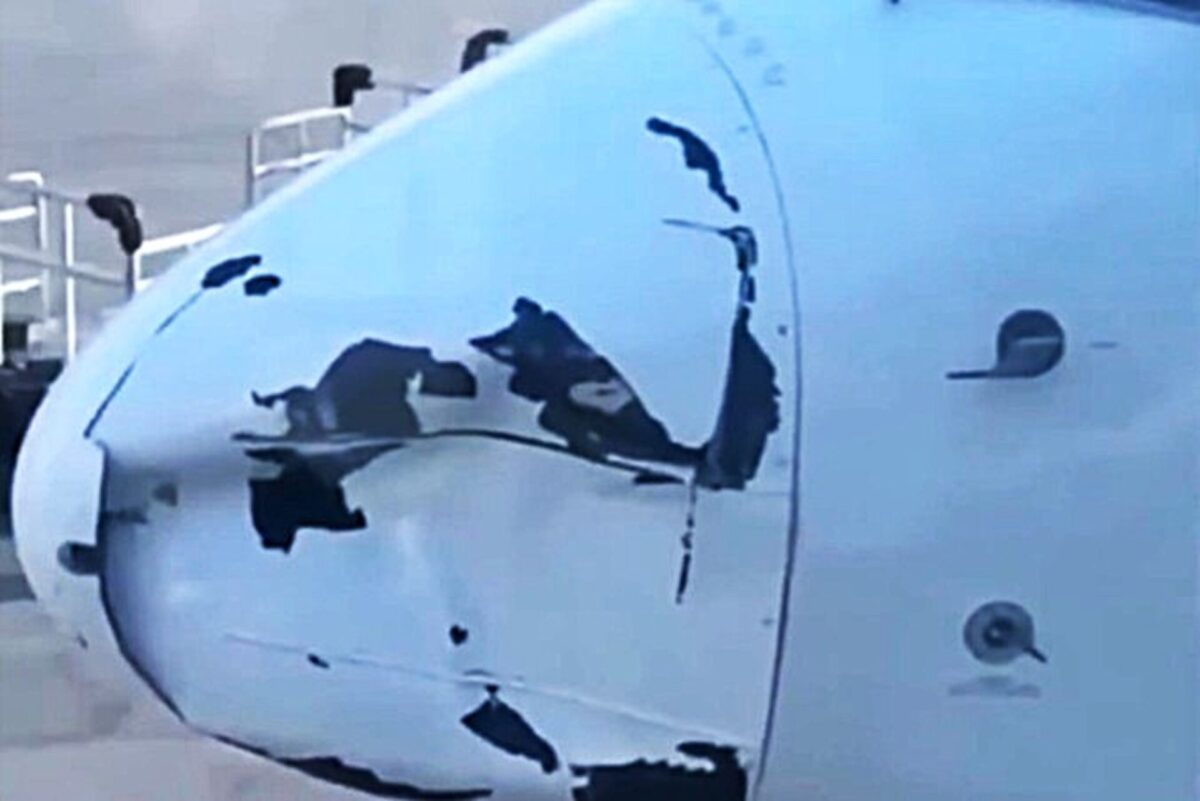
A Garuda Indonesia Boeing 737-800, registered PK-GMX, sustained significant structural damage to its radome during a scheduled domestic operation from Jakarta (CGK) to Pekanbaru (PKU). The damage, discovered upon arrival at Sultan Syarif Kasim II International Airport, presented as a severe inward depression of the nose cone composite structure.
Preliminary inspections suggests the aircraft encountered a high-kinetic impact event during the descent or approach phase. While the flight crew landed the aircraft without further incident, the breach of the radome shell necessitates an immediate grounding for structural integrity analysis and electronic systems verification. This incident highlights the persistent risk of bird strikes or severe weather phenomena in the Indonesian archipelago.
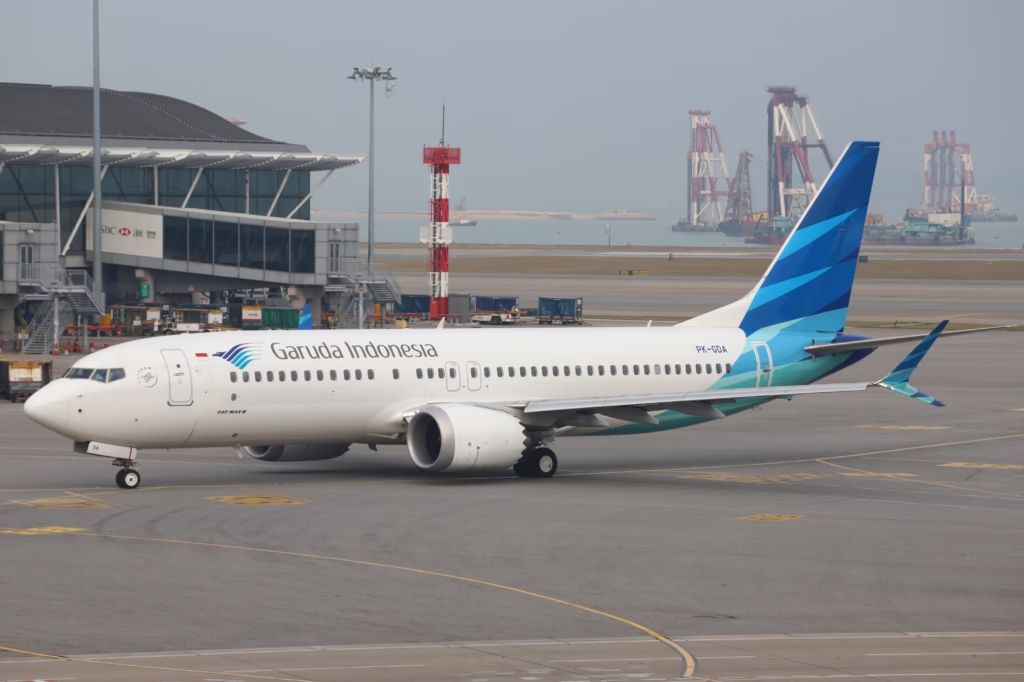
Historically, the Jakarta-Pekanbaru corridor is subject to intense bird activity and rapid convective weather developments. The Boeing 737-800’s radome is a critical aerodynamic component designed to protect the weather radar antenna while allowing electromagnetic signals to pass through with minimal interference. Unlike the aluminium fuselage, the radome is a composite structure, making it susceptible to delamination and crushing upon impact.
- Impact Speed Estimate: 210–250 knots (Typical approach/descent range).
- Material Composition: Fiberglass skins with a honeycomb Nomex core.
- Estimated Repair Lead Time: 48–72 hours for component replacement and radar calibration.
- Fleet Impact: One of 38 active Boeing 737-800 NG units in Garuda’s narrow-body inventory.
- Financial Exposure: Replacement radome units range from $25,000 to $45,000 USD, excluding labor and AOG loss.
The severity of the indentation on the PK-GMX unit suggests a high-mass impactor, likely a large avian species or a localized hail cell. In the context of Airline News, this event serves as a reminder of the operational volatility inherent in regional hubs where wildlife management protocols vary in consistency. The immediate concern for dispatchers is the potential for the radar antenna itself to have suffered mechanical shock.
The RDR-4000 IntuVue or similar radar systems housed behind the radome are sensitive to the G-forces generated by a direct strike. If the radome deforms sufficiently to touch the antenna array, the motor drives and stabilization gimbals may require recalibration or replacement. This extends the Aircraft on Ground (AOG) duration beyond a simple fiberglass swap.
From an operational standpoint, the grounding of a narrow-body asset in Pekanbaru creates a logistical hurdle for Garuda Indonesia’s maintenance control center. A replacement radome must be ferried from the main hub in Jakarta, requiring either a dedicated freighter or belly-hold space on a subsequent passenger flight. This logistical chain increases the total cost of the incident beyond the physical damage.
Technicians must also inspect the forward pressure bulkhead. While the radome is non-pressurized, a strike of this magnitude can transfer energy through the attachment points to the fuselage frame. Standard Boeing 737 NG maintenance manuals require a detailed survey of the 41-section frames to ensure no rivets have sheared or skin panels buckled behind the impact zone.
The radome itself is a tuned structure. It consists of multiple layers of quartz or fiberglass fabric impregnated with resin. The thickness is precisely calculated to be transparent to specific radar frequencies. Any temporary patch or improper repair can create ‘radar shadows’ or signal refraction, leading to inaccurate weather displays for the flight crew.
Wildlife Hazard Management (WHM) at Sultan Syarif Kasim II International Airport will likely face scrutiny following this event. Pekanbaru’s proximity to dense tropical vegetation and migratory paths increases the statistical probability of avian interference. Dispatchers must factor these seasonal risks into fuel planning and alternate airport selection when high-activity periods are reported.
Bird strikes typically occur below 10,000 feet, where the atmosphere is densest and bird populations are concentrated. The Boeing 737-800 is certified to withstand a four-pound bird impact at cruise speeds, but the radome remains the most vulnerable point due to its light construction. A breach of the shell often results in the immediate loss of the weather radar’s environmental protection.
In addition to the physical repair, the incident requires a full download of the Flight Data Recorder (FDR) and Cockpit Voice Recorder (CVR) if the crew declared an emergency. Even without a formal declaration, the Quick Access Recorder (QAR) data will be analyzed to determine if any sudden aerodynamic shifts or pitot-static fluctuations occurred during the event. This data is vital for safety management systems (SMS) to refine future risk assessments.
The economic impact of unplanned maintenance on the Jakarta-Pekanbaru route is exacerbated by current global supply chain constraints. While Garuda maintains a robust parts inventory, specialised composite components like the Boeing 737 NG radome are in high demand across the region. Any delay in sourcing a replacement unit results in canceled segments and passenger re-accommodation costs.
Flight dispatchers at Garuda Indonesia must now manage the tail-swap logistics. Removing PK-GMX from rotation requires adjusting the schedule for several subsequent flights across the domestic network. This ripple effect is a primary driver of operational complexity in high-utilization narrow-body fleets where spare aircraft margins are thin.
Post-repair testing will involve a ‘functional check flight’ or a ground-based radar test using a target generator. The goal is to ensure that the electromagnetic transmissivity of the new radome meets Boeing’s original equipment manufacturer (OEM) specifications. Only then can the aircraft be released back into revenue service for the carrier.
The incident also raises questions about the use of pulse lights and other bird-deterrent technologies on the Garuda fleet. While some studies suggest high-intensity LED pulsing can reduce strike rates, the effectiveness remains a subject of debate among safety analysts. For now, visual avoidance and adherence to bird-notams remain the primary defensive measures for crews.
Looking forward, the integration of advanced sensors may provide earlier warnings of wildlife clusters. However, until such technology is standardized, the radome will continue to act as the primary shield for the aircraft’s electronic eyes. The recovery of PK-GMX Boeing 737 will be a test of Garuda’s regional maintenance agility in the face of sudden structural damage.
For additional operational briefings and the latest Airline News, monitor our dedicated aviation intelligence category.
 Anshum Raj
  Priyanshu Gautam
  Olive Arthur