

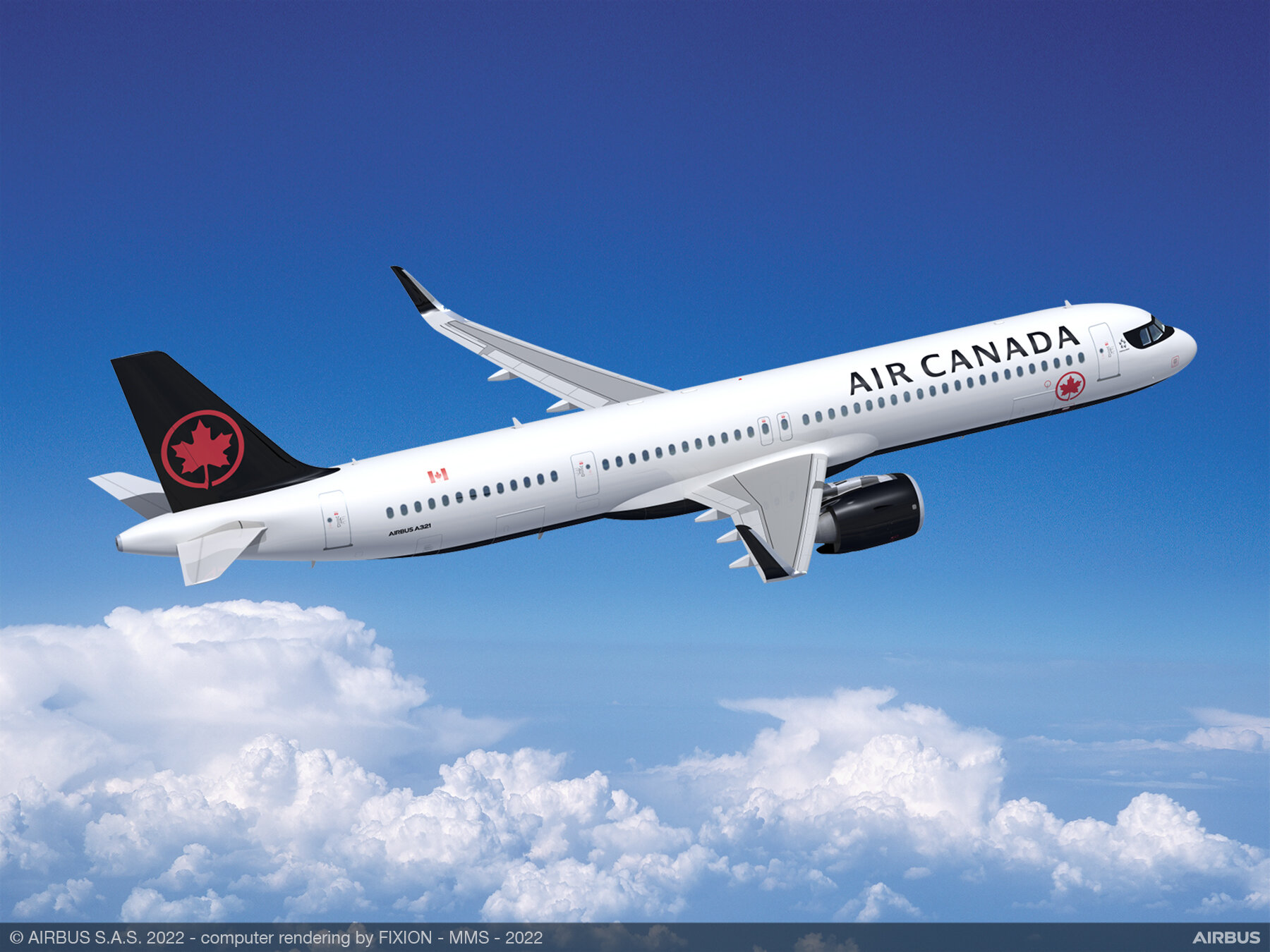
Air Canada’s long-awaited operational pivot to long-range single-aisle transatlantic service took a tangible step forward today as its first Airbus A321XLR successfully completed its maiden test flight. The aircraft, currently bearing test registration D-AVZG (destined to become C-GXLR), departed Airbus’s Hamburg Finkenwerder (XFW) facility at 10:57 AM local time, logging a flight duration of approximately three hours and 20 minutes.
This critical validation sortie, which followed a series of low-speed rejected takeoff (RTO) tests earlier this week, marks the final technical phase before the carrier formally integrates the type into its fleet. For Air Canada, this flight represents more than a routine delivery milestone; it signals the imminent activation of a strategy designed to bypass traditional hub-and-spoke constraints by connecting North American gateways directly to secondary European cities.
The operational logic behind Air Canada’s acquisition of the A321XLR is rooted in the “middle-of-the-market” gap left by the retirement of the Boeing 767-300ER fleet. While widebody aircraft like the Boeing 787 and 777 are efficient for high-density trunk routes to major hubs like London Heathrow or Frankfurt, they are often economically oversized for seasonal or lower-yield destinations.
Air Canada originally placed a firm order for 26 A321XLRs (later increased to 30) to address this inefficiency. The program has faced industry-wide supply chain hurdles and certification delays regarding the rear center tank design, pushing the initial entry-into-service timeline into 2026. This aircraft is poised to become the backbone of the airline’s point-to-point Atlantic strategy, allowing for year-round viability on routes that previously could only sustain seasonal summer service.
FLEET & PERFORMANCE SPECS
- Aircraft Type: Airbus A321XLR (Extra Long Range)
- Registration: C-GXLR (Test Reg: D-AVZG)
- Cabin Configuration: 182 seats total (14 Signature Class lie-flat suites, 168 Economy)
- Range Capability: Up to 4,700 nautical miles (8,700 km)
- Maximum Take-Off Weight (MTOW): 101.5 tonnes
- Fuel Efficiency: 30% lower fuel burn per seat compared to previous-generation narrowbodies.
- Launch Routes (Projected): Domestic proving runs (Montreal-Calgary/Vancouver) followed by international deployment to Palma de Mallorca (PMI), Berlin (BER), and other secondary European markets.
Operational Viability of “Thinner” Routes
The A321XLR fundamentally alters the unit cost economics for transatlantic flying. By offering a range comparable to a widebody but with the trip costs of a narrowbody, Air Canada can profitably serve “thin” routes—city pairs with consistent but lower passenger volumes. The launch of service to Palma de Mallorca and the restoration of Berlin connectivity exemplify this shift. These markets often lack the premium heavy demand required to fill a 300-seat widebody daily, but a 182-seat aircraft with lie-flat business class provides the perfect capacity discipline. This capability allows the carrier to capture high-yield leisure traffic without diluting yields through excess capacity.
From an infrastructure perspective, the A321XLR allows Air Canada to utilize gates and ground equipment at smaller regional airports that may be range-restricted for larger widebodies or lack the turning radius for a Boeing 777. Furthermore, the ability to rotate these aircraft onto domestic transcontinental routes (e.g., Montreal to Vancouver) during operational downtime or off-peak seasons maximizes asset utilization. This flexibility serves as a hedge against demand volatility; if European demand softens in winter, the aircraft can be seamlessly redeployed to sun destinations or high-frequency domestic corridors without the reconfiguration costs associated with widebody redeployment.
Integrating the A321XLR strengthens Air Canada’s position within the Star Alliance Atlantic Joint Venture. As partners like United Airlines also ramp up XLR operations, the alliance can offer higher frequency schedules across the Atlantic. Instead of one daily widebody flight, the alliance could theoretically offer two daily narrowbody flights, offering business travelers better schedule utility. This frequency-over-capacity model is becoming the dominant trend in mature aviation markets.
As the industry monitors these developments, the successful testing of C-GXLR is a major headline in Airline News, signaling that the era of long-haul narrowbody fragmentation is officially underway for Canada’s flag carrier.
For additional operational briefings and the latest Airline News, monitor our dedicated aviation intelligence category.
 Priyanshu Gautam
  Olive Arthur