

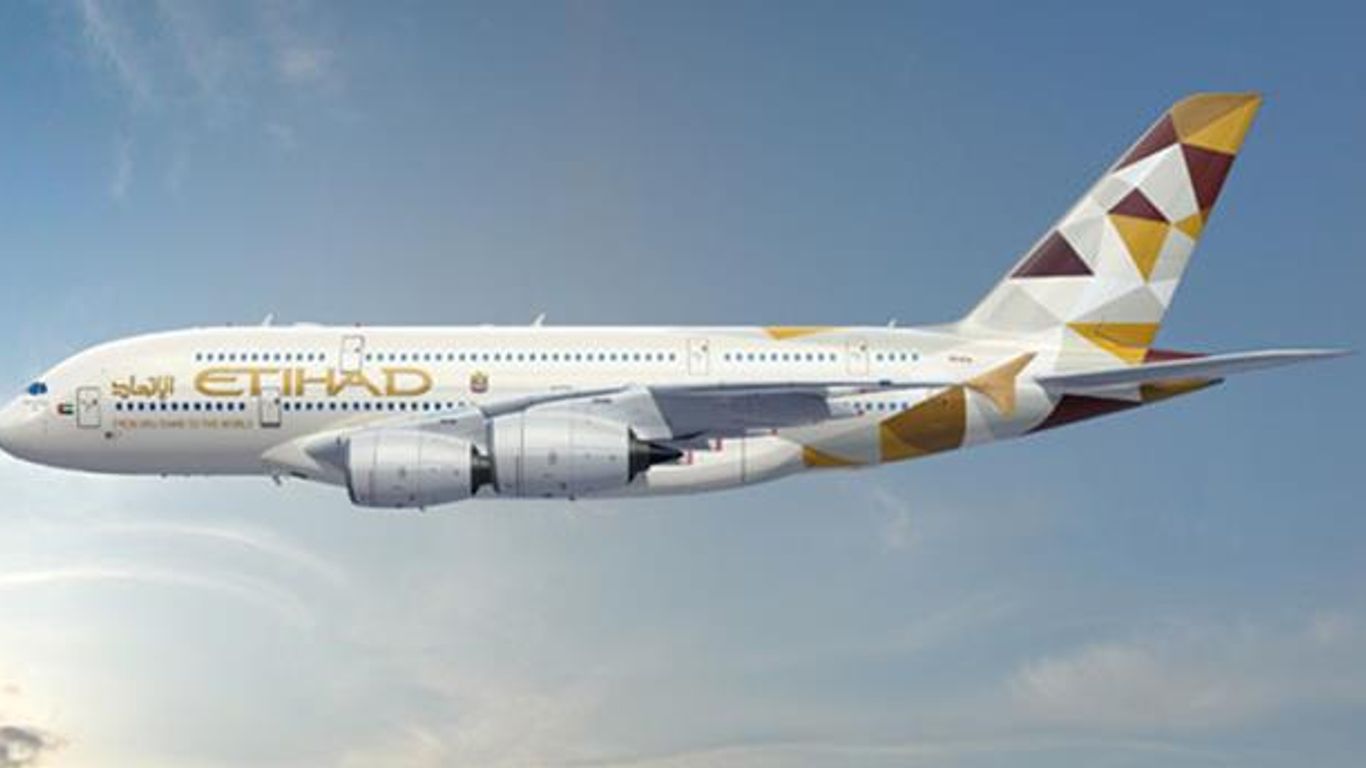
For aviation enthusiasts and luxury travelers alike, the “whale jet” has always been more than just an aircraft; it is a statement of intent. Today, Etihad Airways officially signaled its confidence in the Southeast Asian corridor by announcing the deployment of its iconic Airbus A380 on the Abu Dhabi to Bangkok route.
Starting October 25, 2026, the double-decker superjumbo will take over one of the carrier’s daily frequencies to the Thai capital. While the Boeing 787s and 777s currently serving the route are formidable machines.This move marks the first time Etihad has scheduled its flagship for a regular service to Thailand, turning a standard six-hour hop into a genuine event.
The “Suite” Spot of Luxury
The return of the A380 to more routes joining London, New York, Paris, Singapore, and soon Tokyo is a victory for those who feared the pandemic had permanently grounded the fleet. For Bangkok-bound passengers, the upgrade is most felt at the front of the bus.
The deployment introduces The Residence to the Thai market: the world’s only three-room suite in commercial aviation, featuring a living room, a separate bedroom with a double bed, and a private ensuite shower. Approximately 70 Business Studios, over 400 economy seats, Compared with Airbus A350 or Boeing 787 operations, the A380 provides up to 40–60% more seating capacity, allowing the airline to transport significantly more passengers per slot at congested international airports.
Operational & Market Metrics: A380 Deployment on Bangkok Corridor
Aircraft Wingspan: 79.8 m
Length: 72.7 m
Maximum Takeoff Weight: ~575 tonnes
Cruising Speed: ~Mach 0.85 (≈ 900 km/h)
Range Capability: ~15,200 km
Operational Efficiency and Cost Advantages
Deploying a high-capacity aircraft on the Bangkok route provides several measurable operational benefits:
Higher seat density per movement
Maximizes passenger throughput where airport slots are constrained.
Lower unit cost per seat
Improves cost efficiency on high-demand sectors.
Premium revenue expansion
Enhanced First and Business class inventory supports high-yield traffic.
Fleet optimization
Frees smaller wide-body aircraft for secondary or emerging routes.
Competitive Dynamics on the Bangkok Corridor
Bangkok is one of Asia’s most competitive long-haul destinations, served by Gulf carriers, Asian full-service airlines, and low-cost long-haul operators. Capacity, connectivity, onboard product, and schedule convenience remain key differentiators.
The A380’s premium cabin experience and high seat volume enable Etihad to compete effectively across both luxury leisure and price-sensitive travel segments, while also strengthening its value proposition for connecting passengers.
Talking about the network optimization and fleet deployment, The Bangkok deployment forms part of Etihad’s broader A380 reactivation and network optimization strategy. Following pandemic-era fleet restructuring, the airline reintroduced the superjumbo on routes demonstrating strong passenger volumes and premium demand.
Etihad plans multiple daily A380 departures from Abu Dhabi during peak travel periods, with high-capacity service concentrated on major global routes including London, Paris, Singapore, Toronto, and Tokyo. Bangkok’s inclusion in this network highlights its importance as a high-density leisure and transit market.
 Anshum Raj
  Priyanshu Gautam
  Olive Arthur
[…] DHABI, Etihad Airways secures high-visibility inventory on McLaren’s MCL40 and WEC Hypercar, signaling an aggressive […]
[…] special ferry flights,non-revenue operations intended to bring back crew members to India from Abu Dhabi (AUH) to New Delhi (DEL) and Bengaluru (BLR). These flights are designed solely for repositioning […]