


CINCINNATI, American Airlines has formalized the propulsion architecture for its next decade of narrowbody deliveries, selecting CFM International’s LEAP-1A engines to power 155 forthcoming Airbus A321neo and A321XLR aircraft.
The agreement, finalized this week between American CEO Robert Isom and GE Aerospace CEO H. Lawrence Culp, Jr., extends beyond hardware acquisition to include a comprehensive long-term maintenance and services contract. This strategic move locks in technical uniformity for the carrier’s single-aisle backbone, ensuring that aircraft ordered in 2024 will maintain operational commonality with the existing fleet upon delivery through 2032.
The decision reinforces American Airlines’ reliance on the GE/Safran partnership, continuing a century-long operational lineage. As the Airbus A321neo family replaces the Boeing 757 and earlier-generation A321ceo models, the choice of engine is a critical determinant of fleet economics. The A320neo family offers operators two propulsion choices: the Pratt & Whitney GTF (Geared Turbofan) or the CFM LEAP-1A.
American has consistently favored the CFM architecture for its Airbus narrowbodies. This preference prioritizes dispatch reliability and supply chain predictability over the theoretical efficiency gains that drove some competitors toward the GTF. By committing to the LEAP-1A for the entirety of the 2024 order book, American avoids the logistical friction of a mixed-engine sub-fleet, simplifying spare parts inventory and line maintenance protocols at domestic hubs.
FLEET AND ORDER METRICS
Current Operational Fleet (CFM LEAP-1A Powered):
- A321neo: 84 aircraft.
- A321XLR: 5 aircraft.
Confirmed Order Book (Through 2032):
- A321neo: 120 aircraft.
- A321XLR: 35 aircraft.
- Total Firm Commitment: 155 engines sets (plus spares).
Contractual Options
A320neo Family: 116 aircraft (eligible for LEAP-1A provisioning).
Performance Specifications (LEAP-1A vs. CFM56)
- Fuel Efficiency: +15% improvement.
- Carbon Emissions: -15% reduction.
- Technology: Ceramic Matrix Composites (CMCs) and 3D-printed fuel nozzles.
Related Widebody Propulsion
Boeing 777: 20 aircraft (GE90).
Boeing 787: 70 aircraft (GEnx) + 19 on order.
SUPPLY CHAIN INSULATION
The inclusion of a long-term maintenance agreement is the operational pivot point of this announcement. In the current aerospace environment, possessing the asset is secondary to keeping it airworthy. The global supply chain for engine components, particularly high-pressure turbine blades and combustor linings, remains constrained.
By bundling the engine purchase with a direct CFM services contract, American effectively purchases priority status in the MRO (Maintenance, Repair, and Overhaul) queue. For dispatch reliability, this reduces the risk of Aircraft on Ground (AOG) events caused by parts unavailability. The LEAP-1A’s open MRO ecosystem allows for some third-party competition, but a direct OEM (Original Equipment Manufacturer) tie-in provides a firewall against the volatility seen in the aftermarket sector. This is a risk-mitigation strategy designed to protect schedule integrity as the carrier increases utilization rates on the A321 fleet.
THE A321XLR MISSION PROFILE
The specific inclusion of 35 A321XLR (Xtra Long Range) aircraft in this propulsion agreement highlights a shift in transcontinental and transatlantic economics. The A321XLR is tasked with thin-route international flying—missions previously operated by the Boeing 757 or 767. These routes often lack the diversion options available on overland domestic corridors, making ETOPS (Extended-range Twin-engine Operations Performance Standards) compliance paramount.
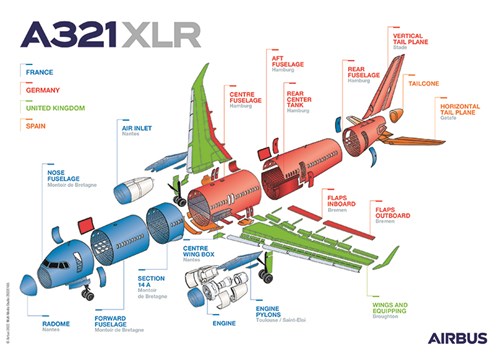
The LEAP-1A has achieved a level of maturity that supports high-minute ETOPS certification. American’s deployment of the XLR to secondary European markets from East Coast hubs requires an engine capable of sustaining 10-12 hour daily utilization cycles with minimal technical interruptions. The 15% fuel burn advantage cited by CFM translates directly into payload capability on these edge-of-envelope routes. Any degradation in engine performance would force payload restrictions or fuel stops, negating the XLR’s economic rationale. This agreement signals American’s confidence that the LEAP-1A can deliver widebody reliability on a narrowbody airframe.
ASSET UTILIZATION AND RESIDUAL VALUE
Standardizing on CFM engines impacts the balance sheet as significantly as the operation. A unified engine type reduces the capital requirement for spare engines. If American operated a split fleet (GTF and LEAP), they would be required to hold distinct spare pools for each type, tying up millions in non-revenue-generating capital.
Furthermore, the LEAP-1A’s market penetration ensures strong residual value. As these aircraft age, the secondary market for CFM-powered A321neos is projected to remain liquid, given the engine’s ubiquity. This facilitates easier financing terms and eventual exit strategies for these airframes in the 2040s. The operational data suggests American is positioning the A321neo/XLR fleet not just as a replacement cycle, but as a high-utilization asset class intended to drive down Cost Available Seat Mile (CASM) through maximum uptime.
TECHNOLOGICAL MATURITY VS. INNOVATION RISK
CFM’s LEAP engine utilizes Ceramic Matrix Composites (CMCs) in the hot section, a technology GE Aerospace has refined over two decades. This material allows the engine to run hotter—which increases thermal efficiency—without requiring the heavy cooling air loads of traditional metal alloys.
For American’s dispatchers and maintenance controllers, the “fastest ramp-up in commercial aviation history” cited by CFM translates to a robust dataset. We now have over a decade of operational data on the LEAP architecture. Early teething issues typical of new propulsion programs have largely been resolved through block upgrades. In contrast to the durability challenges faced by rival geared architectures, the LEAP-1A offers a conventional direct-drive design that aligns with the maintenance competencies already present in American’s tech ops workforce. This minimizes the learning curve and reduces the likelihood of maintenance-induced errors during line operations.
COMPETITIVE CONTEXT
American’s staunch commitment to GE/CFM diverges from the strategies of some domestic rivals who have split their orders or leaned heavily into the GTF for performance gains on paper. By consolidating the widebody fleet around GE (GE90/GEnx) and the narrowbody fleet around CFM, American creates a vendor leverage point.
This volume operating more CFM/GE powered aircraft than any other airline—grants American significant negotiating power regarding service intervals, warranty claims, and spare parts pricing. In an industry with razor-thin margins, the administrative and logistical savings of a single-source propulsion partner can amount to substantial annualized operational savings.
FORWARD IMPLICATIONS
This agreement secures the operational stability of American Airlines’ narrowbody fleet through the mid-2030s. As the A321XLR expands the carrier’s network into seasonal European and deep South American markets, the reliability of the LEAP-1A will be the fulcrum upon which that expansion rests.
The decision to exercise options on the additional 116 A320neo family aircraft remains the next major strategic watchpoint. Given the current trajectory and the sunk costs in CFM tooling and training, it is operationally probable that American will convert these options, further cementing the CFM LEAP-1A as the singular power plant for its future domestic and near-international network.
The immediate focus for American’s Technical Operations team will now shift to integrating the 2026 delivery stream, ensuring that the MRO pipeline established in this contract can withstand the high-cycle demands of the approaching summer travel season.
 Anshum Raj
  Olive Arthur