

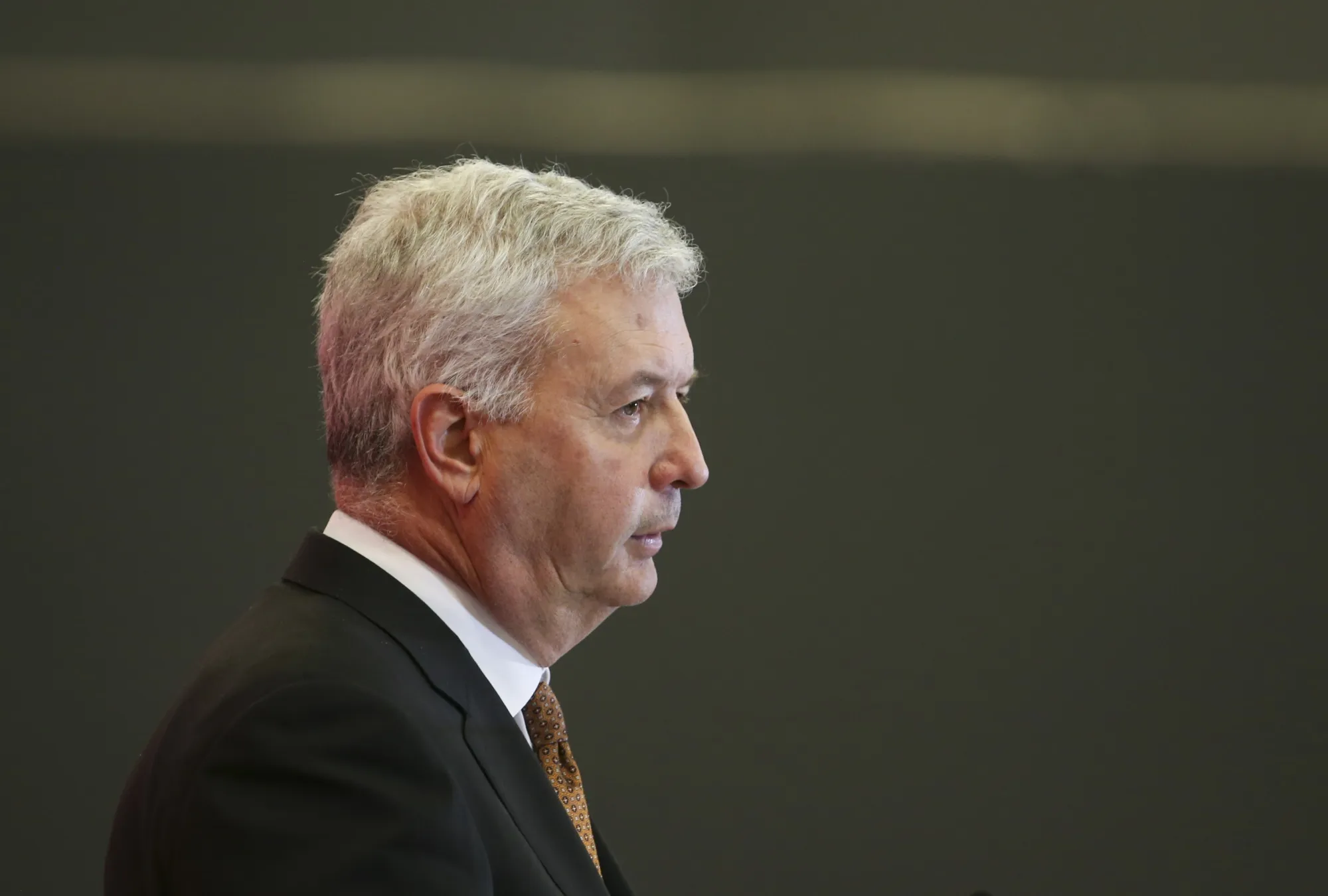
There is a particular kind of corporate downfall that has nothing to do with fraud, financial mismanagement, or strategic failure. It is the kind that begins with a moment, a single, avoidable human misstep that exposes something deeper about a leader’s relationship with the people he was entrusted to serve. Michael Rousseau, the outgoing Chief Executive Officer of Air Canada, will be remembered for both building one of the airline’s most financially successful modern chapters and for ending his tenure in precisely that manner.
On March 30, 2026, Air Canada confirmed what political pressure, public outrage, and a near-unanimous legislative vote had been demanding for days: Rousseau would retire before the end of the third quarter of this year. The announcement, measured in its tone and careful in its framing, could not fully conceal the circumstances that made it inevitable.
The Crash, The Video, and the Two Words That Weren’t Enough
It began on March 22, when Air Canada Express Flight 8646, operating from Montreal, collided with a fire truck on the runway at LaGuardia Airport in New York. Two pilots lost their lives First Officer Antoine Forest, a French-speaking Quebecer, and Captain Mackenzie Gunther. The tragedy was sudden and devastating, and the country waited for its national airline’s leadership to respond with the gravity the moment deserved.
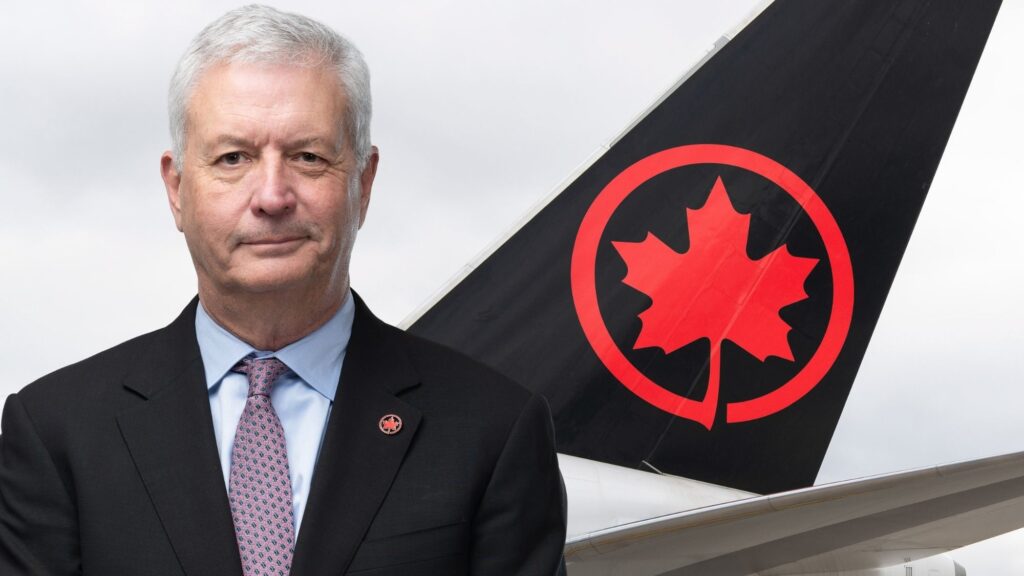
What came instead was a four-minute condolence video from Rousseau that contained exactly two words of French “bonjour” at the opening, and nothing else of substance in the language. For the CEO of an airline headquartered in Montreal, subject to Canada’s Official Languages Act, and serving millions of francophone customers and employees including the family of a French-speaking pilot who had just died the omission was not a minor oversight. It landed like a slap.
The backlash was swift, bipartisan, and cross-jurisdictional. Quebec Premier François Legault called the video disrespectful. Prime Minister Mark Carney said it demonstrated “a lack of judgment” and “compassion.” The Quebec National Assembly, the provincial legislature voted 92 to zero in favour of a motion calling on Rousseau to resign. Within days, the Office of the Commissioner of Official Languages had received over 2,360 formal complaints about the video. Rousseau apologised, acknowledging that his inability to speak French had “diverted attention from the profound grief of the families.” But the damage, by then, was irreversible.
A Pattern That Goes Back Years
What made the public response so forceful was not simply the video itself, it was that this was not the first time. In 2021, Rousseau delivered a speech to the Montreal Chamber of Commerce almost entirely in English, and told reporters afterward that he did not need to speak French to get by in Montreal. The backlash then was significant. He apologised. He pledged to learn French. Air Canada announced he had undertaken 350 hours of language courses and 250 hours of practice scenarios. Five years later, in his airline’s most visible moment of grief, he produced four minutes of English and two words of French.
For many Canadians and particularly for Quebecers that gap between promise and performance said everything. The fact that Rousseau’s total compensation for 2025 came to $13.1 million, including a $2.8 million bonus announced on the very same day as his retirement added a layer of public frustration that no communications team could have softened.
The Complicated Truth About His Tenure
To dismiss Rousseau’s time at Air Canada as simply a failure would be both inaccurate and unfair. He joined the airline nearly two decades ago and navigated it through circumstances that would have collapsed lesser institutions. The Covid-19 pandemic alone presented an existential threat to global aviation Air Canada, like every major carrier, saw revenues evaporate virtually overnight. The recovery that followed, built on disciplined cost management and careful capacity deployment, was in large part a product of his financial stewardship. The airline emerged leaner, more profitable, and better positioned than many of its peers.
Labour relations, however, were not among his strengths. A three-day flight attendant strike in August 2025 during which workers defied a federal back-to-work directive caught the airline and its CEO visibly off-guard, disrupting thousands of flights and damaging the airline’s reputation with travellers at a critical point in the recovery. It was a preview of the communication and relationship deficits that would ultimately define his exit.
What Air Canada Needs Now
The search for Rousseau’s successor was already quietly underway. Air Canada had launched a global CEO search in January 2026 but his departure has injected urgency into a process that was previously unfolding on a more measured timeline. The criteria have effectively been narrowed by political reality. Prime Minister Carney has stated clearly that bilingualism for the next CEO is not optional. Quebec Premier Legault echoed the same. Richard Leblanc, a governance professor at York University, noted that the language requirement effectively rules out most American aviation talent but argued that was not necessarily a disadvantage, given Canada’s distinct cultural and political landscape.
The next leader of Air Canada will inherit a carrier that is financially solid, operationally complex, and deeply embedded in the identity politics of a bilingual country. They will also inherit the responsibility of rebuilding trust with Quebec, with labour, and with the millions of travellers who expect Canada’s flagship airline to reflect the full character of the nation it represents.
A Departure Long in the Making
Air Canada, in its official statement, noted that Rousseau had “reached a natural retirement age” and that succession planning had been underway internally for more than two years. That framing is technically accurate and also clearly incomplete. Leaders who depart cleanly on their own terms do not typically do so the week their national legislature votes unanimously for their removal.
What is true is that the timing of his exit however forced spares the airline a prolonged period of political and public turbulence at a moment when it can least afford distraction. Carney called the retirement “appropriate,” while acknowledging Rousseau had been “an effective operator.” That is a fair, if deliberately restrained, verdict.
Michael Rousseau built things worth building at Air Canada. He also, in the end, underestimated something that no amount of financial acumen can substitute for the understanding that leading a national institution means being fluent not just in the language of business, but in the language of the people you serve.
Q: Why is Air Canada CEO Michael Rousseau retiring? A: Michael Rousseau announced his retirement on March 30, 2026, following widespread public and political backlash after he delivered a condolence video almost entirely in English following the fatal Air Canada Express Flight 8646 crash at LaGuardia Airport.
Q: What happened in the Air Canada LaGuardia crash?
On March 22, 2026, Air Canada Express Flight 8646 collided with a fire truck on the runway at LaGuardia Airport in New York, killing both pilots — First Officer Antoine Forest and Captain Mackenzie Gunther.
Q: Did the Quebec National Assembly vote on Michael Rousseau’s resignation?
Yes. The Quebec National Assembly voted 92 to zero in favour of a motion calling on Rousseau to resign, following the French-language omission in his condolence video.
Q: Who will be the next CEO of Air Canada?
Air Canada launched a global CEO search in January 2026. The next CEO is widely expected to be bilingual in English and French, a requirement emphasised by both Prime Minister Mark Carney and Quebec Premier François Legault.
Q: What was Michael Rousseau’s salary at Air Canada?
Rousseau’s total compensation for 2025 was $13.1 million, including a $2.8 million bonus that was announced on the same day as his retirement.
 Martin hope
  Shaifali