

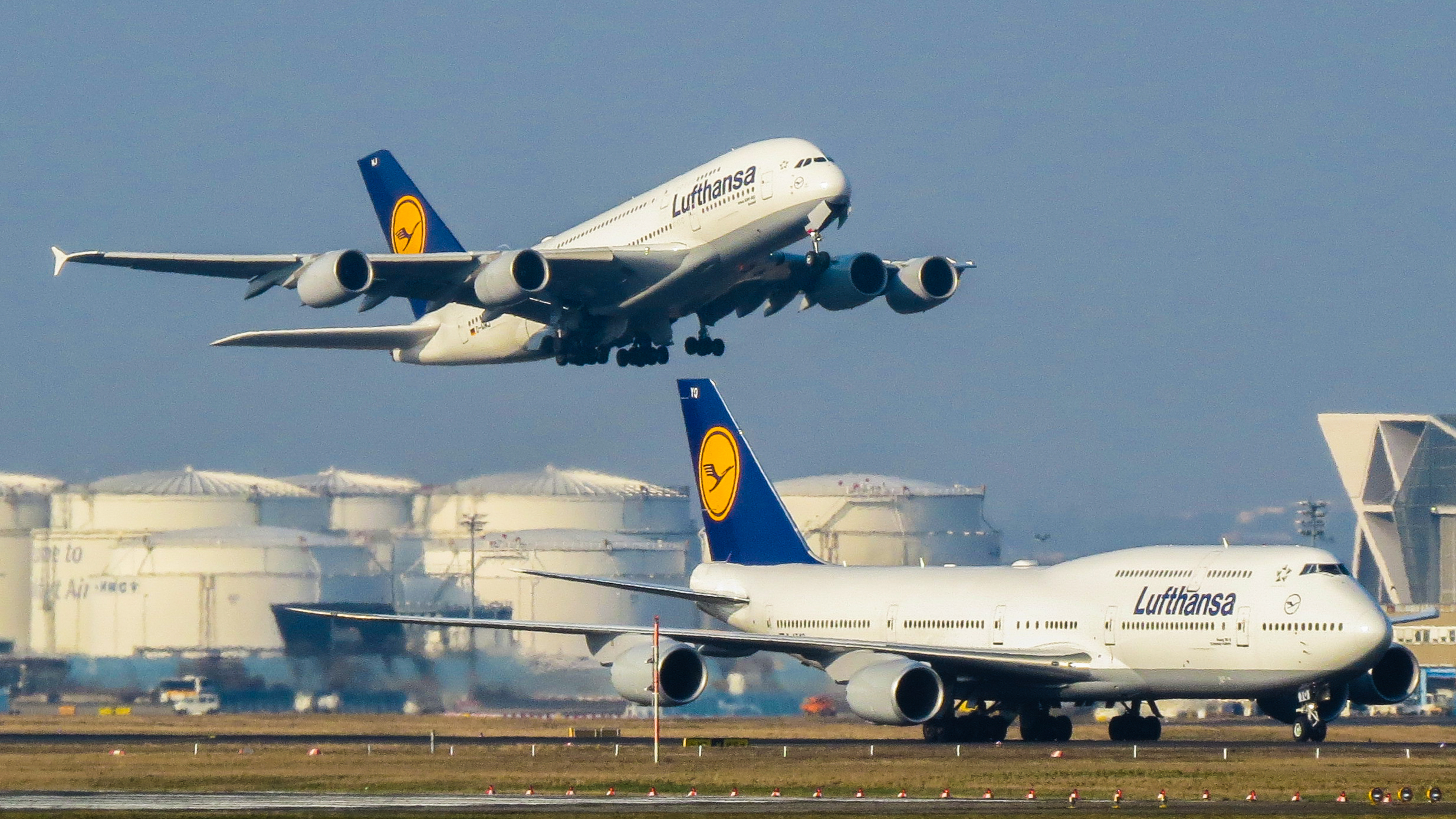
Nearly two decades after its commercial debut, the world’s largest passenger jet has defied the odds — winning over travelers even as airlines quietly moved on.
251 Total A380s delivered
853 Max passenger capacity
49% Operated by Emirates
2005 Year of first flight
When Airbus poured billions into building the world’s largest commercial aircraft in the 1990s, the goal was audacious: dethrone Boeing’s iconic 747 and redefine long-haul, high-volume air travel. What followed was a commercial saga that combined engineering triumph, market misjudgment, and an unexpected second act — one still playing out in airports across the globe in 2026.
The Airbus A380-800, the only commercial aircraft ever built with two full passenger decks, first took flight on April 27, 2005, and entered commercial service in 2007. Nearly 21 years on from that maiden flight, the jet remains one of the most recognizable — and for passengers, most beloved — aircraft ever to grace the sky.
What went wrong for the A380 — and what didn’t
To understand the A380’s complicated legacy, it’s important to separate two very different storylines: how airlines felt about it, and how passengers felt about it.
For airlines, the timing was brutal. A shift toward point-to-point routes eroded demand for the hub-and-spoke model the A380 was designed to serve. The aftershocks of 9/11, a global financial crisis, and volatile fuel prices made the aircraft’s four powerful engines — and their corresponding fuel burn — a hard sell. The result: Airbus closed the program in 2021 having delivered just 251 aircraft to 14 customers.
“The aircraft’s unpopularity with airlines was due to shifting market trends — not any flaw in the aircraft itself.”
For passengers, though, the A380 told a different story. Its spacious cabins, reduced cabin noise (a byproduct of those four large engines operating at lower thrust), and — crucially — the extraordinary premium cabin products installed aboard them, turned the jet into a cult favorite among frequent flyers. In premium classes especially, some of the most innovative seat products in commercial aviation have called the A380 home.
The Emirates effect: how one airline kept a program alive
No analysis of the A380 is complete without a deep focus on Emirates. The Dubai-based carrier took delivery of 123 of the 251 total aircraft ever built — a staggering 49% of all A380s delivered. For nearly a decade, Emirates operated virtually nothing but A380s and Boeing 777-300ERs, making the superjumbo inseparable from the airline’s identity.
Emirates didn’t just buy the aircraft — it invested heavily in them. The carrier retrofitted a significant portion of its A380 fleet with brand-new cabins, built out in-house maintenance capabilities through Emirates Engineering, and constructed an entire dedicated A380 concourse (Concourse A) within its own Terminal 3 at Dubai International Airport (DXB).
Singapore Airlines, the A380’s launch customer, rounds out the list of major operators with 24 examples — a distant second, but still a meaningful presence in the premium long-haul market.
Key facts
- The A380 program launched in the 1990s and entered commercial service in 2007
- First flight: April 27, 2005 — making 2026 its 21st anniversary year
- Production ended in 2021 after 251 deliveries to 14 airlines
- Emirates alone operates 123 examples — nearly half the entire fleet
- Maximum certified capacity: 853 passengers in an all-economy configuration
- Range: 8,000 nautical miles (14,816 km)
How the A380 compares to today’s widebody competition
In terms of raw capability, the A380 still holds records no other aircraft has matched. Its certified all-economy capacity of 853 passengers dwarfs the next closest aircraft, the Boeing 747-8, which maxes out at 605. In practice, airlines configure the A380 far more generously — typically 480–520 seats across three or four classes — making the cabin feel positively spacious by modern standards.
| Specification | Airbus A380-800 | Boeing 747-8 | Boeing 777-300ER | Airbus A350-1000 |
|---|---|---|---|---|
| Typical capacity | 480–520 | 320–360 | 392 | 400 |
| Range | 8,000 NM | 7,370 NM | 7,370 NM | 9,000 NM |
| Engines | 4 (RR Trent-900 / GP7000) | 4 (GEnx) | 2 (GE90) | 2 (RR XWB-97) |
| Cruise speed | Mach 0.85 | Mach 0.86 | Mach 0.84 | Mach 0.85 |
| Decks | 2 (full) | 1 + upper hump | 1 | 1 |
The A380’s four-engine configuration is its most significant operational disadvantage. Twin-engine aircraft like the 777-300ER and A350-1000 burn considerably less fuel per seat, a factor that proved decisive as airlines pursued lower operating costs and reduced carbon footprints through the 2010s.
Still flying strong in 2026
The A380 may be out of production, but it is far from out of the picture. With Emirates continuing to operate a large, recently-refurbished fleet and Singapore Airlines maintaining its commitment to the type on key premium routes, the superjumbo will remain a fixture of long-haul aviation well into the 2030s.
For aviation enthusiasts and premium cabin travelers, spotting an A380 at the gate still carries a certain thrill. The aircraft’s sheer scale — and the knowledge that no replacement of equivalent size will ever be built — makes every flight aboard it feel like a piece of history. What Airbus may have called a commercial disappointment, the flying public has quietly crowned a legend.
 Priyanshu Gautam
  Shaifali