


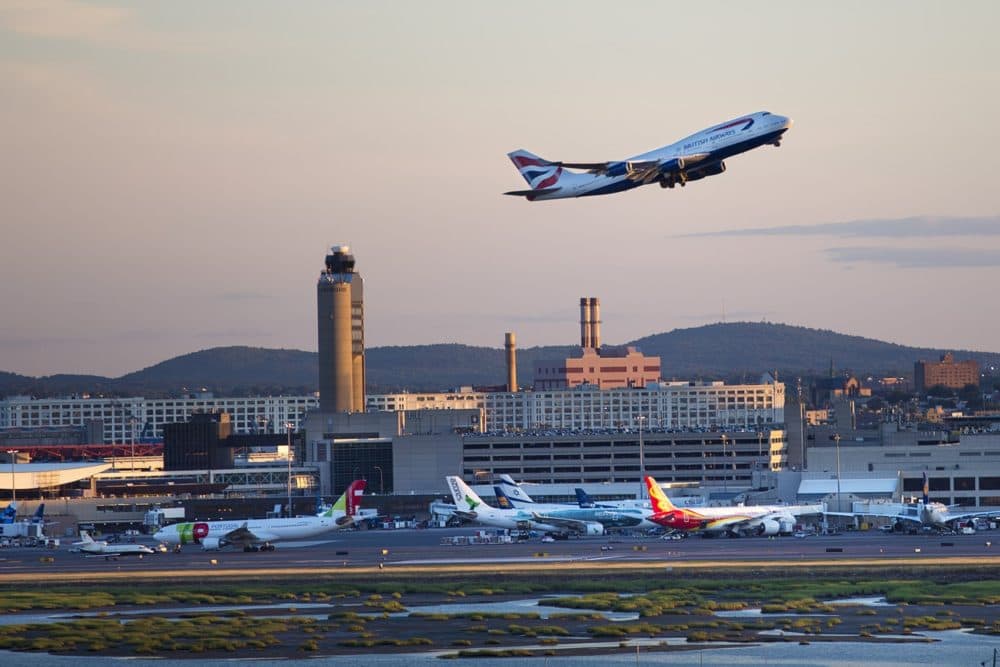
Boston Logan International Airport (BOS) faced significant operational degradation Monday as a high-intensity weather system moved across the Northeast corridor, triggering over 400 flight disruptions.
Air Traffic Control (ATC) and airline Flight Operations Centers (FOCs) coordinated through a series of Ground Delay Programs to manage reduced Arrival Rate (AAR) capacities. These measures were vital to maintain safety margins as visibility dropped and convective activity blocked primary arrival gates into the Boston Terminal Radar Approach Control (TRACON) airspace.
BOSTON LOGAN (BOS) OPERATIONAL CONSTRAINTS
Navigating the complexities of Northeast Corridor airspace during severe weather requires precise synchronization between the FAA and carrier dispatchers. Monday’s storm system presented a multifaceted challenge, combining high-altitude wind shear with low-level ceiling and visibility issues.

Logistics professionals monitor these atmospheric shifts to adjust fuel loads and alternate airport selections in real-time. When BOS experiences a reduction in runway throughput, the impact radiates across the National Airspace System (NAS), affecting transcontinental rotations and international arrivals. This specific weather event forced a transition to non-standard arrival routes, increasing the distance flown for incoming aircraft and complicating crew duty cycles.
OPERATIONAL IMPACT METRICS
Total Disruptions: 412 (134 Cancellations; 278 Delays).
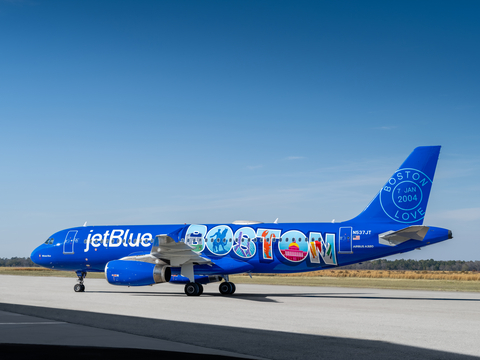
Primary Affected Carriers: JetBlue (B6), Delta (DL), and American Airlines (AA).
Average Arrival Delay: 62 minutes during peak convective activity.
Ground Delay Program (GDP) Parameters: Controlled arrival rates reduced by 35%.
Waiver Coverage: 18 major airports across the East Coast including BOS, JFK, and PHL.
The concentration of disruptions at Logan Airport highlights a broader systemic fragility within the ZBW and ZNY Air Route Traffic Control Centers. When severe weather intersects with high-density traffic areas, the resulting congestion necessitates proactive “load shedding” by carriers to prevent terminal gridlock. Dispatchers prioritize long-haul and international segments during these events to minimize the financial impact of missed connections at overseas hubs.

Unlike localized winter events where ground equipment is the primary bottleneck, this East Coast weather system stressed the volumetric capacity of the air sectors themselves. While passengers see a departure board of red, industry analysts view these trends as critical Airline News that informs how carriers adjust seasonal schedule padding and reserve crew positioning. Proactive cancellations are now a preferred tactical tool to avoid aircraft being out of position for the next day’s first-bank departures.
THE MECHANICS OF TRAVEL WAIVERS AND RE-ACCOMMODATION
Airlines issued comprehensive travel waivers early Monday, a strategic move designed to reduce terminal congestion and call center volume. By allowing passengers to adjust their itineraries without penalty, airlines effectively lower the “re-accommodation pressure” on gate agents and customer service staff during peak IRROPS (Irregular Operations). This flexibility allows FOCs to focus on tactical aircraft recovery rather than administrative processing.
From a dispatch perspective, every passenger who moves their flight voluntarily represents one less seat to fill during the recovery phase. This strategy is particularly effective at BOS, where gate space is at a premium and overnight parking for diverted aircraft is limited. The operational goal is to maintain a fluid movement of hulls and crews, even if it requires a temporary reduction in flown segments.
CREW LEGALITIES AND DUTY LIMITATIONS
One of the most significant hidden challenges during these disruptions is the management of Part 121 crew duty limitations. As delays mount, pilots and flight attendants risk “timing out,” reaching their maximum legal duty day as defined by the FAA. Once a crew times out, the flight cannot legally depart, even if the weather clears and the aircraft is ready.
METEOROLOGICAL IMPACT ON AIRSPACE SECTORS
The specific nature of this storm system—a deep low-pressure trough interacting with a moist coastal front—created significant turbulence at intermediate altitudes. This forced pilots to request deviations of 10 to 50 miles off their planned tracks, significantly increasing the workload for ATC controllers. When multiple aircraft request deviations simultaneously, the separation standards require larger buffers, which naturally reduces the number of aircraft that can safely occupy a sector.
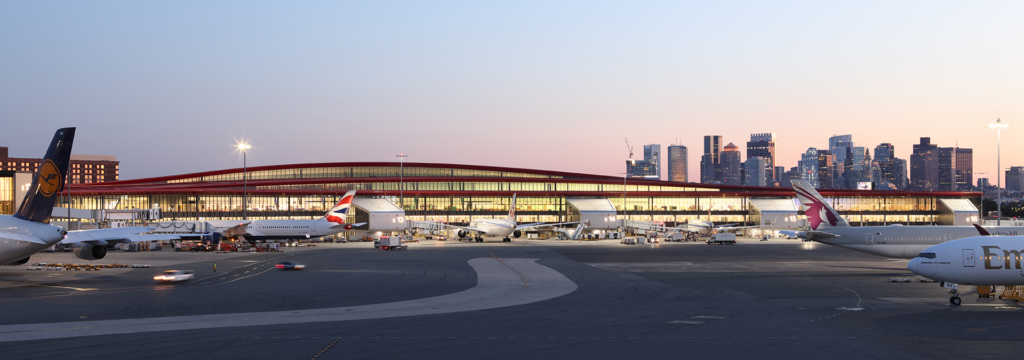
Boston Logan’s layout, while efficient in clear weather, becomes constrained when wind directions fluctuate during a storm. If the wind favors a runway configuration that lacks high-speed turnoffs or shares an arrival path with other major airports, the efficiency of the entire region drops. On Monday, the shift in surface winds necessitated a configuration change that temporarily halted all arrivals for 20 minutes, a move that immediately added hours to the total delay tally.
ECONOMIC IMPLICATIONS OF FUEL AND HOLDING
Every minute an aircraft spends in a holding pattern or on a taxiway with engines running consumes expensive Jet A fuel. During a major weather event like this, the cumulative fuel burn can reach hundreds of thousands of gallons across a single fleet. Dispatchers mitigate this by planning for “contingency fuel” and, in some cases, electing to hold aircraft at their origin airport (Gate Holds) rather than in the air.
Gate holds are more fuel-efficient and safer for crew management but increase the visible delay for the passenger. The decision to take a ground delay versus an airborne hold is a constant calculation performed by the FAA’s Command Center in Virginia. Monday’s operations leaned heavily on Ground Stops to prevent the holding stacks over Massachusetts from becoming unmanageable.
RECOVERY AND SYSTEM STABILIZATION
Stabilizing the schedule after 400 disruptions requires a multi-day effort known as the recovery phase. Airlines must ferry empty aircraft to where they are needed for the next morning’s flights and ensure crews are legally rested. Often, the day after a storm can be as difficult as the storm itself as carriers deal with the backlog of displaced passengers and out-of-position equipment.
By Tuesday morning, the focus shifts to “right-sizing” the network. This involves consolidating partially filled flights and prioritizing the movement of crews to their designated bases. The success of this recovery depends on how effectively the airlines utilized the waiver period on Monday to clear out the passenger backlog before the weather cleared.
STRATEGIC TAKEAWAYS FOR OPERATIONS
The disruptions at Logan serve as a case study in modern IRROPS management. The transition toward data-driven proactive cancellations and the early issuance of travel waivers has become the industry standard for mitigating the chaos of East Coast weather. While frustrating for the traveling public, these tactical decisions are what prevent a localized storm from turning into a nationwide multi-day network collapse.
For additional operational briefings and the latest Airline News, monitor our dedicated aviation intelligence category.