


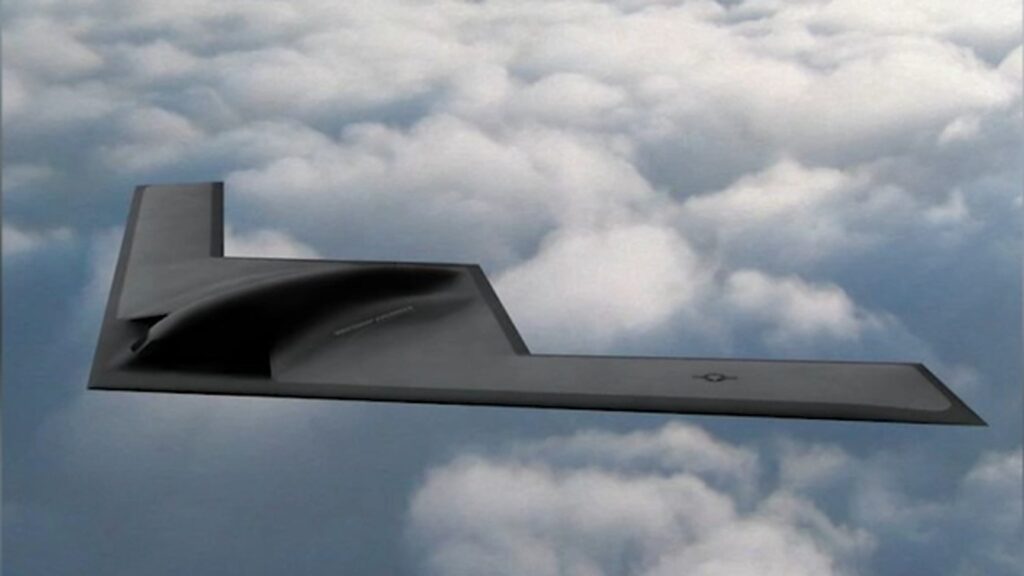
The Department of the Air Force has formalized a strategic agreement with Northrop Grumman to expand the production capacity of the B-21 Raider stealth bomber program.
This industrial escalation is supported by $4.5 billion in previously authorized funding, intended to bolster the manufacturing infrastructure required to maintain a higher annual delivery rate than initially projected. As global security dynamics shift toward long-range deterrence, the Air Force is prioritizing the rapid fielding of this sixth-generation platform to ensure technological overmatch in contested environments.
The B-21 Raider program represents the first major overhaul of the U.S. strategic bomber fleet since the conclusion of the Cold War. Developed under a strict security shroud at Northrop Grumman’s Palmdale facility, the aircraft is designed to replace the aging B-1B Lancer and the B-2 Spirit.

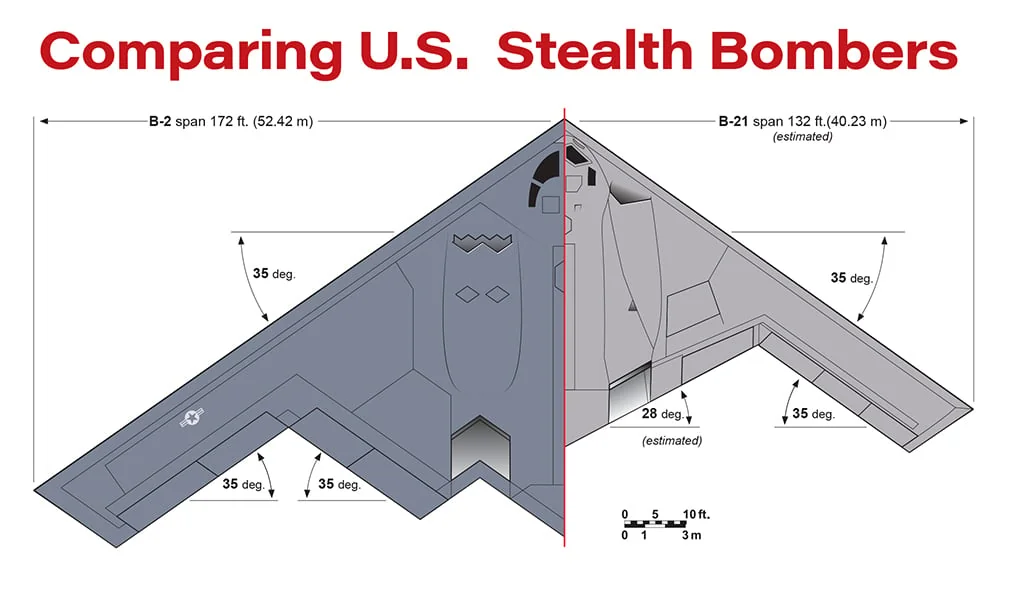
While the B-2 was limited to a production run of only 21 airframes due to shifting budgetary priorities in the 1990s, the B-21 is slated for a minimum production run of 100 units, creating a more sustainable and economically viable fleet structure.
- Expansion Funding: $4.5 billion (previously authorized appropriations).
- Production Increase: 25 percent increase in projected annual aircraft output.
- Target Fleet Size: Minimum of 100 B-21 Raider airframes.
- Projected Deployment: Initial Operational Capability (IOC) at Ellsworth AFB by 2027.
- Unit Cost Target: Approximately $692 million per aircraft (FY2022 dollars).
The decision to expand capacity by 25 percent indicates a shift from low-rate initial production (LRIP) toward a more aggressive manufacturing tempo. This adjustment is not merely a reaction to procurement schedules but a calculated move to mitigate supply chain volatility and industrial bottlenecks.
By front-loading the manufacturing infrastructure, the Air Force reduces the long-term risk of parts shortages that have historically plagued advanced airframe programs like the F-22 and B-2.
The dual-use nature of certain aerospace composites remains a focal point in broader Airline News circles, as civilian and military sectors compete for the same high-performance raw materials. This competition underscores the necessity for the B-21 program to secure its supply lines through long-term industrial commitments.

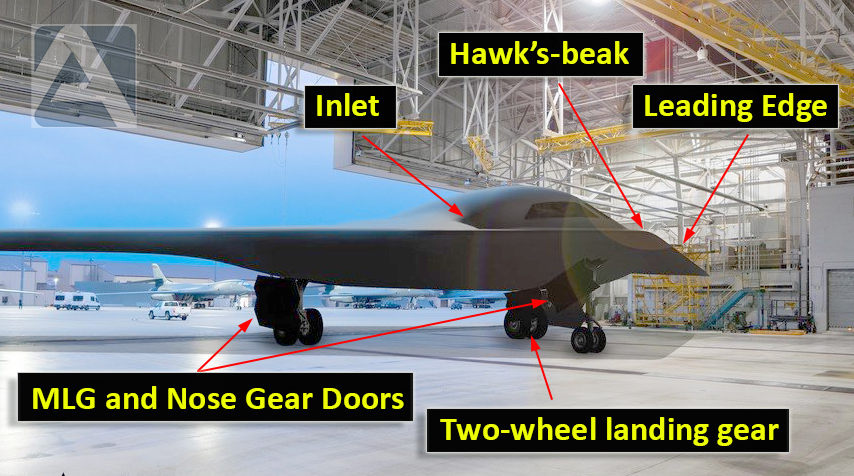
The integration of advanced stealth coatings and composite structures requires a specialized workforce and a facility footprint that cannot be easily scaled without significant capital injection, which this $4.5 billion allocation addresses directly.
Strategically, the B-21 serves as a centerpiece of the United States’ triad of nuclear deterrence, though its conventional capabilities are equally critical. The platform features an open-systems architecture, which allows for rapid software updates and modular hardware integration.
Unlike previous generations where a mission computer upgrade might take years of recertification, the B-21 is built to ingest new code and sensor suites with the same agility as modern commercial cloud systems, ensuring the aircraft remains relevant against evolving radar technologies.
From a logistics perspective, the selection of Ellsworth Air Force Base in South Dakota as the first primary operating base reflects a broader infrastructure strategy. The Air Force is investing heavily in low-observable maintenance hangars and specialized environmental control systems required to preserve the stealth characteristics of the fleet.
This regional investment stimulates the local aerospace economy and provides a blueprint for subsequent deployments at Whiteman Air Force Base and Dyess Air Force Base, which are slated for future transitions.
The operational implication of an accelerated B-21 rollout is the potential for an earlier retirement of the B-1B and B-2 fleets. Maintaining three distinct heavy bomber types—four, if including the B-52 Stratofortress—creates a logistical burden on the global strike command.
Consolidating the stealth fleet into a single, modernized platform reduces the diversity of the spare parts inventory and simplifies the training requirements for maintenance personnel, leading to higher mission-capable rates across the entire long-range strike enterprise.
Furthermore, the B-21 is designed as a digital platform from its inception. The use of digital twins during the design and flight-testing phases has allowed engineers to identify and correct structural fatigue points before they manifest in the physical fleet.
This predictive maintenance capability is expected to significantly lower the cost per flying hour compared to the B-2, which currently requires extensive man-hours for every hour spent in the air. The economic viability of the B-21 hinges on this transition from reactive to proactive fleet management.
As flight testing continues at Edwards Air Force Base, the data gathered is being fed directly back into the expanded production line. This iterative feedback loop ensures that the aircraft coming off the line in 2026 and 2027 incorporate the most recent telemetry adjustments and sensor calibrations.
The Air Force’s willingness to expand production capacity mid-testing signals high confidence in the airframe’s performance and its ability to penetrate advanced integrated air defense systems (IADS) that utilize multi-spectral sensor arrays.
Technological networking is another pillar of the B-21’s operational viability. The aircraft is intended to function as a high-altitude data node, connecting with unmanned collaborative combat aircraft (CCA) and satellite networks to provide a comprehensive battlefield picture.
By acting as a command-and-control hub while remaining nearly invisible to enemy radar, the B-21 expands the lethality of the entire joint force, not just its own internal payload. This role as a “quarterback” in contested airspace necessitates the larger fleet size currently being funded.
The manufacturing expansion also serves as a deterrent signal to global competitors. By demonstrating the industrial capacity to mass-produce stealth technology at scale, the U.S. signals its intent to maintain a persistent presence in contested maritime and continental theaters.
The ability to surge production capacity is a core component of industrial statecraft, ensuring that attrition in a high-intensity conflict can be offset by a robust and active manufacturing pipeline.
In the coming decade, the success of the B-21 program will be measured by its ability to stay on schedule and within the projected cost-per-unit window. While the expansion of capacity requires significant upfront investment, the long-term savings generated by a modernized, more maintainable fleet are expected to provide a higher return on investment for the Department of Defense.
The transition from legacy systems to the Raider marks the beginning of a new era in strategic aviation where digital integration is as vital as physical stealth.
For additional operational briefings, Defense and the latest Airline News, monitor our dedicated aviation intelligence category.
FAQ – B-21 Raider Production Expansion
What is the B-21 Raider?
The B-21 Raider is the United States’ next-generation stealth strategic bomber developed by Northrop Grumman for the United States Air Force. It is designed to penetrate advanced air defense systems and conduct both nuclear and conventional long-range strike missions.
Why is the Air Force expanding B-21 production capacity?
The Department of the Air Force is investing $4.5 billion in previously authorized funding to expand manufacturing infrastructure and increase production output by roughly 25%. This helps accelerate deployment and mitigate supply-chain bottlenecks.
How many B-21 bombers will be produced?
The Air Force plans to procure at least 100 B-21 Raider aircraft, though analysts believe the total could increase depending on global threat dynamics and future force structure requirements.
When will the B-21 enter operational service?
Initial Operational Capability (IOC) is expected around 2027 at Ellsworth Air Force Base.
Which aircraft will the B-21 replace?
The Raider will gradually replace aging strategic bombers including the Rockwell B‑1B Lancer and the Northrop B‑2 Spirit.
What is the expected cost of the B-21?
The program targets an average procurement cost of approximately $692 million per aircraft (FY2022 dollars).
What technologies make the B-21 unique?
The B-21 integrates several advanced features including:
- Next-generation stealth architecture
- Open-systems mission architecture
- Digital twin engineering and predictive maintenance
- Networked command-and-control capability with autonomous systems
Where is the B-21 being manufactured?
The aircraft is primarily developed and produced at Northrop Grumman’s facility in Palmdale, California, a historically classified center for advanced aerospace programs.