


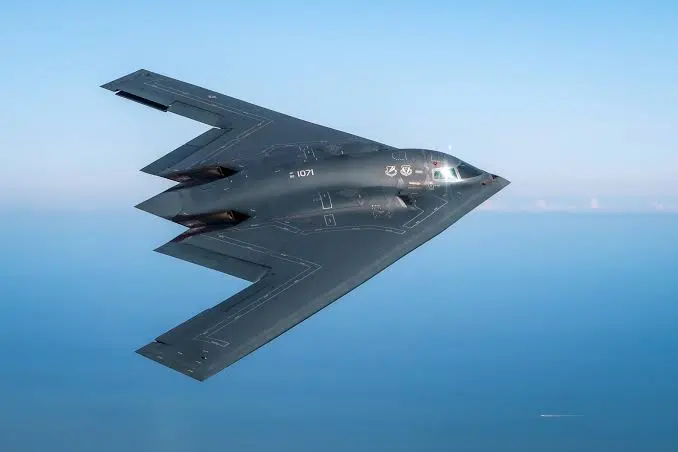
The B-2 Bomber is more than an aircraft , more than one could think of, it is a strategic signal, a technological marvel, and one of the most expensive military platforms ever built. Designed during the Cold War but still central to 21st-century deterrence strategy, the B-2 Spirit remains the world’s most advanced stealth bomber in operational service. Even decades after its first flight, it continues to redefine what air dominance means in an era of advanced radar.
Developed by Northrop Grumman for the United States Air Force, the B-2 was conceived in the late 1970s as a nuclear deterrent platform capable of penetrating Soviet air defenses. Its first public flight occurred in 1989, and it entered service in 1997. Today, it operates from Whiteman Air Force Base, its primary home. It hold significance in the most unique ways.

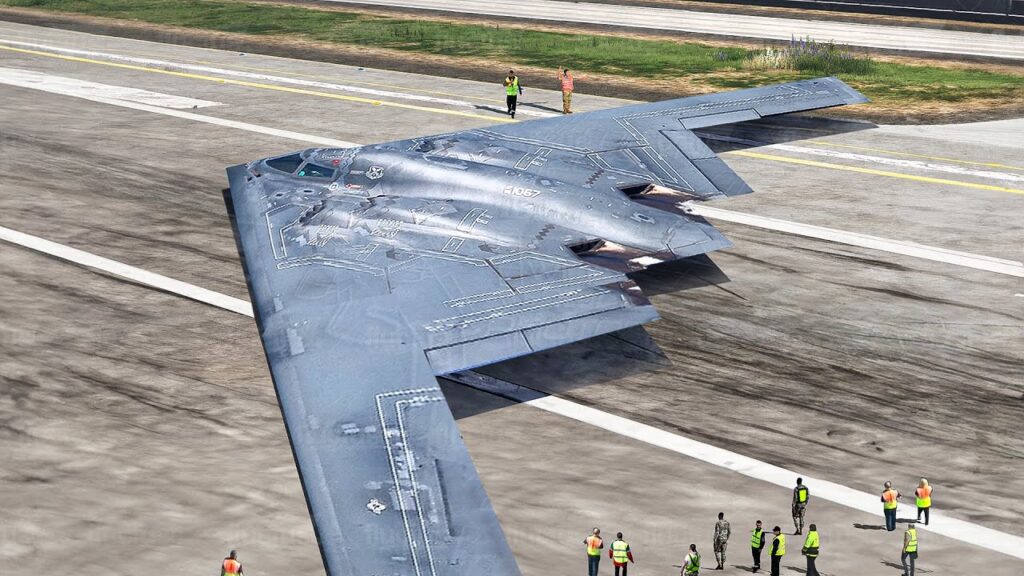
At first glance, the B-2 Bomber appears almost alien a smooth, bat-shaped “flying wing” without a traditional fuselage or tail. This design is deliberate.
- Wingspan: 172 feet (52.4 meters)
- Length: 69 feet
- Height: 17 feet
- Maximum Takeoff Weight: ~170,600 kg (376,000 lbs)
- Top Speed: High subsonic (~630 mph / 1,010 km/h)
- Unrefueled Range: ~6,000 nautical miles (11,000 km)
With aerial refueling, the aircraft can strike any where on the earth within hours representing its one of the best features.
The B-2 Bomber is often called the most expensive aircraft ever built.
- Total Program Cost: Approx. $44–45 billion (1990s dollars)
- Unit Procurement Cost: Around $737 million per aircraft (1997 dollars)
- Estimated Cost Per Aircraft Including R&D: Over $2 billion each
Originally, the U.S. planned to build 132 units. After the Cold War ended, production was cut to just 21 aircraft. Its possses every componenet what an aircraft needs and can do almost everything thus the cost justifies it.
Talking about the weapons and capability:
The B-2 Bomber is dual-capable, meaning it can carry both conventional and nuclear weapons.
Payload Capacity:
- Up to 40,000 pounds (18,000 kg) of ordnance
Notable Capabilities:
- Nuclear gravity bombs (B61, B83 variants)
- Precision-guided munitions (JDAM)
- Massive Ordnance Penetrator (for hardened underground targets)
During operations in Kosovo (1999), Iraq (2003), Afghanistan, and Libya (2011), the B-2 flew intercontinental missions directly from Missouri striking targets and returning without forward basing.
The real power of the B-2 Bomber is not only in the damage it can cause, but in the wars it helps prevent.
Because it can slip past advanced air defense systems, including modern surface-to-air. The aircraft’s stealth design makes it extremely difficult to detect, which means no adversary can be completely sure they are safe from it. That uncertainty itself becomes a powerful form of deterrence.
In nuclear strategy, survival matters as much as strength. Fixed missile silos sit in known locations and can become targets.
Despite all the extraordinary features, the B-2 Bomber is not invincible.
- Stealth coatings require intensive maintenance.
- Hangars must be climate-controlled.
- Per flight hour operating cost is extremely high (estimated tens of thousands of dollars).
- Fleet size is small, limiting sustained high-intensity deployment.
More than 25 years after entering service, the B-2 Bomber continues to represent technological audacity. It was born in secrecy, matured in post-Cold War uncertainty, and now operates in an era of renewed great-power competition.
In an age dominated by drones and hypersonic missiles, the B-2 proves that strategic airpower is not obsolete it is evolving.
The aircraft’s greatest strength may not be its invisibility, but its symbolism. When a B-2 deploys forward to Europe or the Indo-Pacific, it sends a clear geopolitical message: reach and readiness.