



Air India Group has commenced a structured, three-phase implementation of fuel surcharges across its domestic and international networks. This fiscal pivot responds to a sharp appreciation in Aviation Turbine Fuel (ATF) prices, catalyzed by intensifying geopolitical instability in the Gulf region since early March 2026.
Fuel expenditures currently represent approximately 40% of the group’s total operating costs. This baseline is further strained by the specific taxation environment in India, where state-level Value Added Tax (VAT) and Central Excise Duty create a compounding effect on procurement costs at major hubs like Delhi and Mumbai.
Management has confirmed that the surcharge will apply to all segments, including those operated by low-cost subsidiary Air India Express. This move signals a broader industry trend where carriers must prioritize liquidity and solvent operations over aggressive price competition in a volatile energy market.

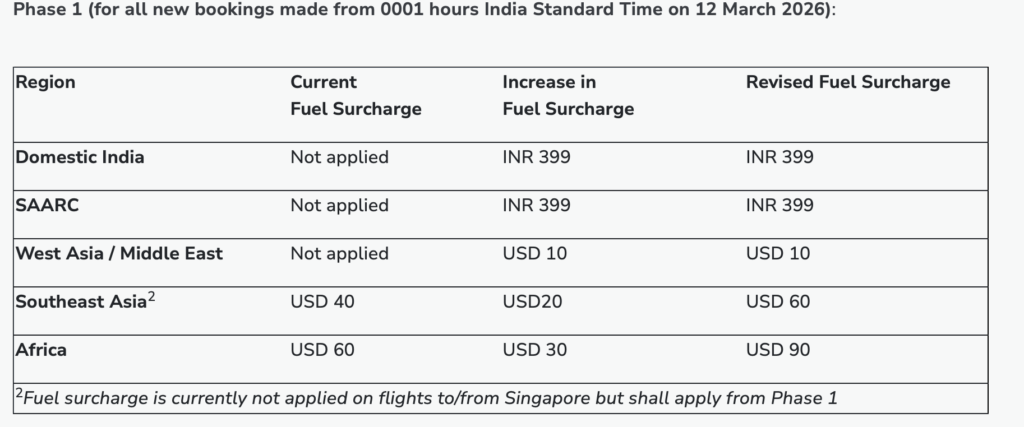
Historical data indicates that Indian carriers operate under some of the highest fuel cost environments globally. Unlike many international jurisdictions that treat jet fuel as a mid-stream industrial input with minimal tax, Indian states often view ATF as a primary revenue generator through VAT ranging from 1% to 29%.
This fiscal structure makes domestic carriers particularly vulnerable to global supply shocks. When Brent crude fluctuates due to regional conflicts, the impact on an Indian airline’s bottom line is immediate and amplified by these fixed ad valorem tax percentages.
- ATF Cost Component: 38.4% to 41.2% of Total Operating Expenses.
- State VAT Impact: 25% in New Delhi (DEL); 20% in Mumbai (BOM).
- Implementation Phases: Phase 1 (Short-haul), Phase 2 (Mid-haul), Phase 3 (Long-haul/Ultra-long-haul).
- Brent Crude Benchmark: Sustained levels above $115 per barrel since March 1, 2026.
The phased rollout allows the group to adjust seat-load factors and monitor demand elasticity in real-time. By applying the surcharge incrementally, Air India aims to mitigate a sudden drop in passenger bookings while ensuring that long-haul routes—which consume the highest volume of fuel—remain economically viable.

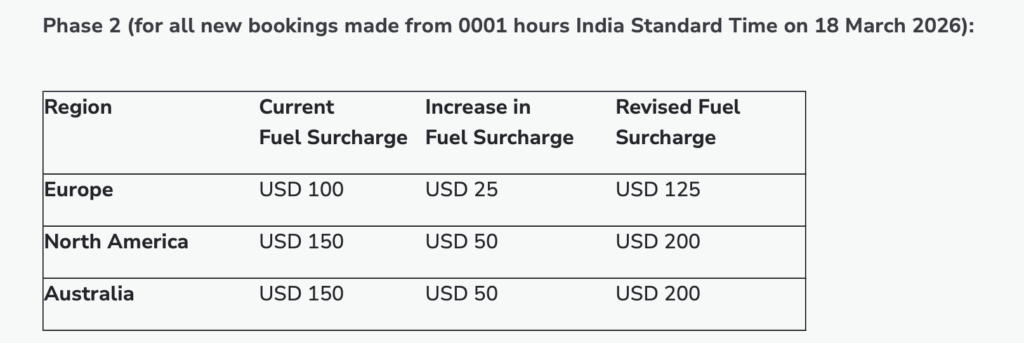
From a fleet perspective, the recent induction of Airbus A350 and Boeing 737 MAX aircraft provides a slight buffer through improved fuel burn efficiency. However, even these technological gains are insufficient to neutralize a 30% surge in raw fuel costs coupled with domestic tax burdens.
Analytically, this move reveals a shift from market-share acquisition to yield-protection. Air India is signaling to the market that it will no longer absorb external cost spikes at the expense of its balance sheet, a necessity for its long-term fleet modernization program.
Comparatively, regional competitors are likely to follow this pricing trajectory. In the current Airline News cycle, observers are tracking how these surcharges might influence the broader recovery of the Indian aviation sector as it navigates the 2026 fiscal year.
The operational implication for passengers involves a transparent but firm increase in the ‘YQ’ or ‘YR’ code on tickets. This transparency is vital for regulatory compliance with the Directorate General of Civil Aviation (DGCA), which requires clear disclosure of unbundled fees.
Furthermore, the inclusion of Air India Express in this mandate suggests that the low-cost carrier (LCC) segment is facing unprecedented pressure. LCCs typically operate on razor-thin margins, and the inability to hedge fuel effectively against sudden geopolitical shifts necessitates immediate surcharge application.
Strategic fuel hedging remains a complex challenge in the current environment. While some international carriers lock in prices months in advance, the sheer volatility of the Gulf situation has rendered many short-term hedges ineffective, forcing airlines toward direct cost-pass-through mechanisms.
Air India’s decision to execute this in three phases also serves as a risk management tool. It prevents a total system shock to the Global Distribution Systems (GDS) and allows corporate travel desks to adjust their budgets for the upcoming quarter without catastrophic disruption.
Industry analysts expect that if Gulf tensions do not subside by the second quarter of 2026, the surcharge may become a permanent fixture of the fare structure. This would mirror the post-2008 era when fuel surcharges were integrated into baseline pricing models across most legacy carriers.
Regulatory scrutiny will remain high as the DGCA monitors whether these surcharges accurately reflect the actual increase in fuel costs. Airlines must provide data-backed justifications for these additions to avoid allegations of predatory pricing or unfair trade practices under Indian competition law.
As the group transitions through Phase 2 and Phase 3, the impact on international transit traffic through the Delhi hub will be a critical metric. High fuel costs could potentially drive price-sensitive transit passengers toward Middle Eastern hubs, which may benefit from lower localized fuel costs.
Despite these challenges, the group’s commitment to its transformation plan remains intact. The revenue generated from these surcharges is earmarked specifically for fuel procurement, ensuring that other capital expenditures for cabin interior upgrades and technology stacks are not cannibalized.
For additional operational briefings and the latest Airline News, monitor our dedicated aviation intelligence category.