

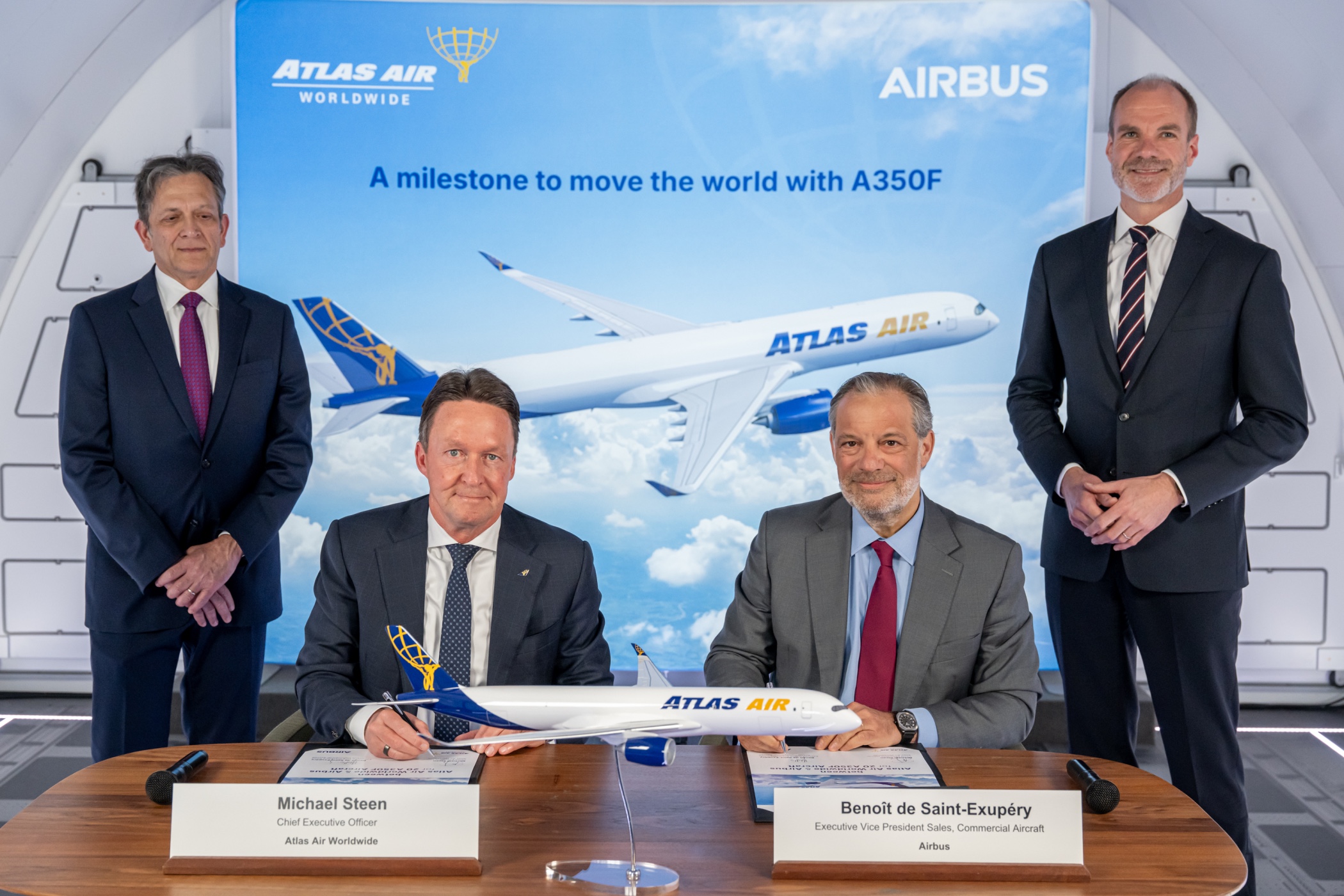
Atlas Air Worldwide has finalized a definitive order for 20 Airbus A350F aircraft, establishing itself as the world’s premier customer for the upcoming freighter variant. This acquisition represents a foundational shift in the carrier’s fleet strategy as it prepares for a post-747-400F operational environment.
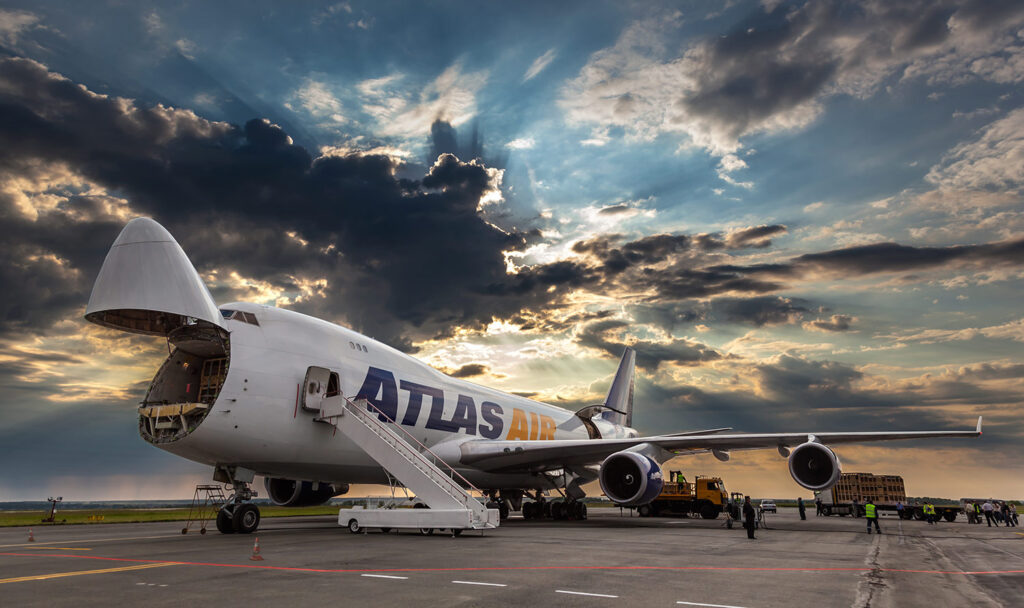
Historically, Atlas Air has functioned as the primary steward of the Boeing 747 platform, maintaining the world’s largest fleet of the iconic ‘Queen of the Skies.’ As production for the 747-8F concluded and older 747-400F airframes approached the end of their economic lifecycles, the carrier required a high-capacity, long-range alternative.
Total A350F Order: 20 Units.
Maximum Payload: 111 Tonnes.
Fuel Efficiency Gain: 40% reduction in burn vs. 747-400F.
Range: 4,700 Nautical Miles.
Compliance: Meets 2028 ICAO CO2 Standards.
The A350F order addresses the looming capacity gap created by the retirement of quad-engine freighters without sacrificing the volume required for dense e-commerce cargo. Unlike the Boeing 777-8F, which leverages a metal wing and legacy design elements, the A350F features a composite-heavy structure and the Rolls-Royce Trent XWB-97 engine, optimized specifically for high-cycle freighter operations.
This transition will require Atlas Air to invest heavily in new maintenance infrastructure and pilot training programs, moving away from a Boeing-centric logistics model. The selection of the A350F is deeply rooted in upcoming regulatory shifts.
The International Civil Aviation Organization (ICAO) has set a 2028 deadline for aircraft CO2 emissions standards, which effectively ends the production of the current-generation Boeing 767 and 777 freighters. By securing 20 delivery slots for the A350F, Atlas Air is future-proofing its global network against these stringent environmental mandates.
This fleet renewal strategy is a critical update for those following Airline News within the logistics and supply chain sectors, as it dictates the cost structure of heavy-lift capacity for the next three decades. The A350F offers a unique advantage in its commonality with the A350-1000 passenger variant. Approximately 70% of the parts are interchangeable, which simplifies the supply chain for spare components.
For a global wet-lease operator like Atlas, this reliability is paramount for maintaining high utilization rates across diverse geographic hubs. The aircraft’s 111-tonne payload capacity is roughly equivalent to the 747-400F, yet it achieves this with two fewer engines and significantly lower landing fees at weight-sensitive airports. Strategic forecasting suggests that the trans-Pacific and Asia-Europe trade lanes will remain the primary drivers of demand for Atlas Air.
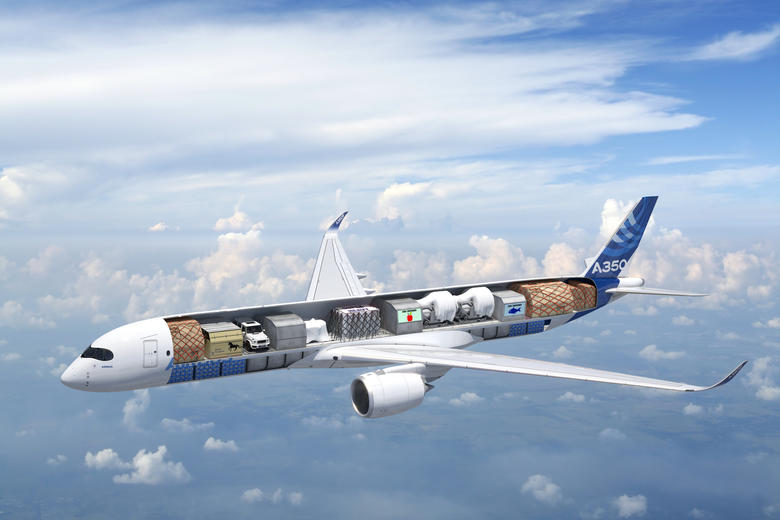
The A350F’s range allows for direct flights between major logistics hubs in Shenzhen, Seoul, and the United States with full payloads. This performance envelope reduces the need for technical stops at intermediate hubs like Anchorage, thereby decreasing cycle times and operational complexity. Furthermore, the A350F features an extra-large main-deck cargo door, which was specifically designed to accommodate the oversized engines of the next generation of aircraft, making it an ideal choice for the aerospace logistics sector.
From an economic perspective, the 40% improvement in fuel efficiency is more than an environmental gesture; it is a hedge against volatile energy prices. Fuel typically accounts for 30% to 40% of an airline’s operating expenses.
By slashing this cost, Atlas can offer more competitive ACMI (Aircraft, Crew, Maintenance, and Insurance) rates to its blue-chip customers, including Amazon, DHL, and Kuehne + Nagel. This contract stability is essential for the long-term viability of the widebody freighter market.
The A350F also introduces advanced digital cockpit capabilities that improve situational awareness and safety. The onboard systems are designed for seamless integration with modern air traffic management protocols, which will become increasingly important as global airspace becomes more congested.
This technological edge ensures that Atlas Air remains the preferred partner for government and military charters that require high-precision logistics in challenging environments. As the cargo industry evolves, the distinction between legacy operators and modern innovators will depend on fleet composition.
The move to the A350F demonstrates Atlas Air’s willingness to disrupt its own internal status quo to maintain its market-leading position. While the 747 will always be part of the Atlas legacy, the A350F is the engine of its future growth.
For additional operational briefings and the latest Airline News, monitor our dedicated aviation intelligence category.
 Anshum Raj