

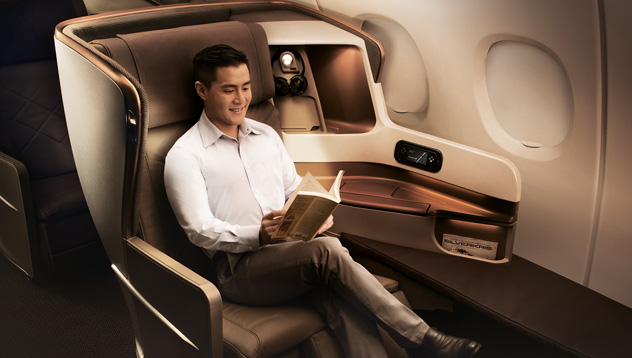
Everyone’s been there. You’re sitting in economy, knees pressed against the seat in front, and a thought surfaces: what if I just asked at check-in? Maybe there are empty business class seats. Maybe they’ll do a deal. Maybe this is finally the flight where you accidentally end up in a lie-flat bed for the price of a restaurant dinner.
Here’s the honest answer: upgrading at check-in doesn’t automatically cost more. But it doesn’t automatically cost less either. The price you see is the result of an algorithm that has been running calculations on your flight for weeks — and by the time you reach the desk, it knows something very specific: exactly how many seats are left and exactly how much demand exists right now.
This guide breaks down how airline upgrade pricing actually works, what real numbers look like across major carriers in 2026, and the smartest window to upgrade if you want the best shot at a deal.
First, Understand Why Upgrade Prices Are Never Fixed
The biggest misconception about business class upgrades is that airlines have a set price. They don’t. Every major carrier — Delta, United, American, British Airways, Emirates — uses dynamic pricing, a revenue management system that adjusts upgrade costs in real time based on supply and demand.
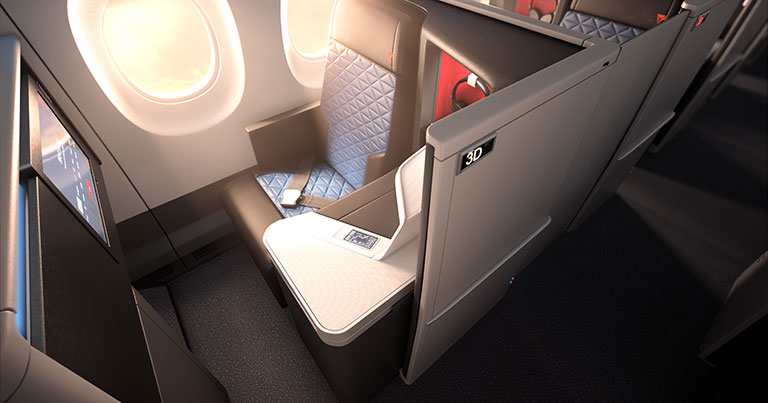
Think of it like this: a business class seat is a perishable asset. The moment that aircraft pushes back from the gate, any empty premium seat is worth exactly zero to the airline. The entire pricing system before departure is one extended attempt to extract maximum value from that seat before it becomes worthless.
The algorithm considers four things simultaneously: how many business class seats remain unsold, how full the economy cabin is, historical booking patterns for this route and day, and what loyalty programme upgrades have already cleared. By the time you check in — typically 24 hours before departure — all of those variables have converged into one number: the price you’re offered.
That number could be a bargain. It could be eye-watering. And here’s the frustrating part — there’s no logical pattern you can reliably predict in advance.
Real Numbers: What Upgrades Actually Cost in 2026
Upgrade pricing examples — same routes, different timing windows (2026 data)
| Airline | Route | 3 days before | At check-in | Verdict |
| Delta | DFW → MIA (domestic) | $180 | $350 | Check-in costs MORE |
| Delta | JFK → LAX (high-demand) | $250 | $700+ | Check-in costs MUCH MORE |
| American | DFW → MIA (midweek) | $180 | $180 | Same price |
| British Airways | LHR → JFK (Club World) | $1,100 | $900–$1,400 | Variable — can go either way |
| BA (Avios bid) | LHR → long-haul | ~24,000 pts | Often unavailable | Book early with points |
| Delta | JFK → Paris (low demand) | $900 | $600–$700 | Check-in CHEAPER |
| Southwest | Any domestic | N/A | N/A | No business class |
| SWISS / Lufthansa | Any long-haul | Fixed price offer | $0 possible T-24 | T-24 window = free chance |
The Three Scenarios That Determine Your Price
Scenario 1: High demand, few seats left — you will pay more at check-in.
This is the most common situation on popular routes — JFK to LAX, ORD to SFO, any transatlantic flight on a Monday morning. Elite frequent flyers have already cleared their complimentary upgrades days before departure. By the time check-in opens, there might be two seats left in business. The algorithm sees scarcity, flags high demand, and prices accordingly. What was $250 three days ago is now $700. This is not a coincidence. It is the system working exactly as intended.
Scenario 2: Low demand, cabin half-empty — check-in could be your best deal.
Off-peak routes, midweek flights, leisure destinations in shoulder season. If the airline has eight business class seats unsold at T-24, it would genuinely rather sell them at $400 than let them fly empty. These are the moments when check-in upgrade offers undercut the advance price. It happens — but according to passenger rights group Clever Journey, it occurs on only about one in every five to ten flights. Not reliable enough to build a strategy around.
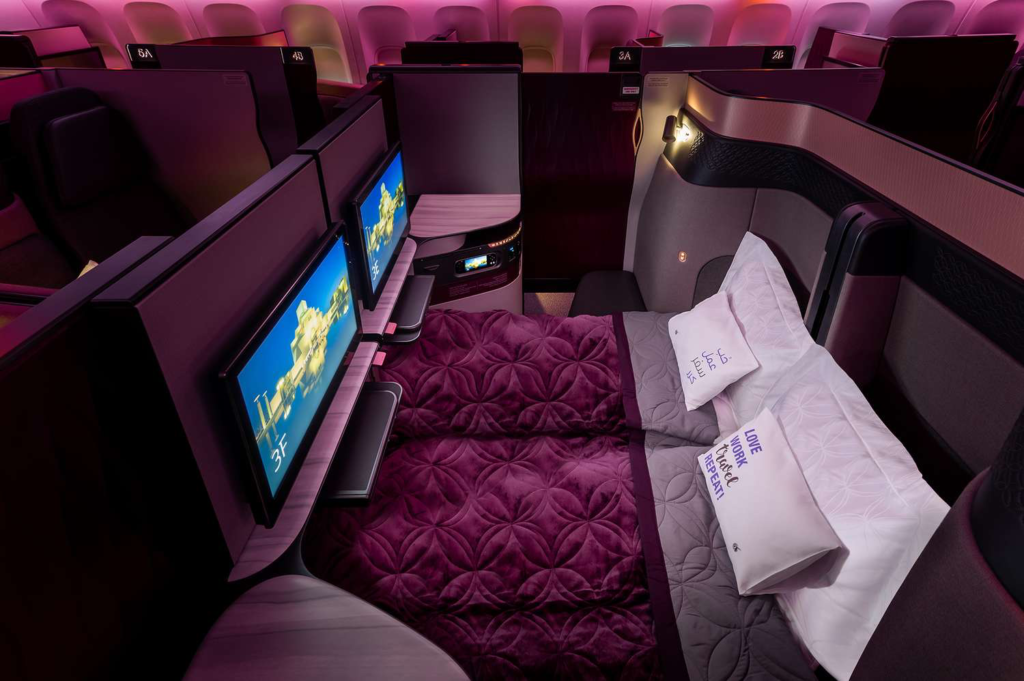
Scenario 3: European carriers, T-24 window — the closest thing to a system.
SWISS, Lufthansa, and other carriers in the group recalculate cabin loads at exactly 24 hours before departure. This is the T-24 window — the moment when unsold premium seats may appear as discounted or even complimentary upgrade offers during online check-in. It’s not a hack. It’s an operational reset built into the revenue system. If you’re flying these carriers and your loyalty profile is linked, checking in at the earliest possible moment — exactly at T-24 — gives you the best shot at seeing a discounted offer before it’s gone.
Why Your Loyalty Status Changes Everything
Here’s something most passengers don’t realise until it’s too late: by the time you reach the check-in desk hoping for an upgrade, the airline has often already given most of those seats away for free — to people who earned them.
Delta Diamond Medallion and Platinum members are eligible for complimentary domestic upgrades that typically process days before departure. American’s Executive Platinum members follow the same logic with AAdvantage. United’s 1K members often clear into Polaris business on international flights before the rest of the cabin even starts filling up.
The practical consequence for non-elite travellers: you’re shopping for leftover seats in a cabin that’s already been partially filled by loyalty upgrades. Fewer seats available means higher prices. It’s not personal — it’s just the order of the queue.
If upgrades matter to you, even a mid-tier loyalty status changes the math significantly. An American AAdvantage Gold member and a non-member checking in for the same flight may see entirely different upgrade prices — or the non-member may see no offer at all.
So When Should You Actually Upgrade? The Smart Timing Guide
Five Practical Things to Do Before Your Next Flight
- Check daily: Download your airline’s app and check the ‘manage booking’ section daily from one week out — upgrade offers appear and disappear without notification.
- Book direct: Book directly with the airline, never through a third-party site — OTA tickets often have sync issues that make upgrade offers invisible or unavailable.
- Link your loyalty number: Link your frequent flyer number to the booking immediately — even basic status changes how the system prices offers to you.
- Factor in flight length: On overnight or ultra-long-haul flights, a discounted upgrade is almost always worth it — the lie-flat bed alone changes your condition on arrival.
- Bid low, not high: If you bid on an upgrade (Qatar, Virgin, Lufthansa all offer bid systems), bid near the minimum — accepted bids have been confirmed at the lowest possible level on multiple documented occasions.
The myth that check-in upgrades are always cheaper is exactly that — a myth. So is the reverse. The honest answer is that upgrade pricing is dynamic, unpredictable, and designed by an algorithm that knows far more about your flight than you do.
What you can control is your timing and your information. Check your booking app daily from one week out. Fly with elite status if upgrades are a priority. On European carriers, set your alarm for the T-24 window. And if a price appears that feels fair for the route and the experience — take it. The same seat could cost twice as much two hours later.
The seat doesn’t care when you buy it. The system only cares how much demand exists when you try.
That’s the only rule that actually matters.
 Joseph Atrin
  Martin hope