

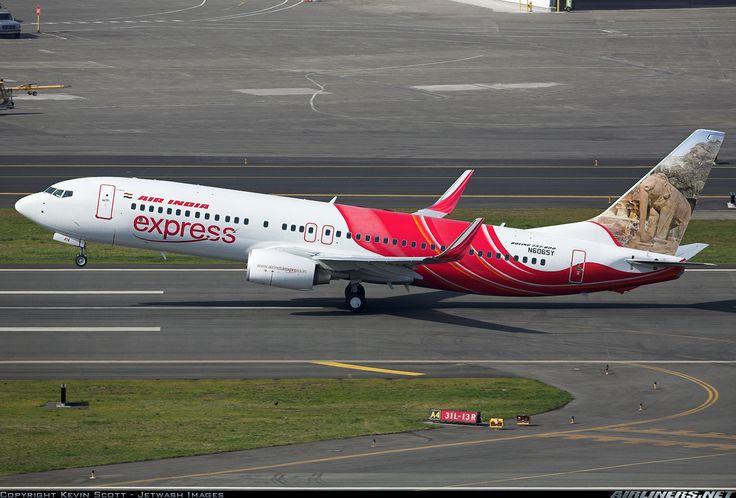
The humid air of Hyderabad’s Begumpet Airport traditionally hums with the optimistic jargon of regional aviation, but at Wings India 2026, the atmosphere carried the weight of a fundamental shift in the global long-haul architecture. On the sidelines of Asia’s premier aviation gathering, Air India quietly but decisively altered its trajectory, signalling that the future of its international expansion may not rely solely on the massive wings of widebody giants. By converting 15 of its existing Airbus A321neo orders into the high-performance A321XLR (Extra Long Range) variant, the Tata-owned carrier has moved from a philosophy of sheer capacity to one of surgical precision. This pivot represents more than a fleet update; it is a calculated gamble on the viability of long, thin routes that have historically been the Achilles’ heel of the Indian flag carrier.
For decades, the narrative of Indian international travel was a binary choice: the efficiency of narrowbody jets for domestic hops or the heavy operational costs of twin-aisle aircraft for anything beyond a five-hour radius. The conversion announced this week effectively shatters that paradigm. The A321XLR, capable of traversing up to 4,700 nautical miles, grants Air India the range of a widebody with the lean economics of a single-aisle jet. For an airline currently deep into its five-year transformation plan, the ability to bypass congested mega-hubs and connect secondary Indian cities directly to destinations in Central Europe and Southeast Asia is the missing piece of the Vihaan.AI puzzle.
The logistical heart of this strategy lies in the numbers. When Air India finalized its historic 470-aircraft order in 2023, the focus was on reclaiming the sky through volume. However, as the 2026 aviation landscape has matured, the pressure to maintain high load factors on massive A350s and Boeing 777s has become a double-edged sword. Each A321XLR delivery, now slated for the 2029-2030 window, offers a fuel burn reduction of roughly thirty percent per seat compared to previous-generation competitors. By committing to fifteen of these specialized units, Air India is positioning itself to harvest demand in markets that were previously deemed marginal. A route from a city like Pune or Ahmedabad to a European capital like Prague or Athens might not justify 300 seats a day, but it becomes highly lucrative when serviced by a 180-seat narrowbody with long-haul amenities.
This move is also a reactive masterstroke in the ongoing chess match with low-cost rivals. Only months prior, IndiGo began its own long-haul assault with the A321XLR, specifically targeting the Delhi-to-Greece corridor. Air India’s response, however, seeks to differentiate through a superior cabin experience. While the competition focuses on high-density configurations, internal reports suggest Air India is eyeing a sophisticated three-class layout for its XLR fleet. This includes a full-flat business class seat that mirrors the comfort of its widebody fleet, ensuring that the eight-to-ten-hour journey does not feel like a compromise for the premium traveller. By doing so, the airline is attempting to capture the corporate and high-end leisure segments that have long been lost to Middle Eastern carriers who force passengers through time-consuming hub transfers.
Stakeholders within the Air India leadership have emphasized that this conversion is part of a broader synergy between its short-haul and long-haul networks. Chief Executive Campbell Wilson noted that the addition of these long-range single-aisle jets allows the airline to test international markets with significantly lower financial exposure. If a route shows explosive growth, it can eventually be graduated to a widebody aircraft; if it remains a niche high-yield sector, the A321XLR can continue to serve it sustainably. This flexibility is supported by the airline’s concurrent announcement of thirty additional Boeing 737 MAX jets, including the larger MAX 10. The combined effect is a fleet that can scale up or down with almost surgical efficiency, responding to seasonal demand shifts that often render rigid widebody schedules unprofitable.
Industry analysts observe that the timing of this announcement at Wings India 2026 serves a dual purpose: it reaffirms Air India’s commitment to the Airbus partnership while signalling to Boeing that it remains an aggressive customer for narrowbody capacity. The operational commonality between the existing A321neo fleet and the incoming XLRs also simplifies pilot training and maintenance logistics, a critical factor for an airline that has struggled with legacy infrastructure in the past. The joint venture with Airbus for a state-of-the-art pilot training facility further underscores the long-term nature of this commitment.
Looking ahead, the projections for Air India’s international footprint are ambitious. By the dawn of the next decade, the carrier expects to have a formidable sub-fleet of extra-long range narrowbodies capable of reaching as far as Perth in Australia or Helsinki in the north, all while operating out of secondary hubs that avoid the slot constraints of Delhi and Mumbai. This democratization of direct international travel is the ultimate goal. It shifts the power from global hubs back to the point of origin, potentially transforming the way millions of Indians access the world.
The conclusion to be drawn from the Hyderabad announcement is clear: Air India is no longer content with being a participant in the global aviation market; it is actively attempting to rewrite its rules. The conversion of these fifteen aircraft is a testament to an airline that has found its strategic footing. By embracing the A321XLR, Air India has chosen a path of disciplined growth, prioritizing route resilience and passenger convenience over the vanity of large aircraft. As these jets begin to enter service in 2029, the true measure of this strategy will be seen in the new non-stop flight paths that will soon cross continents, proving that in the modern era of aviation, the smallest planes can sometimes cast the longest shadows.
 Anshum Raj
  Vibhuuti Goyal