

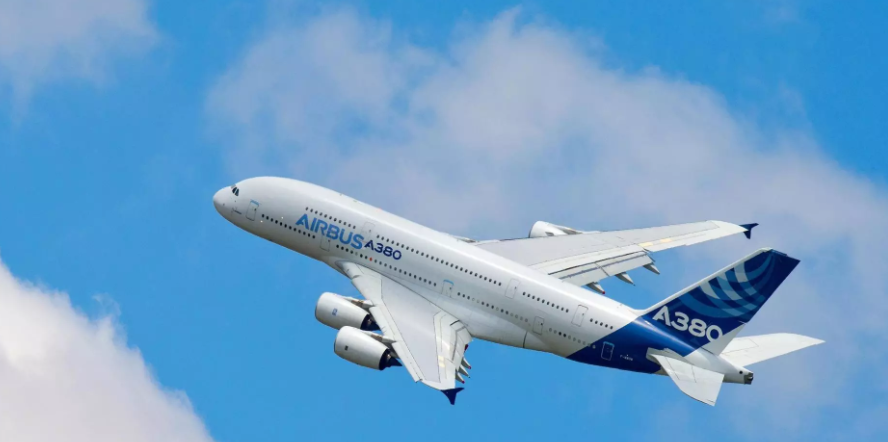
The absence of the Airbus A380 from U.S. carrier fleets stands as one of the most significant strategic divergences in modern aviation history. While international heavyweights like Emirates and Singapore Airlines defined their brands around the double-decker superjumbo, American Airlines, United Airlines, and Delta Air Lines universally rejected the airframe. This decision was not merely a preference for Boeing products but a calculated rejection of the Very Large Aircraft (VLA) operational model. The A380’s failure to penetrate the U.S. market resulted from a fundamental incompatibility with the multi-hub domestic network structure and a refusal by U.S. carriers to sacrifice frequency for capacity on transoceanic corridors.
When the Airbus A380 entered commercial service in 2007, it redefined the scale of passenger aviation. Talking about its structure, Designed as a double-deck, ultra-large aircraft capable of carrying more than 500 passengers on long-haul routes, . Yet, despite its global visibility, no U.S. airline ever operated the aircraft.
As we look into its structure, and passenger capacity it requires ICAO Code F airport infrastructure, including wider taxiways and specially designed gates.
- Max capacity: 853 passengers
- Typical capacity: 450–550
- Fuel burn: ~12 tonnes/hour
- Efficiency threshold: ~80% load factor
- Total built: 251 aircraft
- Production ended: 2021
- Typical three-class configuration: 450–550 passengers
One of the largest operators are Emirates, Singapore Airlines and Qantas etc
Talking about the absence of Airbus A380 in American fleets ,No US airlines have ever placed an order for the jet. This reflects the difference in the market demand and network strategy, rather than lack of air travel demand in the United States,
US is globally one of the largest aviations market, thus the travel demand is not a factor but the infrastructure requirements and operating economics is.
U.S. network model
Major U.S. carriers:
- American Airlines
- Delta Air Lines
- United Airlines
It prefers high-frequency flights using smaller widebody aircraft rather than concentrating passengers onto one ultra-large aircraft. Multiple daily departures,Greater schedule flexibility.
The A380 was designed for slot-constrained mega hubs more common in Europe, the Middle East, and Asia.
Let’s look into the data insights of why the airbus Airbus A380 doesn’t serve US Airlines
Capacity vs Demand Economics
- A380 typical seating: 500–615 passengers (max certified: 853)
- Boeing 777: ~314–396 passengers
- Boeing 787 Dreamliner: ~242–330 passengers
- U.S. airlines prefer higher frequency flights instead of filling 500+ seats on one departure.
Thus the passenger count isn’t a major idea to look into for US airlines but the frequency of flight.
The next one is the most major one that is the economic and operating considerations
While the A380 can be efficient per seat when near full capacity, profitability typically requires load factors above 80%. Maintaining such consistently high loads is challenging outside dense hub-to-hub corridors.
Twin-engine widebodies such as the Boeing 787 Dreamliner, Airbus A350, and Boeing 777 offer long range with lower fuel burn and improved operational flexibility.
Approximate fuel burn:
- A380: ~11–13 tonnes per hour
- Boeing 787: ~5–6 tonnes per hour
Coming to the infrastructural considerations, Operating the Airbus A380 requires ICAO Code F infrastructure, including:
- reinforced taxiways and runways
- wider gate spacing
- dual or triple boarding bridges
Whereas the major U.S. gateways such as John F. Kennedy International Airport and Los Angeles International Airport can accommodate the aircraft. However, widespread compatibility across an airline’s network is limited, reducing operational flexibility.
- Wingspan: 79.8 m → requires ICAO Code F gates
U.S. airports upgraded, but domestic hub networks do not require Airbus A380-scale capacity.
This shows the actual constraints faced
Covid-19 really affected the world in end number of ways and air transport was the most affected one, as the travel was restricted and tourism travel was almost 0, thus due to the pandemic, many airlines grounded or retired Airbus A380 fleets due to operating costs and demand uncertainty.The end of A380 production in 2021 reflected these changing priorities.
As we can see that the A380 changed long-haul travel globally but the US airlines choose practicality and flexibility over operating the worlds largest passenger jet. Its absence in US fleet is less about the demand but more about how structured the US airlines actually is.
The absence of the Airbus A380 in American Airlines’ livery was not an oversight, but a disciplined adherence to unit revenue economics over prestige. The carrier identified early that the A380 solved a problem American Airlines did not have: slot constraints at mega-hubs. Instead, AA faced the challenge of connecting a sprawling domestic network to global markets efficiently.
By choosing the Boeing 777-300ER and subsequently the 787, American maintained cargo revenues, operational flexibility, and fleet commonality. The economic data confirms that for a multi-hub US carrier, the “Trip Cost” of the A380 outweighed its “Seat Cost” advantage. As the industry moves toward smaller, more agile widebodies, US Airline’s rejection of the A380 stands as a prudent avoidance of a capital-intensive asset with limited strategic utility.
 Priyanshu Gautam
  Aastha Choudhary
[…] Airbus SE has released its Full-Year (FY) 2025 financial results, confirming a year of record revenue generation and substantial order intake, despite severe upstream headwinds. The European manufacturer reported consolidated revenues of €73.4 billion and an Adjusted EBIT of €7.1 billion, exceeding previous guidance. […]
[…] of narrowbody deliveries, selecting CFM International’s LEAP-1A engines to power 155 forthcoming Airbus A321neo and A321XLR […]