


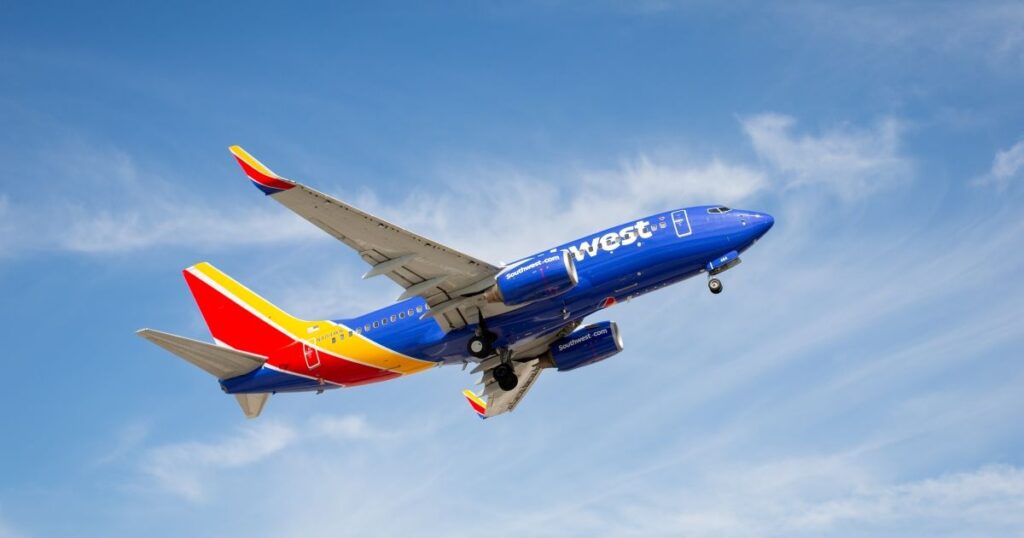
DALLAS, Southwest Airlines has initiated a critical infrastructure overhaul of its inflight connectivity (IFC) systems, formally scheduling the activation of SpaceX’s Starlink network across its Boeing 737 fleet beginning Summer 2026. This deployment marks a strategic pivot for the carrier, transitioning from legacy geostationary satellite dependencies to Low-Earth Orbit (LEO) technology to support high-bandwidth passenger demands.
The integration of Starlink technology represents a fundamental shift in Southwest’s operational hardware strategy. Following the February 11 announcement, the carrier has confirmed that the first LEO-equipped aircraft will enter revenue service in mid-2026. The rollout schedule is aggressive: Southwest aims to complete retrofits on more than 300 aircraft before the close of the fiscal year 2026.
This connectivity upgrade is not an isolated modernization effort but a component of a broader cabin reconfiguration project. As Southwest moves to abandon its fifty-year-old open seating model in favor of assigned and premium seating, the inclusion of enterprise-grade WiFi becomes a requisite feature to attract corporate accounts and high-yield travelers. The Starlink system will leverage SpaceX’s constellation of over 9,000 satellites, providing coverage across Southwest’s 11-country route network, including over-water corridors where ground-based systems historically fail.
Historically, inflight internet was governed by Geostationary Earth Orbit (GEO) satellites positioned approximately 22,000 miles above the equator. While functional for basic telemetry and light browsing, GEO systems suffer from inherent latency issues—the time it takes for a signal to travel to the satellite and back—often exceeding 600 milliseconds. This latency renders real-time applications, such as video conferencing and VPN tunneling, unstable or inoperable.
Southwest previously relied on varied connectivity providers, including Anuvu, which utilized Ku-band satellite capacity. As passenger data consumption surged—driven by streaming services and cloud-based enterprise tools—legacy bandwidth limitations created bottlenecks, resulting in throttled speeds and service gaps. The industry shift toward LEO technology, pioneered effectively by competitors like JetBlue and Delta (via Viasat) and United (also partnering with Starlink), utilizes satellites orbiting just 340 miles above Earth. This proximity reduces latency to under 30 milliseconds, mirroring terrestrial fiber optic performance.
PROGRAM INFRASTRUCTURE SPECIFICATIONS
Fleet Penetration Target: >300 Aircraft by Dec 31, 2026.
Satellite Constellation: 9,000+ active Starlink units (SpaceX operated).
Latency Threshold: <30ms (Targeted LEO performance).
Customer Base Impact: 134 Million annual passengers (based on 2025 metrics).
Hardware Variant: Electronically Steered Array (ESA) Antenna.
STRATEGIC FORECASTING AND VIABILITY
The decision to utilize Starlink addresses the primary friction point in modern aviation economics: the passenger productivity gap. By reducing latency, Southwest effectively transforms the cabin into a viable remote office. The physics of LEO networks allow for “make-before-break” handovers between satellites moving at high velocity, ensuring consistent throughput. Unlike mechanical gimbaled antennas of the past, the Starlink Electronically Steered Array (ESA) creates a flat, low-drag profile on the fuselage. This reduces fuel burn penalties associated with external radomes—a critical consideration for a low-cost carrier (LCC) sensitive to operating margins. The ESA hardware contains no moving parts, significantly increasing mean time between failures (MTBF) and reducing maintenance downtime compared to mechanical predecessors.
Retrofitting 300 aircraft in approximately six months indicates an unprecedented modification cadence. This suggests Southwest is leveraging a streamlined Supplemental Type Certificate (STC) process and likely pre-wiring aircraft during routine heavy maintenance checks. The installation speed is facilitated by the smaller form factor of LEO antennas. However, the operational risk lies in the supply chain; ensuring SpaceX can deliver adequate hardware volume to match Southwest’s aggressive hangar schedule will be the primary constraint. If successful, this rapid deployment allows Southwest to market a consistent product experience faster than legacy carriers who are locked into long-term contracts with GEO providers.
Commercial Implications of “Free” Connectivity
The partnership with T-Mobile to offer free WiFi to Rapid Rewards members serves a dual purpose: loyalty acquisition and data monetization. By gating the connectivity behind a loyalty login, Southwest increases the valuation of its Rapid Rewards program. This mirrors the “Delta Sync” model, which proved that high-quality free WiFi is a potent driver of loyalty program enrollment. In the context of Airline News regarding ancillary revenue, this move shifts the value proposition from selling internet sessions (a low-margin, high-friction transaction) to selling the ecosystem of the loyalty program itself (high lifetime value).
THE PREMIUM CABIN ECOSYSTEM
The deployment of Starlink must be viewed as the digital backbone of Southwest’s new cabin interior. The carrier is simultaneously installing RECARO seating, USB-A and USB-C power outlets at every seat, and increasing overhead bin capacity.
This synchronization of hardware upgrades is necessary to support the “Bring Your Own Device” (BYOD) entertainment model. Southwest has opted not to install seatback screens (IFEs), a capital-intensive feature found on competitors like Delta and United. Instead, Southwest is betting on the ubiquity of personal tablets and smartphones. For a BYOD model to succeed, two variables must be guaranteed: sufficient battery power (solved by in-seat power) and sufficient bandwidth to stream content (solved by Starlink).
If the WiFi fails, the entertainment product ceases to exist. Therefore, the reliability of the Starlink constellation is not just an amenity issue for Southwest; it is a core component of their inflight entertainment infrastructure. The provision of device holders on seatbacks further signals this reliance on passenger hardware.
Southwest’s move neutralizes a significant competitive advantage previously held by full-service carriers. As Delta Air Lines standardized free, high-speed streaming via Viasat, and United Airlines committed to its own future Starlink rollout, Southwest risked becoming technologically obsolete in the eyes of the business traveler.
The corporate travel segment, which yields significantly higher margins than leisure traffic, demands reliable connectivity. By pairing Starlink with assigned premium seating, Southwest is explicitly targeting the corporate expense account demographic. This demographic requires the ability to download large files and conduct video calls—capabilities that only LEO networks can reliably support in a high-density environment like a 737 cabin.
LONG-TERM OPERATIONAL VIABILITY
Looking toward the 2027-2030 operational horizon, the saturation of LEO constellations raises questions regarding bandwidth contention. As more airlines join the Starlink network, the density of demand over major hubs (such as Atlanta, Chicago, or the North Atlantic tracks) will test the capacity of the satellite mesh.
However, SpaceX’s vertical integration—owning both the satellite manufacturing and the launch vehicles—provides a unique advantage. They can replenish and upgrade the constellation at a pace and cost that competitors like Viasat or Intelsat cannot match. For Southwest, this partnership offers long-term insulation against technological stagnation. As 6G standards emerge and passenger bandwidth demands double every few years, the LEO network is designed to scale dynamically.
Southwest Airlines’ integration of Starlink is a corrective measure to align its product offering with modern connectivity standards. It creates a unified digital experience that supports the airline’s simultaneous pivot to premium cabin configurations. By securing a scalable LEO provider, Southwest has secured the necessary digital infrastructure to compete for high-value market share in the latter half of the decade. The success of this initiative will now depend entirely on the speed of installation and the reliability of the hardware under daily operational stress.
For additional operational briefings and the latest Airline News, monitor our dedicated aviation intelligence category.