

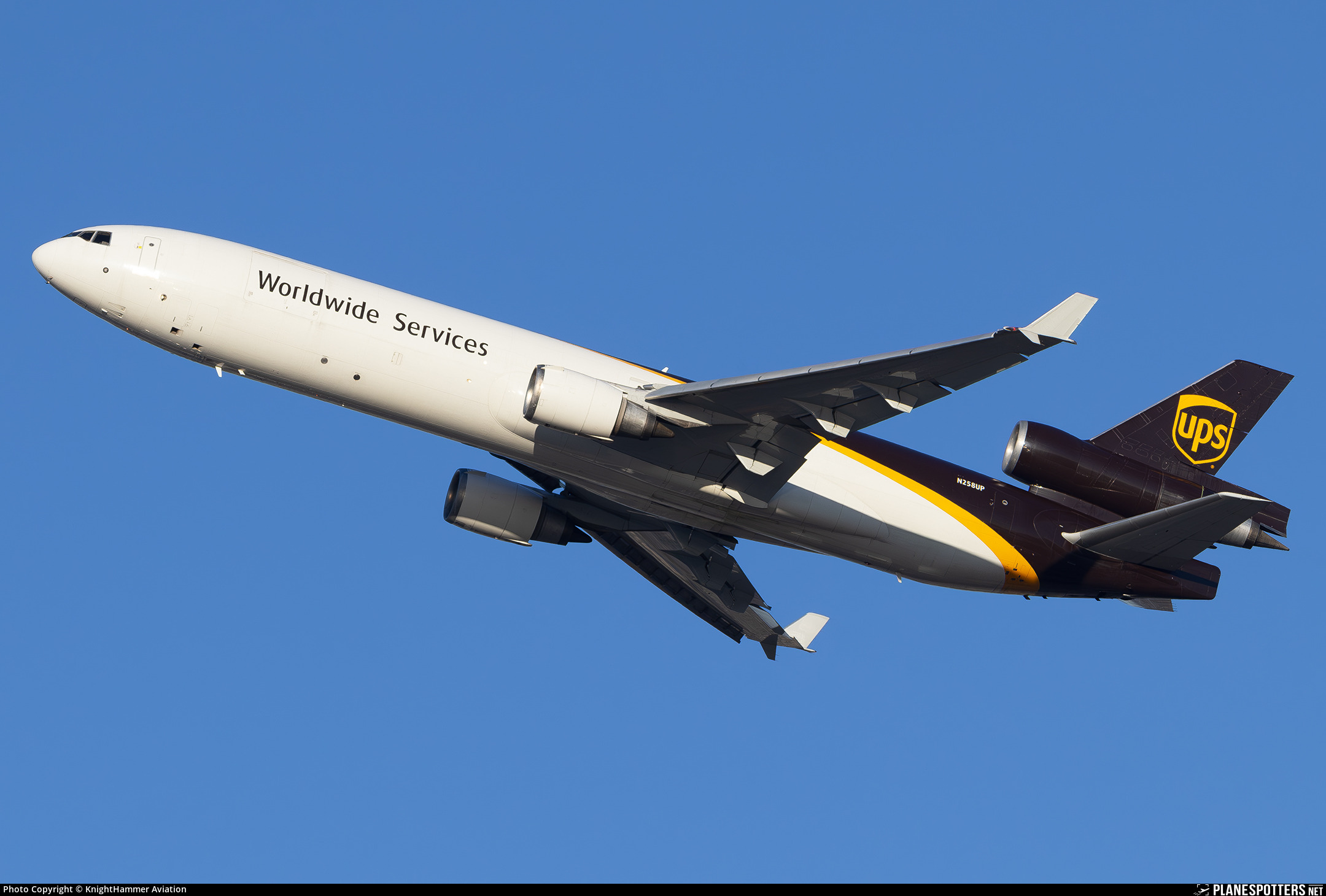
LOUISVILLE, The age of the trijet is one step closer to finally coming to an end, following confirmation from United Parcel Service (UPS) that it has retired its fleet of McDonnell Douglas MD-11 freighters.
THE END OF THE LINE
The operational sunset of the trijet era has arrived faster than anticipated, accelerated by catastrophic mechanical failure and the unyielding pressure of fleet modernization mandates.
While these three-engine widebodies were already scheduled for a gradual phase-out, the tragic loss of UPS Flight 2976 in November served as the catalyst for an immediate cessation of operations.
In its fourth-quarter earnings report released this week, UPS confirmed the permanent grounding of its remaining 26 MD-11 airframes. The decision marks the conclusion of a 30-year operational chapter for the carrier and signals the near-total extinction of the trijet configuration in commercial aviation. Management indicated that the fleet, which represented approximately 9% of UPS’s total airlift capacity, has been effectively written off, with volume shifted to twin-engine Boeing 767 and 777 platforms.
OPERATIONAL CONTEXT
For decades, the MD-11 served as the heavy-lift backbone for long-haul cargo operations. Born from the DC-10 lineage, it offered a unique payload-range capability that bridged the gap between the 767 and the 747. However, the architecture that once made it revolutionary—the center tail-mounted engine—became its Achilles’ heel in a modern era dominated by high-efficiency twinjets.
The retirement decision was formalized following the November 4, 2025, incident in Louisville, where Flight 2976 suffered a catastrophic engine separation shortly after rotation. The subsequent grounding order by the FAA, coupled with an internal safety review, forced UPS to stress-test its network during the peak holiday season without the MD-11. The network held, proving that the older jets were no longer operationally indispensable.
THE MD-11 EXIT
Fleet Size Retired: 26 Aircraft
Average Airframe Age: 30.8 Years
Financial Impact: $137 Million (Non-cash, after-tax charge)
Replacement Capacity: Boeing 767-300F (18 deliveries scheduled over 15 months) & Boeing 777F.
Performance Delta: The MD-11F burns approximately 18-20% more fuel per ton-mile compared to the Boeing 777F.
Incident Context: Flight 2976 resulted in 15 fatalities (3 crew, 12 on ground) following a structural failure of the No. 1 engine pylon.
FLEET ECONOMICS
The Twin-Engine Imperative
From a dispatch perspective, the retirement of the MD-11 is a correction of fleet efficiency. The trijet configuration requires 50% more engine maintenance events per airframe than a twinjet. In an environment where dispatch reliability is paramount, the aging MD-11 fleet averaging over three decades of service presented a liability.
The “Spare Parts Famine” for legacy McDonnell Douglas airframes has exacerbated this, with operators forced to cannibalize stored aircraft to keep active tails flying. The shift to the 767-300F for domestic volume and the 777F for international lanes standardizes parts inventory and pilot training, drastically lowering unit costs.
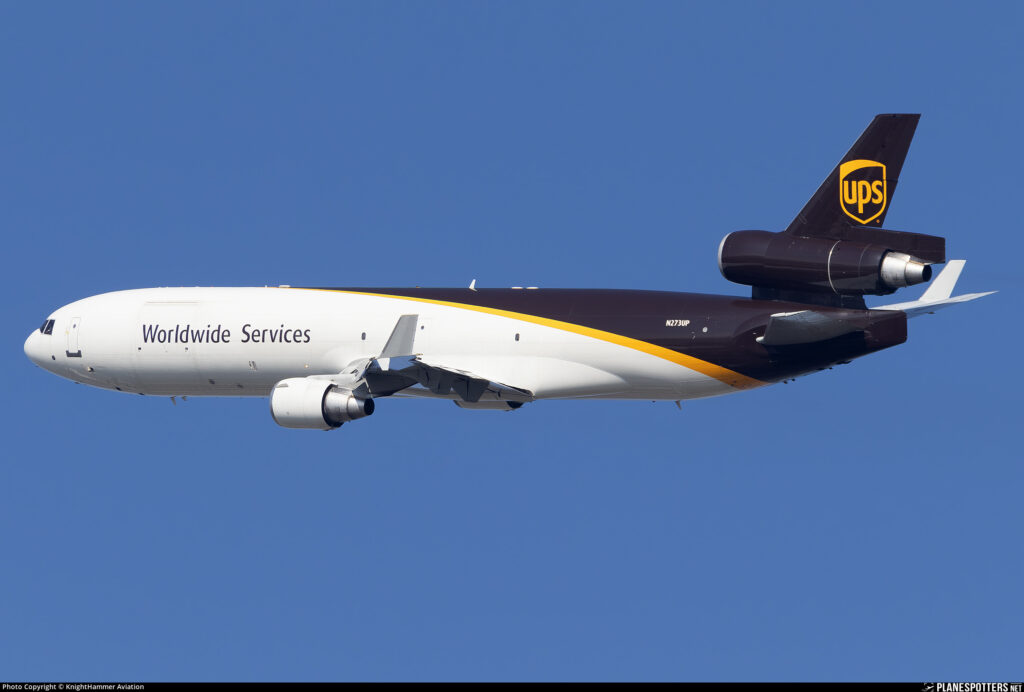
While the MD-11 has been a workhorse, it has historically demanded a higher tier of pilot proficiency due to its sensitive handling characteristics, particularly during landing (the “LSAS” stability augmentation system). However, the November incident was not a handling error but a structural failure of the engine mounting hardware.
This distinction is critical. It suggests that the airframes themselves had reached a fatigue limit that made further life-extension programs economically and safety-prohibitive. The FAA’s scrutiny on engine pylons for this type likely signaled that the cost of compliance would exceed the residual value of the aircraft.
Network Agility
The most revealing data point from this transition is the “Peak Season Stress Test.” UPS successfully navigated the 2025 holiday surge without 9% of its widebody fleet. This indicates that the carrier was likely carrying excess capacity.
By utilizing the 767’s higher cycle frequency and leasing supplemental lift, UPS demonstrated that the heavy-lift capability of the MD-11 is no longer a prerequisite for their hub-and-spoke model. The volume that once required a trijet can now be split between multiple 767 frequencies or consolidated onto a single 777F, offering greater scheduling flexibility.
THE TRAJECTORY
The exit of the UPS MD-11 fleet leaves FedEx as the last major Western operator of the type, and they too are in an aggressive retirement phase. The “Age of the Trijet” an era defined by the visual signature of the tail-mounted engine is effectively over.
For logistics planners, this transition removes a variable of unpredictability. The future is twin-engine, standardized, and inextricably linked to fuel efficiency. The MD-11 will be remembered as a freighter that carried the global supply chain for a generation, but its departure secures a safer, more predictable operational future.
 Aastha Choudhary