

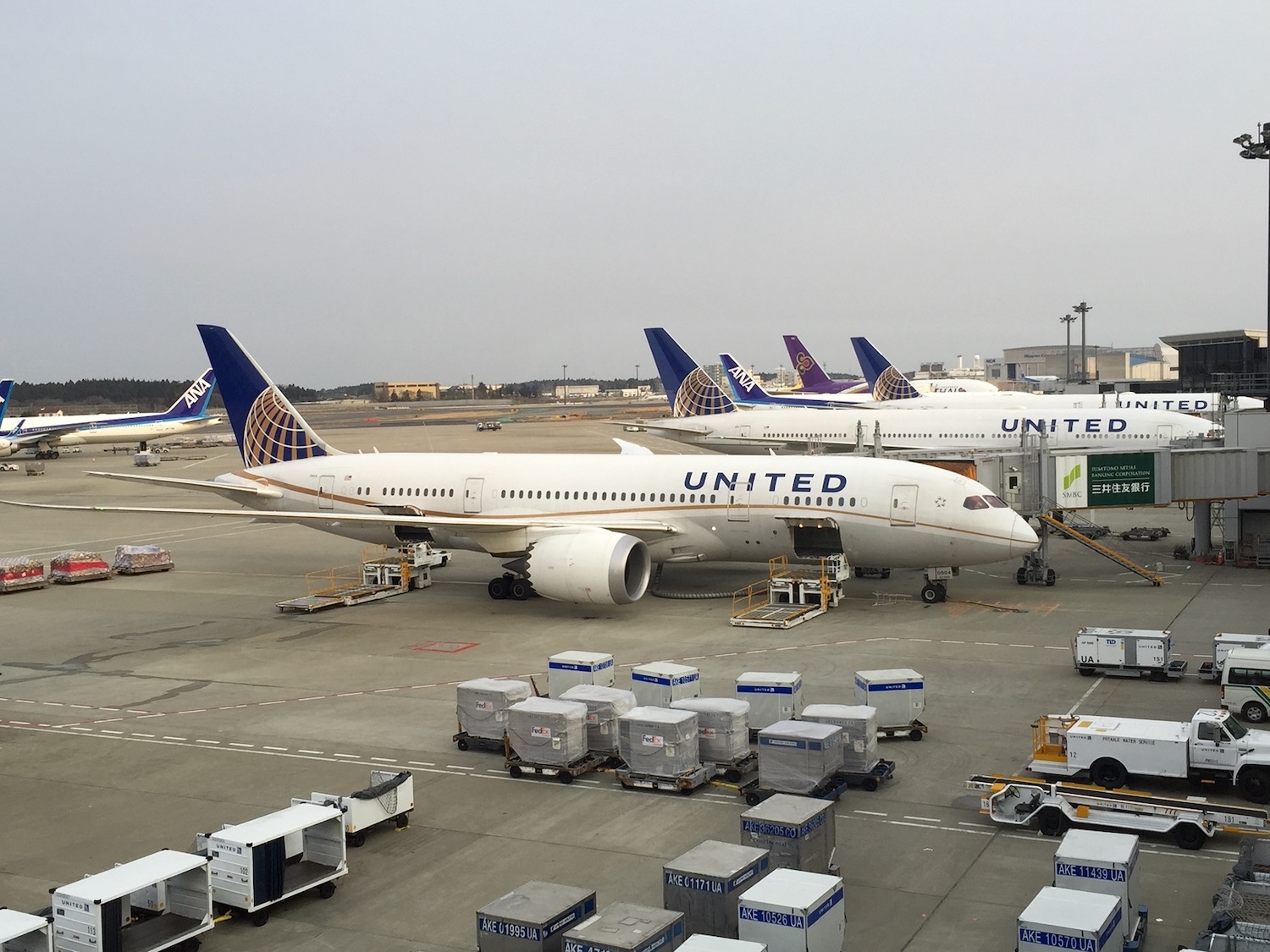
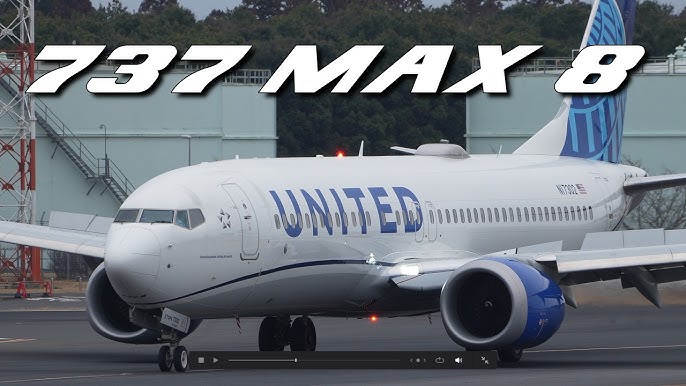
Tokyo’s Narita Airport has long been one of United Airlines‘ most important international hubs, and the carrier just made a move that signals serious intent to deepen its footprint across Asia and the Pacific. United has expanded its Boeing 737 MAX 8 deployment plans from Narita in a meaningful way, widening the aircraft’s reach to six destinations by the end of April.
Originally, the airline had planned to introduce the narrow-body jet on a single route — from Narita to Guam’s Antonio B. Won Pat International Airport. That was the headline a few weeks ago. Now, United has gone significantly further. The 737 MAX 8 will serve not just Guam, but also Cebu, Kaohsiung, Koror, Saipan, and Ulaanbaatar, all operating out of NRT. For travelers and aviation watchers, that’s a notable shift from a single-route trial to a much broader regional rollout.
Why the 737 MAX 8 Matters on These Routes
The Boeing 737 MAX 8 isn’t just a replacement for older jets — it’s a fundamentally different tool for an airline thinking about regional connectivity. It burns considerably less fuel than the aircraft it replaces, which makes thinner routes financially viable in ways they simply weren’t before. That’s the exact logic United is applying here.
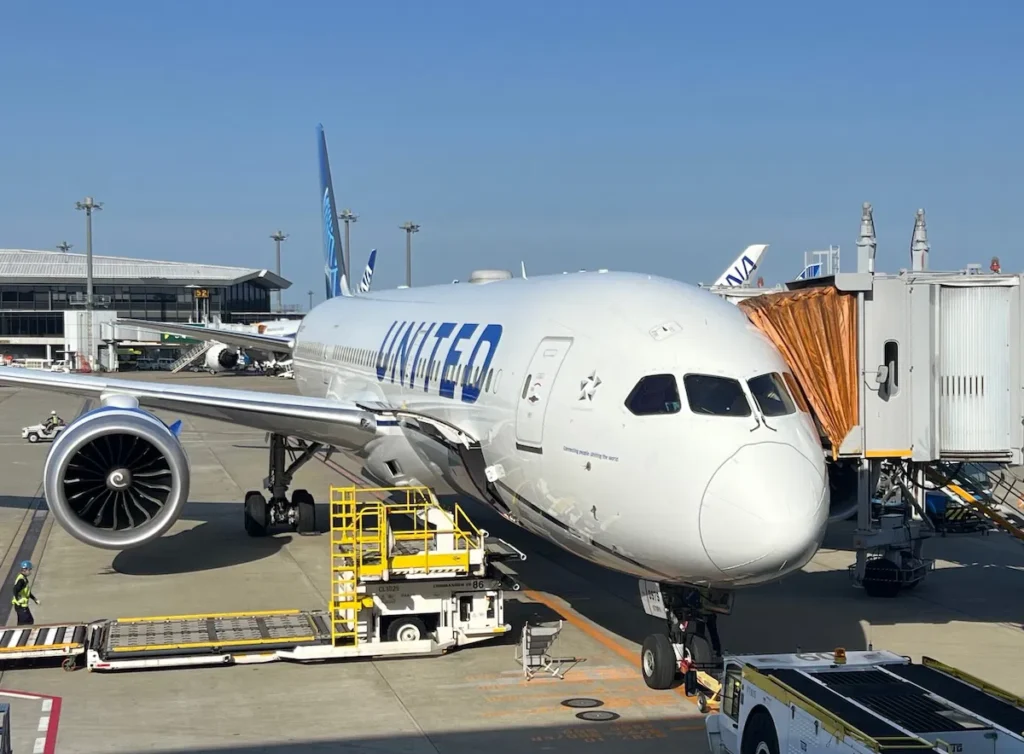
Look at the route map: Guam, Saipan, Koror — these are island destinations in Micronesia that don’t generate the kind of volume that would justify a widebody. Cebu and Kaohsiung are secondary cities in the Philippines and Taiwan respectively, markets that are growing but haven’t historically warranted large-gauge service from Japan. Ulaanbaatar is a different case altogether — the Mongolian capital is an unusual destination for a U.S. carrier, and the 737 MAX 8’s economics make that route far more defensible.
In short, this aircraft unlocks a tier of routes that was either uneconomical or impractical before. United is betting these markets have untapped demand, and the MAX gives them a way to test that without overcommitting.
A Legacy That Goes Back to Pan Am
United’s presence at Narita isn’t something that was built overnight. The carrier’s trans-Pacific operations trace directly to its 1985 acquisition of Pan American World Airways’ Pacific division — a landmark deal that handed United routes, gates, and infrastructure across Japan and Asia that Pan Am had cultivated over decades.
That heritage matters because it explains the depth of United’s presence at Narita in ways that go beyond simple market share. These aren’t routes that United entered cautiously or built incrementally. They inherited a genuine network, complete with the relationships, slots, and brand recognition that came from Pan Am’s postwar Pacific dominance. Narita, for United, has always been a hub in the truest sense — a place where flights connect, not just originate.
That historical foundation is also what has made recent expansions more credible. When you already have strong infrastructure and an established operation at a station, adding routes is a much more executable proposition than building from scratch.
The 2024 Push and What Came After
United’s expansion at Narita accelerated noticeably in 2024, when the airline announced a series of new Asian routes departing from the airport. The strategy reflected a broader trend: U.S. carriers identifying the post-pandemic rebound in international travel demand, particularly across Asia, as a window to grow aggressively before competitors locked up slots and positioned their own fleets.
United wasn’t alone in thinking this way, but the scale and pace of what they announced from Narita stood out. New services to multiple Asian cities were introduced or planned, adding frequency and reach to a network that was already one of the stronger U.S. carrier footprints in the region.
The current 737 MAX 8 expansion is, in many ways, the next chapter of that 2024 initiative. It fills in gaps — smaller markets, secondary cities, island communities — that the widebody fleet couldn’t cover as efficiently. Together, the two phases of growth create a more complete regional network than either could on its own.
What Travelers Can Expect
The 737 MAX 8 configured for United’s international routes isn’t the domestic version of the plane. United has outfitted its MAX jets with lie-flat business class seats in Polaris configuration on longer-haul international flights, though for shorter regional hops the configuration will likely reflect the mission — comfortable, efficient, appropriate for flying times that typically range from two to four hours.
For passengers in destinations like Cebu or Koror, the bigger story is frequency and connectivity. If United is deploying the MAX on these routes, it suggests the airline is planning to operate them on a regular schedule rather than a seasonal or limited basis. That kind of reliability is what actually changes behavior for travelers — once you know a route exists and runs consistently, you plan around it.
The Bigger Picture
United’s 737 MAX 8 expansion from Narita is a clean example of how modern fleet strategy translates into real-world route decisions. The plane’s economics make smaller markets viable. The airline’s legacy infrastructure at Narita makes execution realistic. And the demand signals coming out of Asia and the Pacific give the whole thing commercial logic.
Six routes by the end of April is a concrete commitment. It moves this from an announcement about a single Guam service to something that starts to look like a genuine regional strategy built around a capable, modern aircraft. For anyone who flies through Narita — or lives in one of these six destinations — that’s worth paying attention to.
For additional operational briefings and the latest Airline News, monitor our dedicated aviation intelligence category.
 Aastha Choudhary