


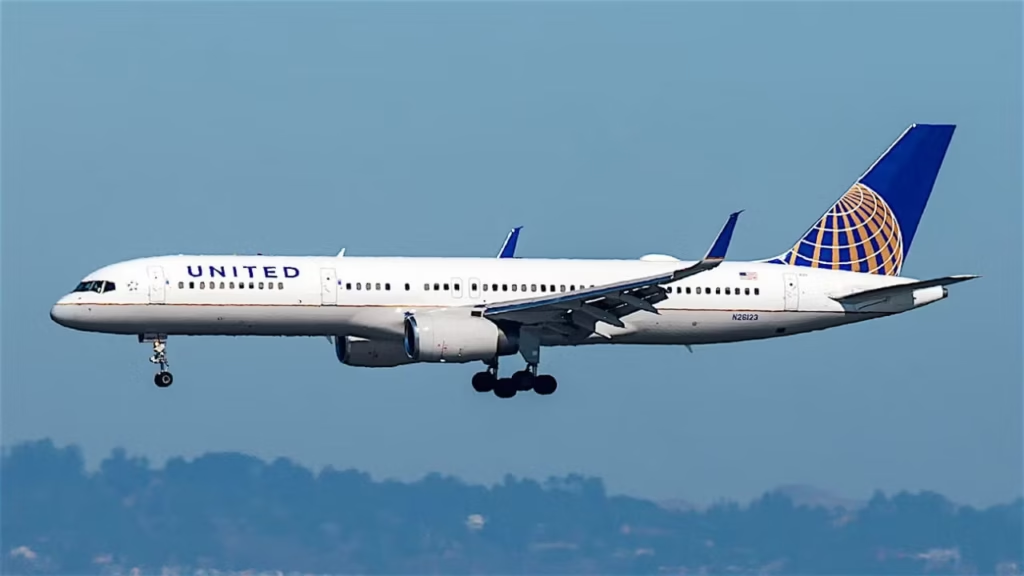
A United Airlines Boeing 737 carrying 168 passengers and crew came alarmingly close to a U.S. Army National Guard Sikorsky Black Hawk helicopter Tuesday evening while on final approach to John Wayne Airport in Santa Ana, California, triggering an immediate federal investigation into one of the most serious aviation safety incidents seen in Southern California in recent years.
United Airlines Flight 589 was descending toward the runway at approximately 8:40 p.m. local time when the military helicopter crossed directly in front of the aircraft, leaving little room for error and sending shockwaves through the aviation safety community. The Boeing 737 had departed earlier that evening from San Francisco International Airport, completing what should have been a routine two-hour flight down the California coast.
The Federal Aviation Administration confirmed it has launched a formal investigation into the incident, which has raised urgent questions about coordination between civilian air traffic control and military flight operations in one of the nation’s most congested airspaces.
A Crowded Sky Above Orange County
John Wayne Airport, officially designated SNA, sits in the heart of densely populated Orange County and is surrounded by residential neighborhoods, commercial corridors, and several military and government facilities. The airport handles millions of passengers annually and operates within a complex web of flight paths that intersect with military training routes used by California National Guard units stationed across the region.

Aviation experts say the proximity of military operations to busy commercial corridors has long been a concern — but incidents of this magnitude remain rare. When they do occur, they demand swift and thorough investigation.
ABC News first reported the close-call, noting the sheer number of people aboard the United aircraft whose lives were potentially at risk in those terrifying seconds over Orange County.
What Happened in the Sky
According to preliminary accounts, the Black Hawk helicopter entered the flight path of the descending Boeing 737 without sufficient warning or coordination with air traffic controllers managing the approach sequence into SNA. The commercial aircraft, operating under instrument flight rules and following controller guidance, had no reasonable opportunity to maneuver significantly at such a late stage of its descent.

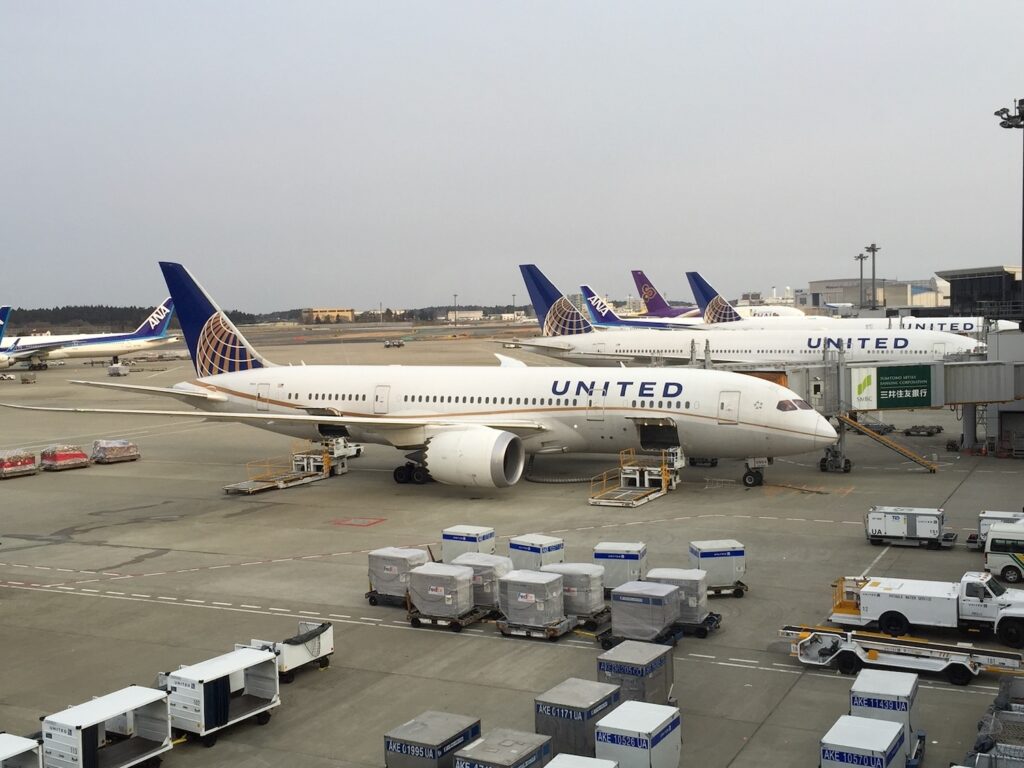
A “final approach” in aviation refers to the last segment of a landing sequence — typically the most critical and least forgiving phase of any flight. Aircraft at this stage are configured for landing, flying at reduced speeds with flaps and landing gear extended, leaving pilots with limited options should an unexpected obstacle appear ahead.
The fact that the Black Hawk crossed directly in front of the 737 during this window makes the incident particularly alarming to safety investigators. How close the two aircraft actually came — measured in feet or seconds of separation — is expected to be a central focus of the FAA’s investigation.
United Airlines and the Military Respond
United Airlines confirmed the incident and stated that the safety of its passengers and crew remains its highest priority. The airline said it is fully cooperating with FAA investigators and conducting its own internal review of the event. Flight 589 landed safely at John Wayne Airport, and no injuries were reported among the 168 people on board.
Representatives for the U.S. Army National Guard had not issued a detailed public statement at the time of this report, though military officials are expected to participate in the federal investigation. The specific unit operating the Black Hawk helicopter and the nature of its mission Tuesday evening had not been officially disclosed.
A Growing Concern for Aviation Safety
This incident arrives at a moment of heightened national attention toward aviation safety. Regulators, airlines, and military branches have faced mounting pressure to improve coordination protocols, particularly in regions where civilian and military airspace overlap.
The FAA is expected to examine communication logs, radar data, and flight recorder information from both aircraft as part of its investigation. Investigators will likely scrutinize whether proper airspace notifications were filed by the military helicopter crew, and whether any breakdowns occurred in air traffic control communication chains.
Safety analysts warn that as both commercial air travel and military flight activity continue to grow in parallel, the systems designed to keep them safely separated must keep pace — or the risk of close calls, and potentially far worse outcomes, will only increase.
For the 168 people aboard United Flight 589 Tuesday night, what began as an ordinary evening flight home became a stark reminder of just how much trust passengers place in those systems every time they board a plane.
The FAA investigation is ongoing. Further details are expected as radar and communication data are reviewed.