



Aviation changed the way people travel around the world. Today, millions of passengers fly every day. Airplanes connect cities, countries, and continents in just a few hours. The aviation industry also supports global trade, tourism, and business. Without airplanes, international travel would take days or even weeks. But many people know very little about aviation. Few passengers understand how airplanes work or what happens behind the scenes. For example, do you know how many parts an airplane has? Or what pilots eat during long flights? The aviation world contains many surprising facts. In this article, you will discover 10 interesting facts about aviation that explain how amazing modern air travel really is.
1. Pilots and Co-Pilots Eat Different Meals
Airlines follow many safety rules during flights. One interesting rule involves the food served to pilots.
Most airlines ask pilots and co-pilots to eat different meals. This rule helps reduce the risk of food poisoning.
If both pilots eat the same meal and the food causes illness, the safety of the flight could be at risk.
For this reason, airlines make sure that the captain and first officer select different dishes.
Pilots usually receive meals similar to business-class or first-class food, but they avoid choosing the same menu option.
2. A Boeing 747 Has Around Six Million Parts
The Boeing 747 remains one of the most famous airplanes in aviation history. People often call it the “Queen of the Skies.”
Engineers designed this aircraft for long-distance travel and large passenger capacity.
One surprising fact about this airplane involves its complexity.
A Boeing 747 contains about six million parts. These parts include screws, wires, computers, wings, engines, and many other components.
Despite this huge number of parts, pilots control the aircraft using advanced systems in the cockpit.
Modern technology helps these systems work together smoothly during flight.
3. Many People Feel Nervous About Flying
Millions of people feel nervous before boarding a plane. Experts call this fear aerophobia.
Some travelers worry about turbulence or heights. Others feel anxious because they do not control the situation.
In many cases, the fear connects to acrophobia, which means fear of heights.
Even though many people feel afraid of flying, statistics show that aviation remains one of the safest forms of transportation.
Many airlines also offer programs that help passengers overcome their fear of flying.
4. A Boeing 747 Engine Weighs About 9,500 Pounds
Aircraft engines rank among the most powerful machines in the world.
Each engine on a Boeing 747 weighs around 9,500 pounds, which equals about 4,300 kilograms.
These engines produce the strong thrust needed to lift a large airplane into the air.
They also cost a lot of money. A single aircraft engine can cost up to 8 million dollars.
Engine manufacturers design these systems to deliver high power, efficiency, and safety.
5. Atlanta Has the World’s Busiest Airport
The Hartsfield-Jackson Atlanta International Airport stands as the busiest airport in the world.
This airport handles millions of passengers every year. Airlines operate hundreds of thousands of flights from this location.
Its central location in the United States makes it a major travel hub.
On an average day, more than 250,000 passengers pass through the airport.
This high level of traffic makes Atlanta one of the most important airports in global aviation.
6. Commercial Airplanes Fly Very Fast
Modern airplanes travel at very high speeds.
A Boeing 747 can reach a maximum speed of about 955 kilometers per hour.
During normal flights, most commercial airplanes cruise between 800 and 900 kilometers per hour.
This speed allows passengers to cross continents in just a few hours.
For example, a flight from Europe to North America usually takes less than ten hours.
Without aviation, such journeys would take days by ship.
7. Only a Small Percentage of People Have Flown
Air travel feels common in many countries. However, not everyone has experienced flying.
Research suggests that only about 5% of the world’s population has flown on an airplane.
Many people live in regions where flights remain expensive or difficult to access.
Economic factors also limit travel opportunities for some populations.
However, the aviation industry continues to grow. As ticket prices become more affordable, more people may travel by air in the future.
8. Aircraft Lifespan Depends on Flight Cycles
People often assume airplanes retire after a certain number of years. In reality, engineers measure aircraft lifespan differently.
Experts measure aircraft usage using flight cycles.
A flight cycle includes one takeoff and one landing.
During each cycle, cabin pressure changes. These pressure changes create stress on the aircraft structure.
Over time, this stress causes metal fatigue.
Most commercial airplanes can complete tens of thousands of flight cycles before retirement.
With proper maintenance, some aircraft remain in service for more than 30 years.
9. One Man Flew More Than 10 Million Miles
Some travelers spend a huge amount of time in the air.
One famous frequent flyer is Tom Stuker. He has flown more than 10 million miles on commercial airlines.
Most of his flights took place on United Airlines.
His work as a consultant required frequent travel around the world.
Because of this travel record, many people consider him one of the most frequent flyers in aviation history.
10. Flying Is One of the Safest Ways to Travel
Many people worry about airplane safety. However, aviation remains extremely safe.
Airlines follow strict safety rules. Engineers inspect aircraft regularly and perform detailed maintenance.
Pilots complete many hours of training before they fly commercial planes.
Airplanes also include advanced technology such as weather radar, autopilot systems, and navigation tools.
These safety measures make flying one of the safest transportation methods in the world.

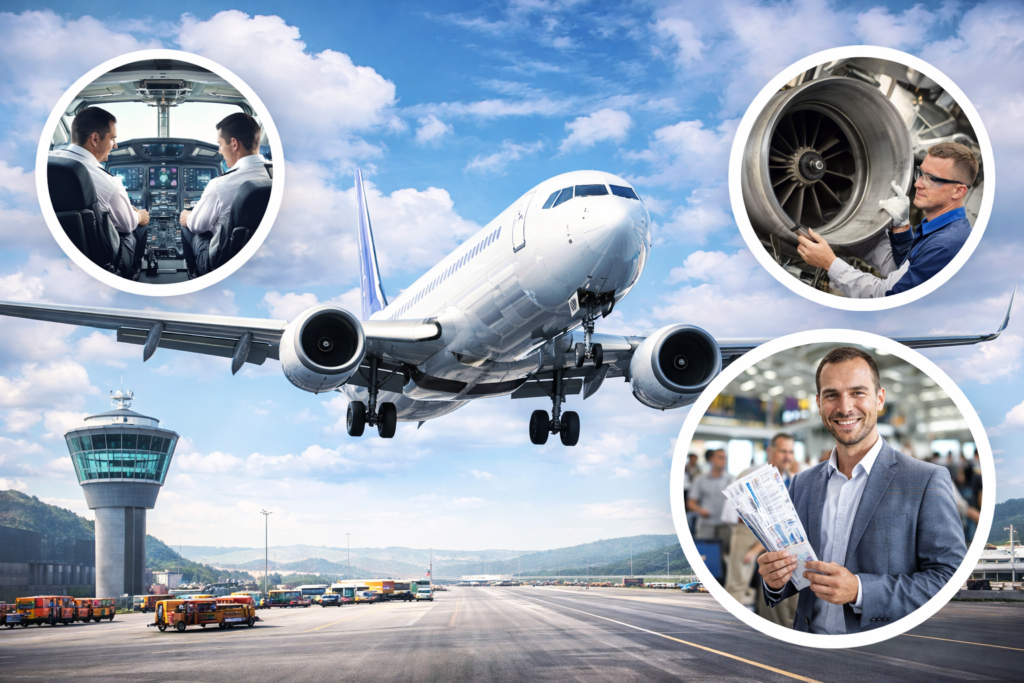
The Future of Aviation
The aviation industry continues to grow and evolve.
Companies now develop electric aircraft, sustainable aviation fuel, and more efficient engines.
These technologies aim to reduce pollution and improve fuel efficiency.
Manufacturers also design quieter aircraft and smarter navigation systems.
In the future, aviation may become even faster, safer, and more environmentally friendly.
Passengers could also see new travel options such as urban air taxis and advanced supersonic aircraft.
Frequently Asked Questions (FAQ)
What is aviation?
Aviation refers to the operation and development of aircraft such as airplanes and helicopters. It includes commercial flights, cargo transport, and military aviation.
Why is aviation important?
Aviation connects countries and supports global trade, tourism, and business travel. It allows people and goods to move quickly across long distances.
How fast do commercial airplanes fly?
Most commercial airplanes cruise between 800 and 900 kilometers per hour during normal flights.
How long do airplanes last?
Commercial airplanes can remain in service for 20 to 30 years or more, depending on maintenance and the number of flight cycles.
Is flying safer than driving?
Yes. Statistics show that flying is one of the safest ways to travel, with fewer accidents compared to road transportation.
Why do pilots eat different meals?
Pilots eat different meals to reduce the risk of food poisoning affecting both pilots at the same time.