

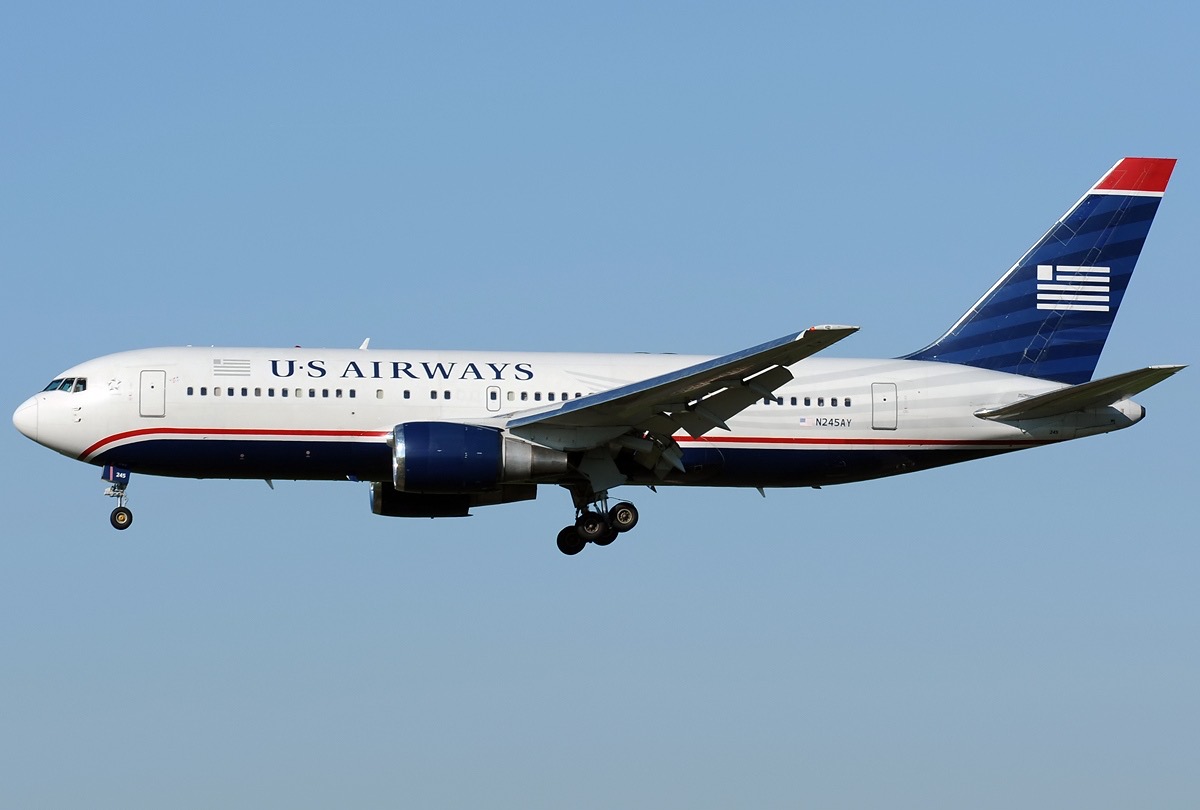
The United States, remains the world’s largest aviation market, being the 4th largest country in the world, reflecting immense power and connecting end number of places and routes, strong demand for business travel, tourism and airline hubs makes it one of the busiest air network. Also talking about the history, since deregulation, hub based airlines indeed shaped the passenger flows across the country as the airlines now could set their own prices.
Also, according to aviation analytics firm OAG, U.S. domestic demand remained strong in 2025, with capacity rising across key routes despite recovery challenges post-pandemic.
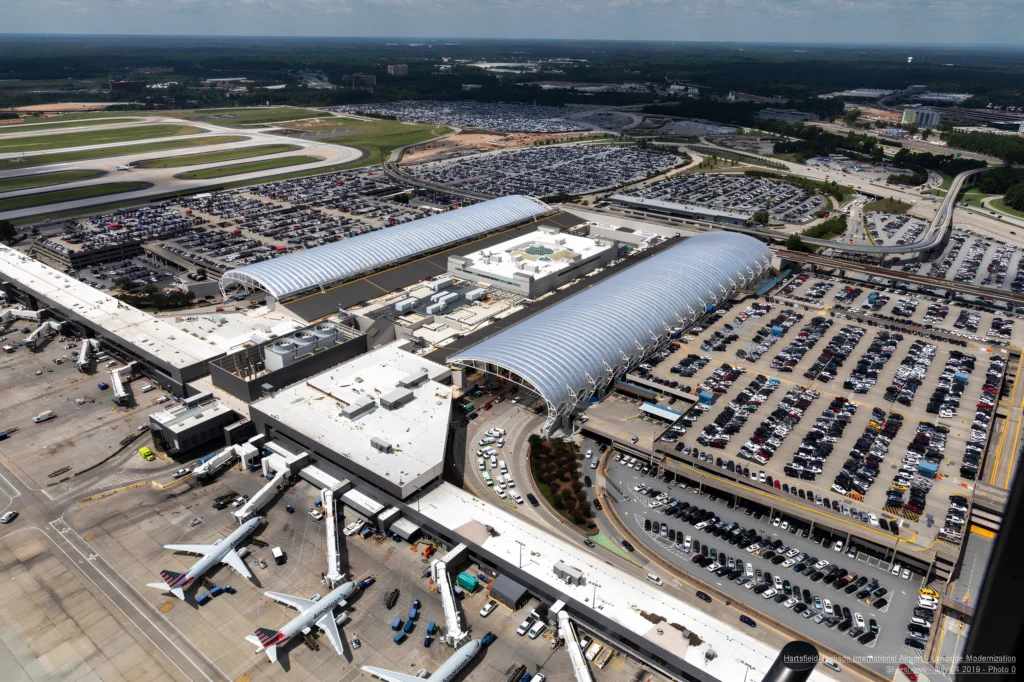
Coming to the scale of the US Aviation Market, it still remains the largest aviation market globally, The TSA screened 904 million passengers in 2024, a record high.
This not only reflects the global scale but also the significant size and immensity of the air market.
Domestic travel dominates because of the country’s size and limited high-speed rail alternatives.
Major hubs driving traffic include:
- Hartsfield–Jackson Atlanta International Airport
- Los Angeles International Airport
- O’Hare International Airport
Now coming to the top 10 busiest US Air Routes
1. John F. Kennedy International Airport – Los Angeles International Airport
Average annual seats: ~3.4 million
This coast-to-coast corridor links two global power centres New York’s financial hub and Los Angeles’ entertainment capital. It remains one of the most prestigious domestic routes, carrying business leaders, media professionals, and high-value travelers across the country daily.
2. LaGuardia Airport – O’Hare International Airport
Average annual seats: ~3.3 million
Connecting two major economic cities, this route serves as a vital bridge between the Midwest and the Northeast. Its high frequency reflects the constant movement between America’s financial and industrial centers.
3. Los Angeles International Airport – San Francisco International Airport
Average annual seats: ~3.3 million
Often described as an “air shuttle,” this short but busy route connects California’s media capital with Silicon Valley’s innovation ecosystem, supporting continuous movement between tech, venture capital, and creative industries.
4. Harry Reid International Airport – Los Angeles International Airport
Average annual seats: ~3.2–3.3 million
This route reflects the close relationship between Southern California and Las Vegas, linking a major population center with one of the world’s top entertainment and convention destinations.
5. Hartsfield–Jackson Atlanta International Airport – Orlando International Airport
Average annual seats: ~3.2 million
A key leisure corridor in the Southeast, this route connects the nation’s busiest hub with one of the world’s most visited family vacation destinations, highlighting the scale of tourism-driven travel.
6. Denver International Airport – Phoenix Sky Harbor International Airport
Average annual seats: ~3.1 million
Linking two fast-growing metropolitan regions, this route reflects migration trends and economic expansion across the American Southwest and Mountain West.
7. Daniel K. Inouye International Airport – Kahului Airport
Average annual seats: ~3.0 million
This essential inter-island connection supports everyday mobility within Hawaii while enabling millions of visitors to move between islands each year.
8. Los Angeles International Airport – O’Hare International Airport
Average annual seats: ~2.8 million
Serving as a major link between the Midwest and the West Coast, this route supports business travel and nationwide connectivity through two major airline hubs.
9. Hartsfield–Jackson Atlanta International Airport – LaGuardia Airport
Average annual seats: ~2.7 million
This corridor connects the Southeast’s primary aviation hub with New York’s business center, reflecting strong economic ties and frequent corporate travel.
10. Hartsfield–Jackson Atlanta International Airport – Fort Lauderdale–Hollywood International Airport
Average annual seats: ~2.6 million
Demand Drivers Behind Busy Routes
Business & Economic Travel
Routes linking New York, Chicago, Los Angeles, and Atlanta support corporate travel and financial activity.
Tourism & Leisure Growth
Orlando, Las Vegas, Hawaii, and South Florida routes benefit from strong visitor flows and convention travel.
Population & Migration Trends
Sun Belt cities such as Phoenix, Denver, and Florida destinations reflect demographic growth and relocation patterns.
Hub-and-Spoke Connectivity
Airlines route passengers through hubs to maximize connectivity and efficiency.
This shows that the country’s vast geography and strong economic networks make air connectivity essential.
Talking about the Policy, Infrastructure & Government Perspective
U.S. aviation authorities emphasize that rising passenger volumes require continued investment in airport infrastructure, staffing, and air traffic modernization.
Key policy focus areas:
- airport capacity expansion
- air traffic control modernization
- sustainability & emissions
The Officials emphasize that modernization and infrastructure investment are essential to handle growing passenger demand while maintaining safety and efficiency.
Domestic aviation in the United States continues to show strong recovery and sustained growth, driven by leisure travel, economic activity, and population shifts toward high-growth regions.
Key Traffic & Passenger Data or some of the major trends remain significant:
- The U.S. remains the world’s largest aviation market, handling 800+ million passengers annually.
- The Transportation Security Administration screened 904 million passengers in 2024, marking a historic high.
- A single day in 2025 recorded over 3.1 million travelers, the busiest day in TSA history.
U.S. Domestic Air Travel
CONCLUSION
The busiest domestic routes in the United States reflect the country’s economic geography, tourism flows, and airline hub networks. As demand continues to rise, these corridors will remain critical to national mobility and commerce. Continued infrastructure investment, operational efficiency, and sustainability initiatives will be essential to support future growth in one of the world’s most dynamic aviation markets.
 Priyanshu Gautam
  Aastha Choudhary
[…] 35-minute benchmark. What was once one of the most efficient turnaround operations in U.S. domestic aviation is now facing mounting pressure from extended gate congestion, slower passenger boarding, and […]