

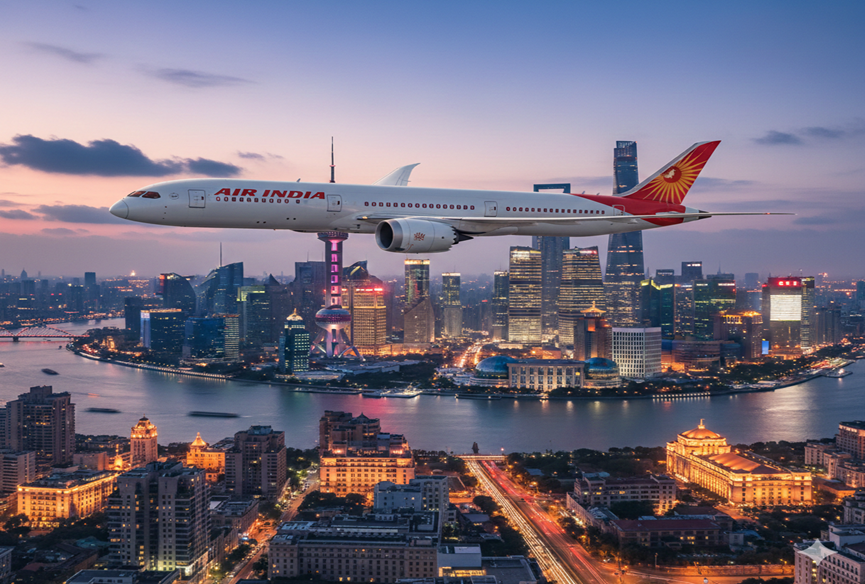
In a move that signals a decisive thaw in one of the most complex bilateral freezes of the modern era, Air India, the flagship carrier under the Tata Group umbrella, officially reinstated its non-stop flight operations between the capital of India and the commercial heart of China on February 1, 2026. The departure of flight AI352 from New Delhi toward Shanghai Pudong International Airport does more than just fill a six-year void in the regional flight map; it serves as a high stake’s barometer for the evolving economic relationship between the two most populous nations on the planet. This resumption occurs against a backdrop of tentative diplomatic rapprochement and an aggressive multibillion-dollar fleet modernization program, positioning the airline as a primary vehicle for India’s soft power and commercial reach in the Asia Pacific corridor.
THE SIX YEAR DISCONNECT AND THE DIPLOMATIC PIVOT
The cessation of direct aerial connectivity between India and China in early 2020 was a dual casualty of the global health crisis and the subsequent geopolitical friction along the Himalayan frontier. For nearly seventy-two months, the absence of direct transit forced business travelers and the sprawling academic diaspora into circuitous routes through Southeast Asian hubs, effectively tripling travel times and doubling logistics costs. The restoration of this link is the direct fruit of a series of high-level engagements, most notably the discussions held during the 2024 Kazan summit and subsequent technical level deliberations in 2025. By late 2025, the Ministry of External Affairs confirmed that both administrations had reached a pragmatic consensus on patrolling protocols and air service agreements, paving the runway for the Tata Group to reclaim its historical footprint in mainland China. The timing is significant, coinciding with India’s preparation to host the 2026 BRICS Summit, where the ease of movement for delegates and executives is a foundational requirement for the event’s success.
QUANTIFYING THE AVIATION VOID: DATA AND CAPACITY ANALYSIS
Prior to the 2020 suspension, the aviation corridor between India and China supported more than five hundred direct flights every month, a volume that underscored the deep integration of supply chains and the burgeoning demand for cross border tourism. The current resumption, while controlled, reflects a calculated ramp up strategy. Air India has deployed its Boeing 787-8 Dreamliner for the Delhi to Shanghai sector, offering a four times weekly service. The aircraft configuration includes eighteen lie flat beds in a premium business cabin and two hundred and thirty-eight seats in the economy section, catering specifically to the high yield corporate traveler and the resilient visiting friends and relatives’ segment. Initial reports from the inaugural flight out of Shanghai Pudong confirmed a load factor exceeding ninety percent, with over two hundred and thirty passengers on board. This surge in immediate demand highlights the massive latent market that remained untapped during the half decade freeze. Market analysts note that while Chinese carriers like China Eastern and the Indian low-cost giant IndiGo also restarted operations late last year, Air India’s full-service model is designed to capture the lucrative cargo and premium executive segments that are essential for the viability of long-haul routes.
GLOBAL ECONOMIC IMPLICATIONS AND SUPPLY CHAIN SYNERGY
The economic gravity of this resumption extends far beyond the passenger manifests. For the global electronics, pharmaceutical, and automotive sectors, the Delhi to Shanghai route is a critical artery for high value cargo. The lack of direct belly hold capacity since 2020 forced manufacturers to rely on more expensive freighter services or transshipment through third countries, adding layers of inefficiency to just in time manufacturing processes. With Air India’s widebody aircraft back in the rotation, the transit time for critical components between the Yangtze River Delta and India’s industrial hubs is expected to drop by over sixty percent. Furthermore, the presence of the Indian Consul General in Shanghai at the inaugural ceremony underscored the institutional weight being thrown behind this relaunch. Beyond trade, the revival of this route is a shot in the arm for the Indian tourism sector, which saw a significant dip in high spending Chinese travelers over the last several years. The synergy between improved air links and relaxed visa norms could potentially inject billions into the regional hospitality ecosystem by the end of the 2026 fiscal year.
TRANSFORMATION UNDER VIHAAN.AI AND FUTURE PROJECTIONS
This specific route resumption is a microcosm of the broader Vihaan.AI transformation strategy, the Tata Group’s five-year roadmap to elevate Air India into a world class carrier. The simultaneous deployment of the airline’s first custom styled Boeing 787-9 on the Mumbai to Frankfurt sector on the same day as the Shanghai relaunch demonstrates a dual focus on quality and network expansion. Looking ahead, Air India has signaled its intent to launch a non-stop Mumbai to Shanghai service later in 2026, contingent upon regulatory clearances and the arrival of further line fit widebody deliveries from Boeing and Airbus. The airline’s massive four hundred and seventy aircraft order is now transitioning from paper to the tarmac, providing the necessary hardware to sustain daily frequencies on high density Asian routes. Experts in the aviation sector predict that if the current diplomatic stability persists, the seat capacity between the two nations could return to seventy five percent of pre-pandemic levels by the first quarter of 2027, provided that other major hubs like Beijing and Guangzhou are also fully integrated into the network.
EXECUTIVE SUMMARY AND STRATEGIC CONCLUSION
The relaunch of Air India’s Delhi to Shanghai service is a landmark moment that defines the post pandemic recovery of Asian aviation. It is a sophisticated maneuver that balances the commercial imperatives of the Tata Group with the broader diplomatic objectives of the Indian state. By reconnecting the world’s two largest population centers, Air India is not merely flying a route; it is rebuilding an economic bridge that has been broken for over half a decade. While challenges remain, particularly regarding the delicate nature of bilateral border relations and the competitive pressure from regional hubs, the inaugural flight’s success provides a definitive blueprint for future expansion. The aviation sector now watches closely as this restored link serves as the primary conduit for a new era of engagement, trade, and regional mobility between New Delhi and Beijing.
 Anshum Raj
  Vibhuuti Goyal