

The US House Just Broke the Sound Barrier on 53 Years of Aviation Policy
H.R. 3410, the Supersonic Aviation Modernization Act, cleared the House on March 24, 2026 — setting the stage for faster-than-sound passenger flight over American soil for the first time in over half a century.
For more than five decades, a single line in the US Code of Federal Regulations — 14 CFR § 91.817 — quietly sealed off the American sky to faster-than-sound civilian aircraft. No sonic booms over suburban rooftops. No coast-to-coast sprints at Mach 1.5. No American supersonic aviation industry to speak of. On March 24, 2026, the US House of Representatives voted unanimously to begin dismantling that prohibition.
The vehicle is H.R. 3410, the Supersonic Aviation Modernization (SAM) Act, introduced by Rep. Troy Nehls (R-TX-22) and co-sponsored in the Senate by Sen. Ted Budd (R-NC). The bill passed the House by voice vote — a sweeping, bipartisan signal that after half a century, American lawmakers believe the technology has finally caught up with the ambition. The bill now heads to the Senate, where industry leaders, aviation advocates, and aircraft manufacturers are urging swift action.
What H.R. 3410 Actually Does
The SAM Act does not wave a magic wand and instantly fill the skies with supersonic jets. What it does is legal and regulatory: it instructs the Federal Aviation Administration (FAA) to revise or issue new regulations within one year of enactment to allow civil aircraft to operate at speeds exceeding Mach 1 in the National Airspace System — without requiring special government authorization — as long as no sonic boom reaches the ground in the United States.
That last clause — “no sonic boom reaches the ground” — is the engineering key that unlocks the whole policy door. For decades, the objection to overland supersonic flight was never really about speed. It was about the thunderclap of compressed air that trails a supersonic aircraft across populated land below. Modern low-boom technology, tested in real flight conditions, has demonstrated that aircraft traveling beyond the sound barrier at sufficient altitude can dramatically reduce or eliminate that ground-level shockwave.
Key Provisions of H.R. 3410 — SAM Act
- Directs the FAA to revise regulations within 12 months of enactment to permit civil supersonic flight in US national airspace without special authorization
- Requires aircraft operations to be conducted so that no sonic boom reaches the ground in the United States
- Mandates the FAA to issue a final noise standard rule by April 1, 2027, capping supersonic aircraft noise at levels no greater than current subsonic commercial aircraft takeoff and landing requirements
- Requires the FAA noise standards to include a process for periodic review and update as noise-reduction technology advances
- Codifies and builds upon President Trump’s June 6, 2025 executive order directing the FAA to lift the overland supersonic ban
The noise standard provision is significant for the aviation industry. By tying supersonic certification to existing subsonic noise benchmarks, lawmakers have given manufacturers a concrete engineering target. The bill also ensures the standard won’t freeze in place — as low-boom technology matures, the FAA will be required to revisit and update those thresholds accordingly.
A 53-Year Timeline: How America Banned the Boom
The FAA enacts 14 CFR § 91.817, prohibiting civil aircraft from exceeding Mach 1 over the United States. The rule targets the sonic boom problem that had made domestic supersonic development politically toxic. No American supersonic airliner ever flies a commercial domestic route.
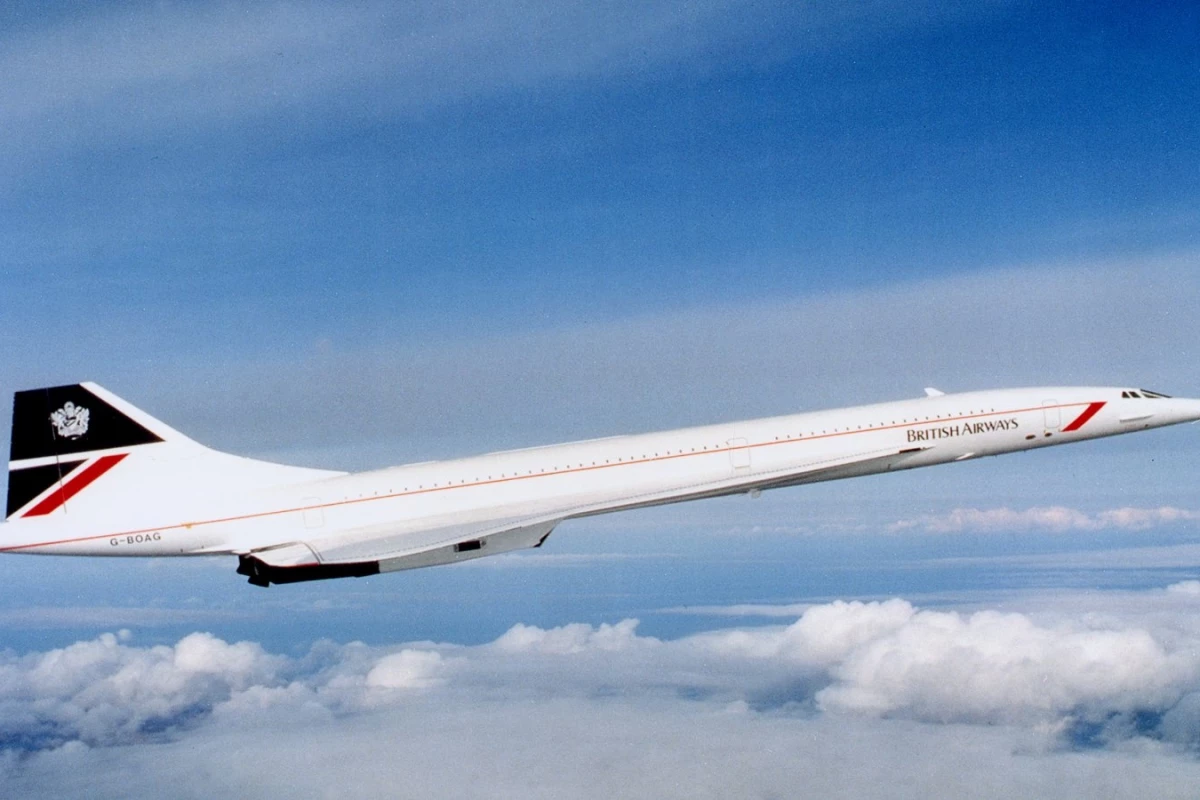
Concorde, the Anglo-French supersonic airliner, operates transatlantic routes, serving New York and Washington but never permitted to fly supersonically over US mainland. Its retirement in 2003 ends the first commercial supersonic era.
Boom Supersonic founded in Denver; NASA begins work on the X-59 QueSST quiet supersonic demonstrator with Lockheed Martin; the International Civil Aviation Organization (ICAO) agrees on new global supersonic noise standards. The era of “low-boom” engineering matures rapidly.
President Trump signs an executive order titled “Leading the World in Supersonic Flight,” directing the FAA to repeal the overland prohibition and establish noise-based certification standards. The order calls the existing rules “outdated and overly restrictive.”
NASA’s X-59 quiet supersonic aircraft completes its first flight, beginning a test campaign focused on handling, safety, and low-boom performance over populated communities.
The House Transportation and Infrastructure Committee passes H.R. 3410 by voice vote, advancing the SAM Act to the full House floor.
The full US House of Representatives passes H.R. 3410, the Supersonic Aviation Modernization Act, by unanimous voice vote. The bill now awaits Senate action.
The Technology That Made This Politically Possible
The 1973 ban was not irrational for its time. Supersonic aircraft of that era produced ground-level shockwaves loud enough to shatter windows, startle livestock, and rattle the political nerves of communities beneath flight paths. The Concorde’s transatlantic service was tolerated only because it operated supersonically over open ocean, throttling back to subsonic speeds before crossing land.
What has changed is the science of boom shaping. Through computational fluid dynamics and decades of aeronautical research, engineers have learned that carefully sculpting an aircraft’s nose, fuselage, and wing geometry can dramatically reshape the pressure signature it creates. Instead of a sharp, jarring double boom, a well-designed low-boom aircraft produces a soft thump — often described as a distant car door closing — or, at sufficient altitude, nothing audible at the surface at all.
NASA’s X-59 QueSST is the flagship proof-of-concept for this approach. Built by Lockheed Martin’s Skunk Works division, the single-engine jet features a needle-like fuselage 99 feet long and a specially designed cockpit without a forward-facing window (replaced by an external camera system). Its first flight in October 2025 marked the beginning of a community overflight campaign designed to gather public response data — noise measurements and perception surveys from people on the ground — to help regulators define what “acceptable” supersonic noise actually sounds like in real residential settings.
Commercially, Boom Supersonic has emerged as the industry’s most visible standard-bearer. The Denver-based company’s XB-1 demonstrator aircraft conducted multiple supersonic test flights over land in early 2025, proving in controlled conditions that civil supersonic flight above certain altitudes generates no detectable ground boom. Boom’s full-scale passenger jet, the Overture, is designed to carry between 65 and 80 passengers at speeds around Mach 1.7. It has already accumulated more than 130 orders and pre-orders from carriers including United Airlines, American Airlines, and Japan Airlines.
“Legalizing supersonic flight makes a renaissance in supersonic passenger travel inevitable.”
Blake Scholl, Founder & CEO, Boom SupersonicWho Is Driving the Legislation — and Who Is Pushing Back
Rep. Troy Nehls, who chairs the House Transportation Committee’s Subcommittee on Aviation, has been the bill’s chief architect and most vocal champion. His framing has been explicitly competitive: the United States cannot afford to cede leadership in supersonic aviation to foreign rivals. “For decades, FAA regulations have held back American innovation and supersonic flight,” Nehls said after the House vote. The senator championing the companion bill in the upper chamber is Ted Budd of North Carolina — not coincidentally, the home state of Piedmont Triad International Airport, where Boom Supersonic’s Overture manufacturing facility is under development.
Industry support has been broad and vocal. The National Business Aviation Association (NBAA), which represents over 10,000 member companies, praised the House vote as essential to preserving American global leadership in aviation. NBAA President and CEO Ed Bolen called the four aviation bills passed that day — of which the SAM Act was the centerpiece — key to “promoting innovation in aircraft development, efficiency through digitization and investment in aviation infrastructure.”
Not everyone is celebrating. Rep. Steve Cohen (D-TN) raised objections during committee proceedings, arguing that the absence of a “serious reexamination of community impact and public health data” made advancing the bill premature. Environmental critics have also pointed to the significant fuel burn of supersonic aircraft and the associated carbon footprint, noting that supersonic flight is inherently more energy-intensive per seat-mile than equivalent subsonic travel. Climate researchers have flagged concerns about contrail formation at supersonic cruise altitudes and potential impacts on stratospheric chemistry.
Industry analyst Brian Foley offered a measured commercial assessment, describing supersonic air travel as “definitely a niche product.” The economics of supersonic flight — higher fuel burn, lower passenger density, elevated maintenance costs — all but guarantee that tickets will carry a premium price, likely placing the experience out of reach for most travelers for the foreseeable future. Like the Concorde before it, the new supersonic era, if it arrives, will begin as a luxury service before any democratization of speed occurs.
Key Players in the Supersonic Race
Boom Supersonic
Denver-based manufacturer developing the Overture passenger jet (Mach 1.7, 65–80 seats). XB-1 demonstrator proved overland low-boom operation. Over 130 airline orders placed.
NASA / Lockheed X-59
Experimental low-boom demonstrator in active flight testing since Oct 2025. Designed to measure public response to quiet supersonic flight over communities.
Rep. Troy Nehls (R-TX)
House Avation Subcommittee Chair and primary sponsor of H.R. 3410. Framed the bill as a national competitiveness imperative against foreign aviation rivals.
FAA
If SAM Act becomes law, the FAA must revise regulations within 12 months and issue final noise standards by April 2027. Faces the complex task of building a new supersonic certification framework.
NBAA
Representing 10,000+ aviation businesses, the NBAA has been among the loudest industry voices backing the SAM Act, arguing that low-boom technology justifies a new regulatory era.
United / American / JAL
Major carriers that have placed orders or pre-orders for Boom’s Overture, signaling commercial confidence in next-generation supersonic passenger service.
What Happens Next: The Road to the Senate and Beyond
The House vote, while landmark, is only one chamber. H.R. 3410 must now pass the Senate before it can be sent to President Trump — who has already signaled his support through the June 2025 executive order — for signature into law. Senate companion legislation has been introduced by Sen. Budd, but the Senate’s calendar and competing legislative priorities will determine how quickly the bill moves.
If and when the SAM Act becomes law, the regulatory clock starts. The FAA will have 12 months to revise its rules and publish a framework for supersonic operations in the National Airspace System. By April 1, 2027, the agency must also issue a final rule establishing noise standards. That standard cannot be more permissive than the current noise limits imposed on subsonic commercial aircraft — a meaningful constraint that will shape aircraft design requirements for years.
Even after regulations are in place, supersonic passenger service over the continental US is not imminent. Boom Supersonic’s Overture has yet to fly in its full-scale form. Certification, commercial production, fleet deployment, and route planning all lie between here and the first supersonic departure from, say, Los Angeles to New York. Industry timelines suggest the early 2030s as a realistic window for the first revenue supersonic flights under any new regulatory regime.
Frequently Asked Questions
The FAA enacted 14 CFR § 91.817 in 1973, prohibiting civil aircraft from operating at or above Mach 1 over the United States due to sonic boom noise concerns.
H.R. 3410, the SAM Act, is legislation passed by the US House of Representatives on March 24, 2026, that would require the FAA to revise its regulations to allow civil aircraft to fly faster than Mach 1 over land, provided no sonic boom reaches the ground. It still requires Senate passage and presidential signature to become law.
A sonic boom is the shock wave produced when an aircraft exceeds the speed of sound, reaching the ground as a loud explosive sound. Modern low-boom technology allows aircraft to fly supersonically at altitude while dramatically reducing or eliminating the shockwave that reaches people on the ground.
Boom Supersonic is the most prominent commercial developer, building the Overture jet with over 130 orders from United Airlines, American Airlines, and Japan Airlines. NASA and Lockheed Martin are testing the X-59, a low-boom research demonstrator.
Even if the SAM Act becomes law in 2026 and the FAA issues rules by 2027, commercial supersonic service over the continental US is unlikely before the early 2030s, given the time required for aircraft development, certification, and fleet deployment.
Almost certainly not at launch. The economics of supersonic flight — higher fuel consumption, smaller cabins, elevated operating costs — mean tickets will command significant premiums over conventional air travel, initially targeting business and premium leisure travelers.
 Aastha Choudhary