

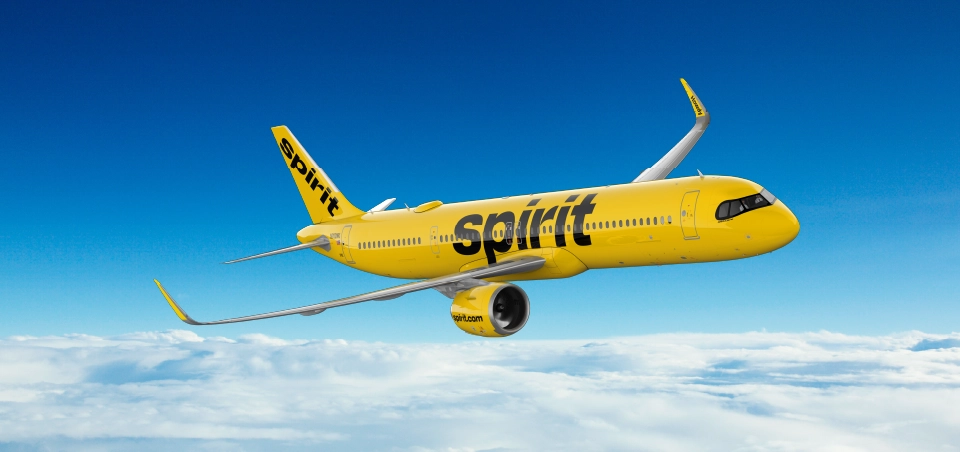
MIRAMAR, Bankruptcy administrators and asset managers at Spirit Airlines made a decision this week that defies every conventional law of aviation economics, signaling a capitulation to market forces that have turned brand-new jets into scrap metal.
Lessors have scheduled a block of Airbus A320neos, some delivered as recently as late 2022, for immediate teardown in Arizona, marking the first time in history that modern airframes under five years of age are being parted out not due to crash damage, but because they are worth more dead than alive. This move exposes the festering wound of the Pratt & Whitney Geared Turbofan (GTF) saga and confirms that for cash-strapped carriers, the operational headache of maintaining these “gliders” has eclipsed their revenue potential.
The logic ruling this decision is cold, hard, and terrifying for anyone holding aviation-backed securities. A commercial airliner is built to fly for twenty-five years. To scrap one before its first heavy maintenance check is financial heresy. Yet, the math at Spirit’s Miramar headquarters is undeniable.
The global shortage of serviceable GTF engines, exacerbated by the powder metal contamination crisis that grounded hundreds of jets starting in 2024, has created a bizarre inversion in the supply chain. The sum of a Neo’s parts, specifically its landing gear, avionics stack, and interior rotables,
now commands a higher immediate liquidity premium than the aircraft itself as a flying asset. Other airlines, desperate to keep their own fleets airborne, are paying ransom prices for spares, making the carcass of a Spirit A320neo a goldmine for parts traders.
We are witnessing the industrial consequences of a broken engine supply chain. Spirit, fighting through its restructuring phase following the blocked JetBlue merger and subsequent Chapter 11 filing, cannot afford to let capital sit depreciating on the tarmac in Roswell or Marana. Every day those aircraft sit engine-less, waiting for MRO slots that are booked through 2028, they burn cash in parking fees and preservation costs.
The “Green Time”, the remaining life on limited-life parts—is the only currency left in these airframes. Asset managers are choosing to monetize the avionics and hydraulics today rather than gamble on a recovery timeline that keeps shifting to the right.
This teardown order casts a long shadow over Airbus. While the manufacturer pushes production rates in Hamburg and Mobile to record highs, existing fleets are effectively rotting. The secondary market for A320neos is fracturing into two distinct tiers: those with Leap-1A engines that can fly, and those with GTFs that are essentially speculative assets.
For Spirit, a carrier that built its business model on high utilization, owning a fleet that cannot fly is a death sentence. The decision to scrap is an admission that they do not expect these specific tails to ever generate revenue for them again.
The absurdity of the current aerospace environment deepens when one looks toward the widebody sector. While carriers are sending three-year-old narrowbodies to the shredder for lack of engines, they are simultaneously giving the cold shoulder to the industry’s newest flagship. Boeing is slated to finally achieve type certification for the 777X later this year, a milestone delayed nearly six years. Yet, in a twist of supreme industry irony, not a single US airline has signed a firm order for the jet as of February 2026. The domestic heavyweights—United, American, and Delta—are ignoring Boeing’s new leviathan while scrambling to cannibalize toddler-aged Airbuses for spare parts.
This disconnect highlights a total collapse in long-term fleet strategy. Executives are no longer planning for the next decade; they are fighting for the next quarter. The 777X offers efficiency for the 2030s, but US carriers are paralyzed by the immediate operational crises of the 2020s. They cannot think about a 400-seat widebody when they cannot keep their 180-seat workhorses in the air. The trust in OEM delivery schedules and performance guarantees has evaporated.
Spirit’s decision to send these young birds to the chopper is the canary in the coal mine. It suggests that the shortage of spare parts and the backlog at engine shops are worse than the public guidance suggests. If a three-year-old jet is worth scrap value, the asset bubble on narrowbodies is distorted beyond recognition. We are no longer operating in an industry of transport; we are in a salvage operation.
The teardown teams in Arizona will strip these planes in a matter of weeks. The aluminum will be recycled, the computers sold to the highest bidder, and the hull registration cancelled. It is a grim milestone for the A320neo program and a scathing indictment of an engine supply chain that promised efficiency but delivered obsolescence. Aviation has always been a cash-burning business, but usually, the fire is in the combustion chamber, not the balance sheet.
 Vibhuuti Goyal