

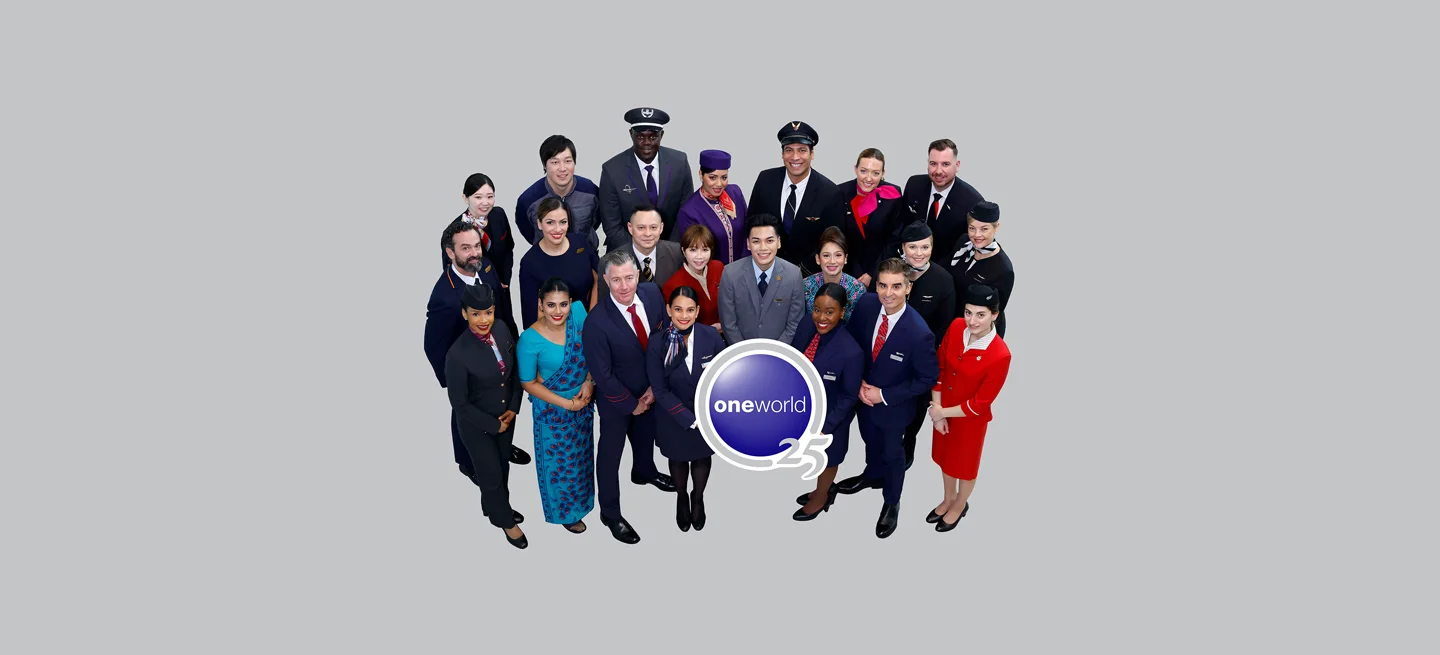
The oneworld alliance has appointed former Finnair Chief Commercial Officer Ole Orvér as its new CEO, effective April 1, 2026. Orvér, a veteran of Nordic and Middle Eastern aviation strategy, succeeds Nathaniel Pieper at a critical inflection point for the alliance as it pivots from membership expansion to deep technical integration. His appointment signals a shift in oneworld’s operational philosophy: moving beyond a marketing coalition to a digitally integrated “super-carrier” capable of competing with the infrastructure dominance of Star Alliance.

THE PIVOT TO EXECUTION
The selection of Orvér is a tactical response to the alliance’s current operational maturity. While his predecessor oversaw a period of aggressive recruitment—bringing Fiji Airways and Oman Air into the fold—Orvér is tasked with the complex machinery of harmonization. His mandate is to dismantle the digital silos that still prevent a seamless passenger experience across member carriers.
Orvér’s tenure at Finnair serves as the blueprint for this assignment. As CCO, he engineered the carrier’s survival strategy during the “double crisis” of the COVID-19 pandemic and the closure of Russian airspace. When Finnair’s primary competitive advantage—the short northern route to Asia—was erased overnight, Orvér pivoted the network to geographically balanced flows, deployed excess capacity via wet-leases to partners like British Airways and Qantas, and oversaw a massive cabin renewal program despite financial headwinds. The oneworld Governing Board is betting that this ability to execute complex pivots under pressure is exactly what the alliance needs to close the infrastructure gap with its rivals.
THE INFRASTRUCTURE DEFICIT
For the past decade, airline alliances have fought for relevance in an era of Joint Ventures (JVs). While JVs allow specific partners (like American and British Airways) to share revenue and coordinate pricing, the broader alliance structure has often been relegated to frequent flyer reciprocity and lounge access.
Oneworld has historically lagged behind Star Alliance and SkyTeam in creating a unified digital backbone. Star Alliance, for instance, has aggressively rolled out biometric infrastructure and intermodal rail partnerships (such as with Deutsche Bahn). SkyTeam has successfully deployed its “Digital Spine” to facilitate cross-carrier check-ins. In contrast, oneworld’s digital initiatives—such as universal boarding passes and real-time cross-carrier baggage tracking—are still in deployment phases. The alliance is playing catch-up, attempting to retrofit a unified digital layer onto the legacy IT systems of 15 diverse carriers ranging from the massive American Airlines to the boutique Fiji Airways.
ALLIANCE BENCHMARKS (2025-2026)
Oneworld Network Expansion:
- New Full Members: Fiji Airways (Joined 2025), Oman Air (Joined 2025).
- Pending Integration: Hawaiian Airlines (Expected 2026, following Alaska Airlines merger).
- Lounge Footprint: 2 branded lounges operational (Seoul-Incheon, Amsterdam); target of 5-10 new branded lounges by 2030 in “white spot” airports (e.g., potential targets in Delhi, Perth).
Digital & Infrastructure Gap
- Star Alliance: Target of 50%-member airline biometric adoption achieved/near-completion by end of 2025.
- Oneworld: “Unified Airline Digital Platform” aiming for 100%-member integration for through-check-in and baggage tracking by year-end 2026.
Finnair Under Orvér (The “Double Crisis” Benchmark)
- Asian Route Efficiency: Flight times increased 40% post-Russian airspace closure, necessitating a complete network restructure.
- Fleet Utilization: Successfully wet-leased excess widebody capacity to oneworld partners, maintaining revenue streams during demand troughs.
1. The “Super-Carrier” Digital Integration
Orvér’s primary challenge is not adding flags to the map, but code to the backend. The “infrastructure trend” here is the shift from physical connectivity (routes) to digital connectivity (APIs). Passengers in 2026 expect to track a bag from a domestic Alaska Airlines flight to a connecting Qatar Airways service within a single app. Currently, this experience is fragmented. Orvér must force technical compliance across the alliance, a task that requires diplomatic leverage over member CIOs. If he succeeds, oneworld transitions from a loose confederation to a virtual “super-carrier.” If he fails, the alliance risks becoming obsolete as bilateral JVs offer superior digital experiences.
2. Asymmetric Hub Strategy
Oneworld’s physical infrastructure strategy is diverging from its peers. While Star Alliance dominates mega-hubs with massive shared terminals, oneworld is aggressively targeting “orphan” hubs—airports with high oneworld traffic but no dominant home carrier. The opening of branded lounges in Amsterdam and Seoul proves the viability of this model. We forecast Orvér will accelerate this capital expenditure, likely targeting high-growth but fragmented markets like India (Delhi/Mumbai) or secondary European gateways. This moves the alliance from a passive service provider to an active infrastructure developer, controlling the premium ground experience where its members cannot.
3. The Loyalty Liquidity Test
The integration of Fiji Airways and Oman Air, followed by Hawaiian, creates a “loyalty liquidity” stress test. The value of oneworld Emerald status lies in its universality—First Class lounge access and priority handling. As the alliance absorbs carriers with different service standards and boutique networks, maintaining the consistency of the “Emerald” brand becomes difficult. Orvér’s background in premium product differentiation at Finnair (e.g., the AirLounge business class seat) suggests he will prioritize protecting the integrity of the premium tier. We expect tighter enforcement of alliance-wide service standards to prevent dilution of the brand as the membership roster grows.
FORECAST
Expect Orvér’s first year to be quiet on the expansion front but aggressive on the backend. The era of “flag planting” is over; the era of “code planting” has begun. The metric for his success in 2027 will not be how many airlines joined oneworld, but how many passengers seamlessly transferred from an American Airlines flight to an Oman Air flight without ever speaking to an agent.
 Aastha Choudhary
  Anshum Raj
  Shaifali