


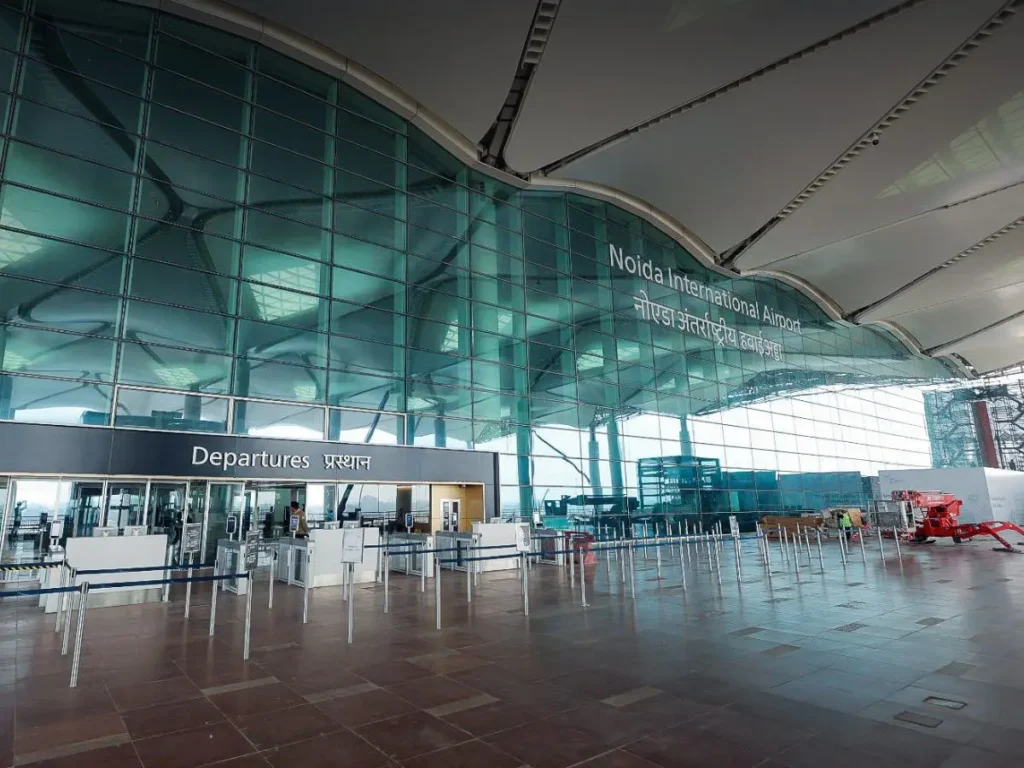
After a much longer wait, India marked a historic milestone in its infrastructure journey today as Prime Minister Narendra Modi inaugurated the much-awaited Noida International Airport at Jewar, positioning it as a key aviation hub for North India and a major catalyst for regional economic growth.
The high-profile inauguration ceremony, held in Gautam Buddha Nagar district of Uttar Pradesh, witnessed the presence of Chief Minister Yogi Adityanath, senior government officials, aviation leaders, and industry stakeholders.
The development of this airport has its own motto, Indra Gandhi International airport has been the major hub to connect Delhi since years but now development is aimed at decongesting the overburdened Delhi airport while significantly improving connectivity for millions of passengers across Noida, Greater Noida, western Uttar Pradesh, and nearby regions.
Addressing the gathering, Prime Minister Modi described the airport as a symbol of “new India’s infrastructure revolution.” He emphasized that the project would enhance connectivity, boost trade and logistics, and create vast employment opportunities.
Not only this but he linked the overall development to the state’s growing network of expressways, industrial corridors, and investment zones.
The Noida International Airport stands out for both its scale and ambition. Phase 1 of the project has been developed at a cost of approximately ₹11,282 crore, while the total planned investment is estimated to reach ₹29,560 crore. Spread across 1,334 hectares, the airport is designed to evolve into one of Asia’s largest aviation hubs in the coming decades.
In its initial phase, the airport will be capable of handling 12 million passengers annually, Long-term plans aim to scale this capacity to 70 million passengers per year by 2036, positioning it among the busiest airports globally.
A very major and highlight point of the airport is the focus on the sustainability, the growing environmental concerns has been a major issue thus the airport focus on net-zero emissions airport, it incorporates renewable energy systems, eco-friendly building materials, and efficient waste management practices.
The airport currently features:
- A 3,900-metre runway
- A modern passenger terminal
- 48 check-in counters
- Around 25 aircraft parking stands
- Operational capacity of 30 flights per hour
While the airport has been officially inaugurated today, the commercial flights are expected to begin around May 2026. Domestic carriers such as IndiGo, Akasa Air, and Air India Express are likely to be among the first to commence services, followed by international operations in subsequent phases.
The economic effect for the airport is going to be massive, the real estate market has already responded positively, with reports indicating a 28% rise in plot prices and a 22% increase in apartment values.
Located along the Yamuna expressway, the airport is set to serve not only Delhi and Noida but also western Uttar Pradesh and neighboring states. Plans are underway to integrate it with road, rail, and metro networks, transforming it into a multi-modal transport hub.
The Jewar airport project has been years in the making. Conceived and approved around 2017, construction began in 2021, culminating in today’s inauguration. Its completion reflects a sustained push toward infrastructure expansion and decentralisation of air traffic in the NCR.
This shows the maximum effort for everyone who completed the project with full potential and made it so big. Today indeed marks a big day for India as a growing infrastructure country.
The inauguration of Noida International Airport marks more than the opening of a new travel hub it represents a strategic shift in India’s aviation landscape. By reducing congestion in Delhi, enhancing regional connectivity, and unlocking economic potential, the airport is poised to redefine how North India connects with the world.
As operations begin in the coming months and expansion phases unfold, the Jewar airport is set to emerge as a cornerstone of India’s future-ready infrastructure.