

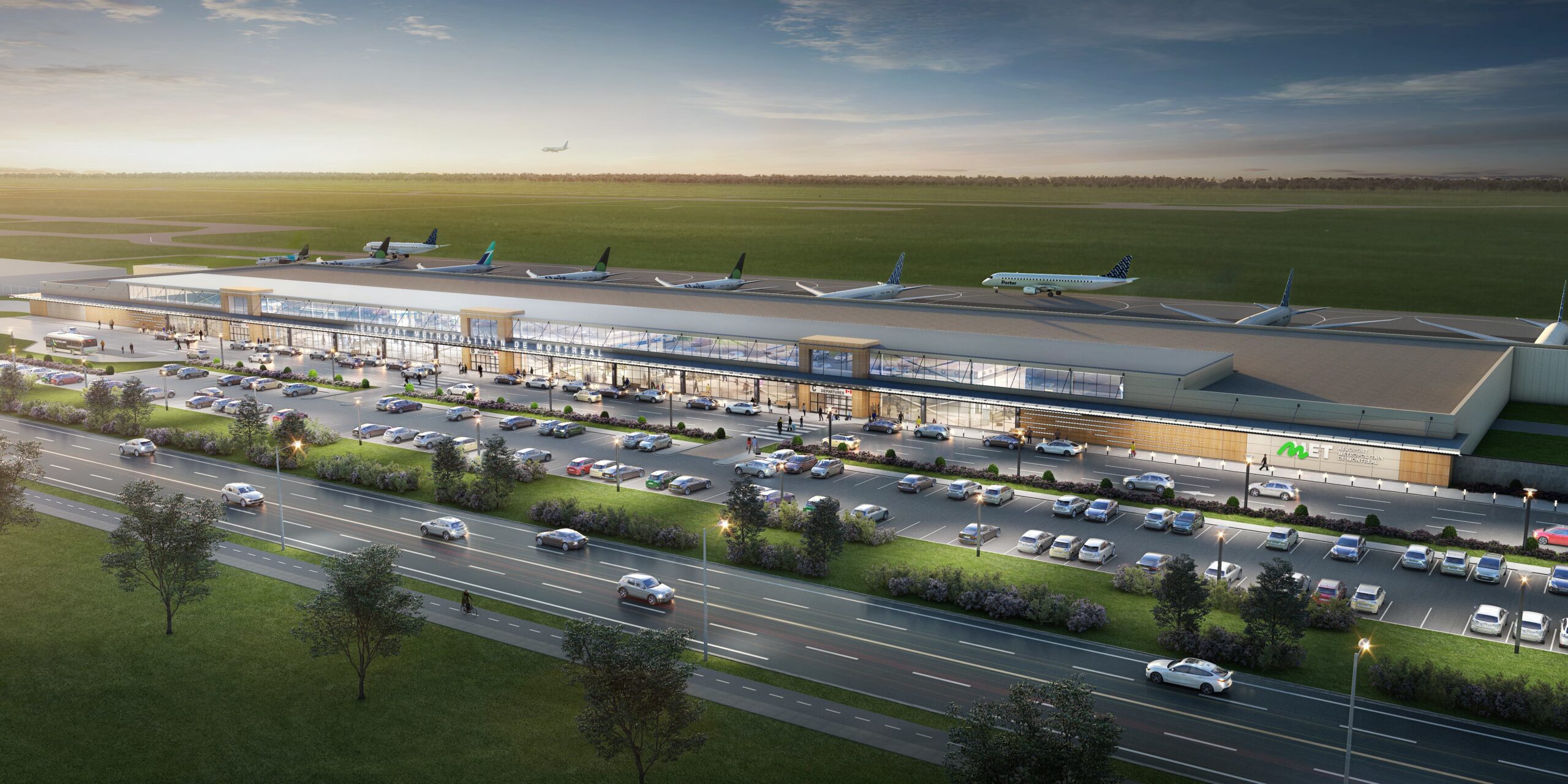
Canada‘s oldest airport is back — rebuilt from the ground up as a modern commercial hub just 15 minutes from downtown Montreal. Here is everything you need to know before you fly.
Montreal has been a one-airport city for decades. That changes on June 15.
Greater Montreal is getting its second full commercial airport with the launch of MET — Montreal Metropolitan Airport — and it is arriving with more ambition than most people expected. This is not a regional airstrip quietly adding a few turboprop routes. It is a brand-new 21,000-square-metre terminal, twelve nonstop destinations served from day one, and a carrier that is betting its entire Montreal strategy on making YHU work.
For the millions of South Shore and Montérégie residents who have spent years driving past this airport on their way to Trudeau, the wait is finally over.
What Is Montreal Metropolitan Airport (MET / YHU)?
Most Montrealers know this site as Saint-Hubert Airport — a name that has been associated with general aviation, flight training schools, and the occasional regional turboprop for the better part of a century. The airport first opened in 1927, making it the oldest operating airport in Canada, and briefly served as Montreal’s primary commercial gateway before wartime priorities redirected commercial traffic to Dorval in 1940.
The rebranding to MET — Montreal Metropolitan Airport — marks a clean break with that utilitarian past. The new identity signals something important: this is no longer a secondary field. It is a full commercial airport with its own terminal, its own airline partnerships, and its own identity in the Montreal market.
The IATA code remains YHU. The airport sits in Longueuil on Montreal’s South Shore, approximately 15 kilometres from the city centre — a distance that puts it within comfortable reach of more than half of the greater Montreal region’s population. For anyone who finds the Trudeau commute inconvenient, the geography alone makes YHU worth paying attention to.
The New Terminal: Built for Speed and Simplicity
The new terminal at YHU is the physical centrepiece of this entire project, and it was built with a specific philosophy in mind: get passengers from the curb to the gate as fast as possible.
The structure spans 21,000 square metres and was constructed by PCL Construction, designed by Scott and Associates Architects. Construction began in August 2023 and was completed in under three years — a pace that puts most Canadian infrastructure timelines to shame. The terminal originally targeted a 2024 opening before construction timelines pushed the date forward to the current June 15, 2026 launch.
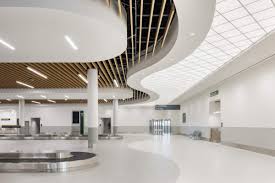
Inside, passengers will find nine boarding bridges, a departure lounge with seating capacity for 900 people, and a food and retail offering anchored by Quebec-based brands rather than the generic national chains that fill most Canadian airport terminals. The open-concept layout is intentional — the design avoids the sprawling corridor configurations that turn airports like YUL into endurance tests and instead keeps everything visible and accessible from a central space.
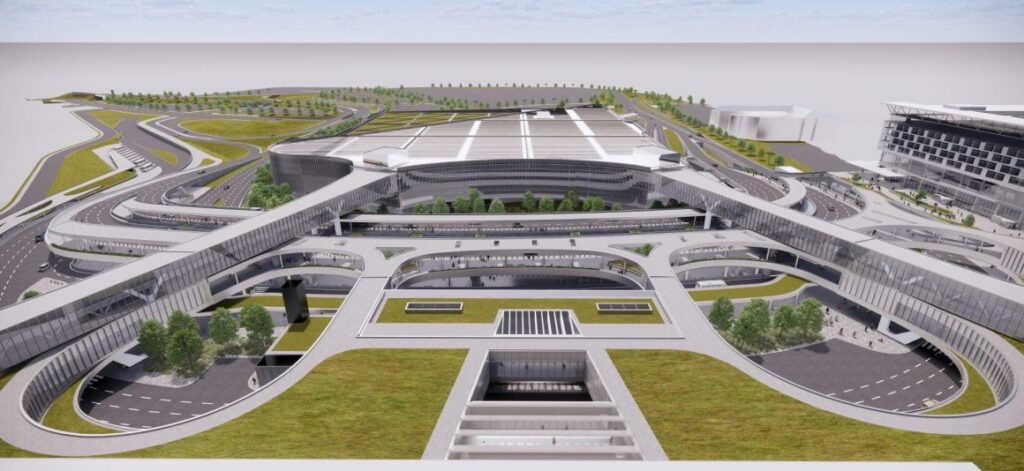
A few practical things to know before arriving: MET operates as a domestic-only airport at launch. There is no customs facility, no international pre-clearance, and no duty-free. There are also no private airline lounges — but the main departure lounge is designed to be genuinely comfortable for all passengers, regardless of fare class. The entire operation runs under a single integrated management model, which means check-in, security, and gate operations are all coordinated under one system — something that should translate directly into faster processing times compared to larger fragmented terminals.
Porter Airlines at YHU: 12 Routes, 138 Weekly Flights
Porter Airlines is the anchor carrier at YHU, and its commitment to the airport is substantial. On June 15, Porter launches twelve nonstop routes from MET covering destinations from coast to coast across Canada.
The destination list reads like a national network built in a single move. Toronto is served twice — both Billy Bishop City Airport and Pearson International — with combined weekly frequencies that make YHU a viable daily-use option for Montreal-Toronto travellers. Vancouver, Calgary, and Edmonton give western Canada full representation from day one. Halifax, St. John’s, Moncton, and Charlottetown complete the Atlantic Canada coverage. Quebec City, Winnipeg, and Hamilton round out the network.
The frequency numbers are where things get genuinely interesting. Porter will operate up to 138 weekly departures from YHU — more than the 106 weekly flights it operates from Trudeau. In practical terms, Porter will run more of its Montreal flying out of YHU than its established base at YUL from the very first week of service. This is not a soft entry into a new airport. It is a strategic pivot.
When combined with its continuing Trudeau operation, Porter will offer up to 244 weekly departures from the Montreal region at peak summer — a 91% increase in its local capacity. That number represents one of the most aggressive single-market capacity expansions any Canadian carrier has executed in recent memory.
The aircraft operating YHU routes will be the De Havilland Dash 8-400 on thinner regional routes and the Embraer E195-E2 on higher-volume destinations including Toronto, Vancouver, and Calgary. Both aircraft types operate without middle seats — a cabin configuration Porter has made central to its brand identity across its entire network.
Pascan Aviation: Connecting YHU to Quebec’s Regions
Porter is not flying alone at YHU. Pascan Aviation — Quebec’s leading regional carrier — will operate its own routes from the airport, providing connections into smaller Quebec communities that fall outside Porter’s network coverage. The two carriers have established an interline agreement allowing passengers to purchase a single ticket covering both airlines, with through-checked baggage. For travellers heading to Quebec’s more remote destinations, this arrangement removes the friction of a separate booking and a separate baggage claim.
How to Get to Montreal Metropolitan Airport (YHU)
Getting to a new airport is always the question that decides whether people actually use it, and YHU has a reasonable answer.
By public transit: The METbus — RTL route 428 — runs as an express shuttle between the Longueuil–Université-de-Sherbrooke metro station and the YHU terminal. From that metro station, the Yellow Line connects directly into Montreal’s central metro network, making car-free travel from most of the island a genuine option rather than a logistical exercise.
By car: The drive from downtown Montreal runs approximately 25 to 30 minutes under normal traffic conditions. South Shore residents will likely find it significantly faster than crossing the Champlain Bridge or Tunnel Louis-Hippolyte-La Fontaine to reach Trudeau. On-site car rental is available through Enterprise, Alamo, and National. Parking is available directly at the terminal.
YHU vs. YUL: Which Montreal Airport Should You Choose?
This is the question every Montreal traveller will be searching before summer arrives, so here is a straight answer.
Choose YHU when: You are flying Porter to any of its twelve launch destinations. You live on the South Shore, in Longueuil, Brossard, Saint-Jean-sur-Richelieu, or anywhere in Montérégie. You want a smaller, faster, less crowded airport experience. You are travelling domestically and want to skip the full Trudeau process.
Choose YUL when: You are flying internationally. You need Air Canada or a carrier not yet operating at YHU. You are based in north or west Montreal where the drive to the South Shore adds meaningful time. You need connections to the United States with customs pre-clearance.
The two airports are not in direct competition for every passenger on every route. They serve different geographic catchment areas and different carrier networks. A functioning dual-airport city is not one where passengers are confused — it is one where the right airport for each trip becomes obvious. Montreal is building toward that clarity.
Why Montreal’s Second Airport Changes Everything
The broader significance of YHU’s commercial launch goes beyond convenience for South Shore commuters. Airport competition within a single metro area is one of the most effective structural mechanisms for driving fares down and service quality up. Montreal passengers have not had access to that dynamic in the modern era. Starting June 15, they will.
Public support for the project is strong — a 2024 survey conducted by research firm Léger found that 77 percent of greater Montreal area residents back the airport’s commercial development, a level of enthusiasm that reflects genuine demand rather than institutional optimism.
The terminal has also been designed with future growth in mind. Additional carriers beyond Porter and Pascan are expected to follow as YHU establishes its commercial track record. The infrastructure is ready. The routes are live. The question now is simply whether passengers show up — and given the combination of location, simplicity, and Porter’s coast-to-coast network, there are strong reasons to believe they will.
Montreal’s air travel landscape on June 14 and Montreal’s air travel landscape on June 16 are going to look very different. For passengers, that is nothing but good news.
Porter Airlines routes from YHU are available to book now at flyporter.com. The terminal officially opens June 15, 2026.
 Aastha Choudhary