


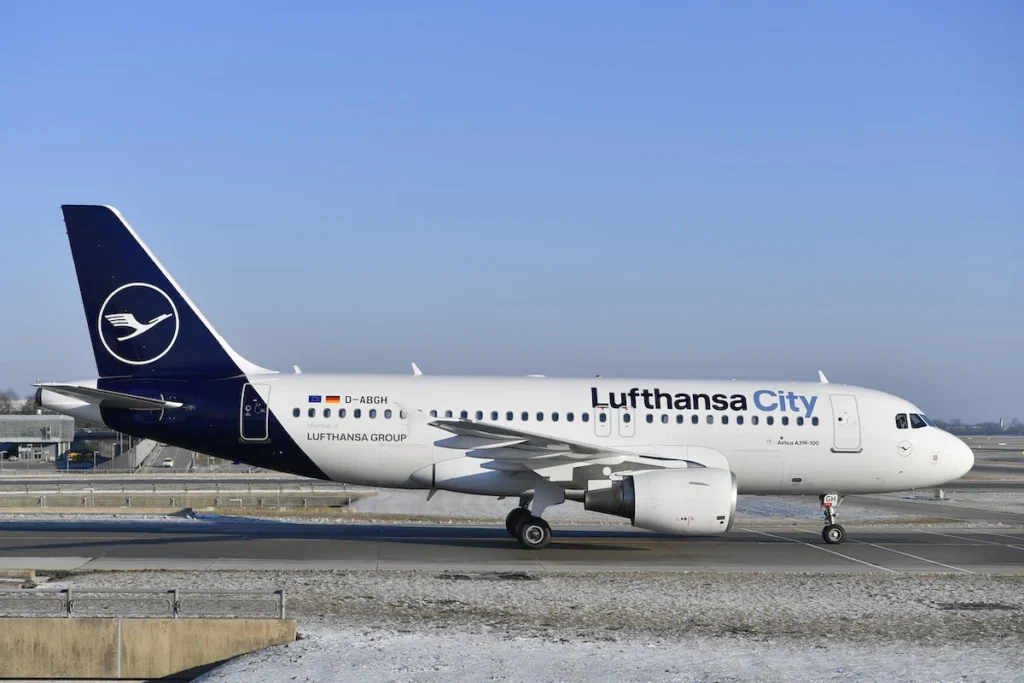
On April 16, 2026, Lufthansa Group made one of the most abrupt and consequential decisions in its recent corporate history — grounding all 27 operational aircraft of its long-standing regional subsidiary, Lufthansa CityLine, with effect from April 18. What was originally planned for 2028 was compressed into a matter of days. The trigger: a fuel crisis born from geopolitical fire, compounded by months of crippling labor unrest.
It did not take years of gradual decline to bring Lufthansa CityLine to a halt. It took two days’ notice. When Lufthansa Group’s Chief Financial Officer Till Streichert stepped before cameras on April 16 to announce the immediate and permanent removal of CityLine’s entire operational fleet from the flight program, he was frank about the forces at work — soaring kerosene prices that had more than doubled since before the Iran conflict, and the mounting financial toll of repeated pilot and cabin crew strikes that had already cancelled thousands of flights across the group’s network.
What made the announcement particularly striking was not just its speed but its finality. This was not a suspension, a seasonal grounding, or a temporary capacity adjustment. CityLine’s 27 aircraft — a dozen Airbus A319s and fifteen Bombardier CRJ-900 regional jets — were gone from the schedule permanently, effective immediately. The doors of one of Europe’s oldest regional carriers, founded in 1958 as Ostfriesische Lufttaxi and renamed Lufthansa CityLine in 1992, were being shut in real time.
A Decision Years in the Making, a Crisis That Made It Inevitable
The closure of Lufthansa CityLine was not entirely a surprise to those who had followed the group’s strategic direction. In June 2024, Lufthansa had already publicly signaled that CityLine would be wound down at some point in the foreseeable future, with its European feeder routes gradually migrating to a newer, lower-cost entity called Lufthansa City Airlines — a separate air operator certificate established in 2022 and operational since June 2024. The original timeline pointed toward 2028.
Streichert was explicit on this point: the group had “identified the prospective removal of CityLine from its program as part of strategic development for some time, independently of the current geopolitical crisis.” The Iran war and its ripple effects on global oil markets did not invent the decision. They simply made it impossible to delay.

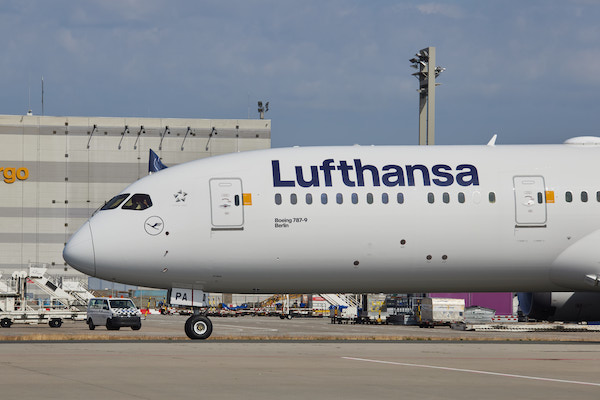
The CRJ-900 regional jets at the heart of CityLine’s fleet were, by the group’s own admission, nearing the end of their technical operational life. Their per-seat fuel consumption was high relative to modern narrowbody aircraft. The Airbus A319s in the fleet averaged over 24 years of age — among the oldest aircraft in any Lufthansa Group livery. Operating these aircraft in an environment where jet fuel prices had surged dramatically generated losses with every departure. As Streichert put it, the grounding was necessary “to reduce further losses of the loss-making airline.”
The Fuel Shock Behind the Decision
The backdrop to CityLine’s closure is a fuel market that has been reshaped dramatically by the conflict involving Iran. Kerosene prices, which had already crept upward in recent years, more than doubled relative to pre-conflict levels as geopolitical instability disrupted global oil supply chains and sent commodity markets into sustained volatility.
Lufthansa Group, like most major carriers, hedges a significant portion of its fuel requirements. The group had hedged approximately 80 percent of its fuel needs at above-average rates based on crude oil prices. But the remaining 20 percent — the unhedged portion — was being purchased at sharply elevated spot prices. That slice of unprotected fuel expenditure, multiplied across a fleet of hundreds of aircraft operating thousands of daily flights, was generating enormous additional costs that no amount of commercial revenue optimization could comfortably absorb.
By retiring CityLine’s fleet immediately, the group could reduce the total volume of fuel it needed to purchase at those elevated market rates. The logic was straightforward: the aircraft being grounded were among the least fuel-efficient in the portfolio, and their removal would cut the unhedged portion of fuel consumption disproportionately. In other words, the savings effect of the CityLine grounding was amplified precisely because the fleet being retired burned more fuel per seat than the modern aircraft that would remain in service.
Three Steps: CityLine, Long-Haul Cuts, and Winter Reductions
The CityLine grounding was the most visible but not the only element of what Lufthansa Group described as an accelerated implementation of its fleet and capacity strategy. The announcement outlined a three-phase program of reductions spanning the coming months.
The first step — the immediate removal of CityLine’s 27 aircraft — took effect within 48 hours of the announcement. The second step, scheduled for the end of the summer flight season in October 2026, involves the retirement of the last four remaining Airbus A340-600 aircraft from the Lufthansa mainline fleet, bringing a definitive end to the A340-600 era at Germany’s flag carrier. Two Boeing 747-400 aircraft will simultaneously be grounded for the winter season. Together, these long-haul retirements account for six intercontinental aircraft leaving active service by October.
The third step will follow during the 2026-2027 winter flight schedule, when five additional aircraft will be cut from Lufthansa Airlines’ core short- and medium-haul program. Running alongside all three phases is the accelerated transfer of nine additional Airbus A350-900 aircraft to Discover Airlines, the group’s leisure carrier, as part of medium-term fleet modernization planning.
The underlying philosophy connecting all three steps is one of consolidation and simplification. Lufthansa Group has long identified the proliferation of different aircraft sub-fleets as a source of unnecessary cost and operational complexity. Maintenance certifications, spare parts inventories, pilot type ratings, and engineering expertise must all be maintained separately for each aircraft variant in the fleet. Every sub-fleet eliminated reduces that burden.
CityLine’s Place in the Group — and Its Replacement
Lufthansa CityLine had operated for decades as the backbone of Lufthansa’s short-haul European network, running dense domestic and regional routes out of Frankfurt and Munich under Lufthansa’s livery and flight codes. Passengers booking Lufthansa tickets on routes to smaller European cities were often flying on CityLine aircraft without ever knowing it. The airline was, in that sense, invisible to the traveling public — a structural layer beneath the Lufthansa brand rather than a standalone identity.

That operational model, however effective in earlier decades, had become financially untenable as labor costs rose and competition from budget carriers intensified. Lufthansa City Airlines was designed as the answer: a new operator with a fresh set of labor agreements, initially operating Airbus A319 and A320neo aircraft, capable of flying the same European feeder routes at meaningfully lower crew costs. The transition from CityLine to City Airlines was always going to be disruptive for CityLine’s workforce, but the accelerated timeline has compressed what was supposed to be a managed multi-year migration into an abrupt closure.
What Happens to the People
Approximately 2,000 employees worked within CityLine’s operations across cockpit, cabin, technical, and administrative functions. The group has been emphatic that its priority is to keep those workers within the broader Lufthansa family.
Ground staff have already been offered positions at the newly established Lufthansa Aviation GmbH. Cockpit and cabin crew were presented with transfer options to Lufthansa City Airlines at the turn of 2024 and 2025, with offers designed to preserve compensation conditions comparable to those at CityLine for a multi-year transition period. Formal negotiations on redundancy terms and social plans are now underway for those workers who may not be absorbed through the transfer scheme.
The human dimension of the closure is real and significant. CityLine was not merely a collection of aircraft and routes — it was an employer with deep institutional roots, employing people who had built careers within its specific culture. The speed of the closure has understandably created anxiety, even for workers who have in principle been offered alternative employment.
A Broader Lesson for European Aviation
The CityLine story fits within a wider pattern that has been reshaping European aviation for years. Regional carriers operating older, less efficient aircraft under legacy cost structures face an increasingly impossible equation as fuel costs rise and budget carriers undercut them on every route. The middle ground — not cheap enough to compete on price, not premium enough to command a loyalty premium — has become a place where airlines go to lose money slowly, then quickly.
Lufthansa Group, by choosing to accelerate a decision it had already made strategically, has at least avoided the slow-motion collapse that has characterized the end of some carriers. The CityLine fleet was ageing, the cost structure was unsustainable, and the replacement architecture in the form of Lufthansa City Airlines was already in place. Acting decisively in response to a fuel crisis that forced the issue is, by the standards of the industry, a rational response.
What remains to be seen is whether the broader capacity reductions — the long-haul retirements, the winter schedule cuts, the accelerated A350 expansion at Discover — will be sufficient to stabilize the group’s financial position in an environment that continues to evolve unpredictably. For now, across dozens of European airports, flights once operated by Lufthansa CityLine will either migrate to other group carriers or disappear from the schedule entirely. The CRJ-900s that were the signature of the CityLine operation for years have taken their last revenue flights. An era that began in the propeller age of postwar German aviation has drawn to a close — not gradually, but overnight.
Q1: Why did Lufthansa shut down CityLine?
A: Lufthansa shut down CityLine due to rising fuel costs, aging aircraft inefficiency, and financial pressure from labor strikes.
Q2: How many aircraft were grounded?
A: A total of 27 aircraft, including Airbus A319s and CRJ-900 jets, were permanently removed.
Q3: What will replace Lufthansa CityLine?
A: Lufthansa City Airlines will take over regional operations with a lower-cost structure.
Q4: How does fuel price affect airlines?
A: Fuel is a major cost component. Sharp increases can make older, inefficient aircraft unprofitable.
Q5: What happens to CityLine employees?
A: Many employees are being offered transfers within Lufthansa Group or to City Airlines.