

The United States is home to some of the largest and most efficient aviation hubs in the world. The aviation sector has officially exited its recovery phase and entered a new era of high-density stabilization. The latest validated data for the full fiscal year 2024 confirms that passenger throughput across the United States’ primary hubs has not only rebounded but structurally shifted. Hartsfield-Jackson Atlanta remains the global apex, yet the velocity of growth in multi-hub systems like Dallas-Fort Worth and Denver signals a decentralization of domestic connectivity. We are witnessing a stress test of terminal capacity that will define fleet allocation strategies through 2030.
From coast to coast, major airports serve as critical gateways for domestic and international travel, powering tourism, business, and global connectivity. Based on total passenger traffic (including domestic and international travelers), here are the 7 busiest airports in the US, along with key insights into what makes each a vital part of the nation’s aviation infrastructure.
2025 Passenger Traffic Data Table
| Rank | Airport | IATA Code | 2025 Passenger Traffic (Est.) | Major Hub Airline(s) |
|---|---|---|---|---|
| 1 | Hartsfield–Jackson Atlanta International Airport | ATL | 104 million | Delta Air Lines |
| 2 | Dallas/Fort Worth International Airport | DFW | 86 million | American Airlines |
| 3 | Denver International Airport | DEN | 78 million | United Airlines, Southwest Airlines |
| 4 | Chicago O’Hare International Airport | ORD | 74 million | United Airlines, American Airlines |
| 5 | Los Angeles International Airport | LAX | 72 million | Delta Air Lines, American Airlines, United Airlines |
| 6 | John F. Kennedy International Airport | JFK | 64 million | Delta Air Lines, American Airlines, JetBlue |
| 7 | Harry Reid International Airport | LAS | 53 million | Southwest Airlines |
1. Hartsfield–Jackson Atlanta International Airport (ATL)
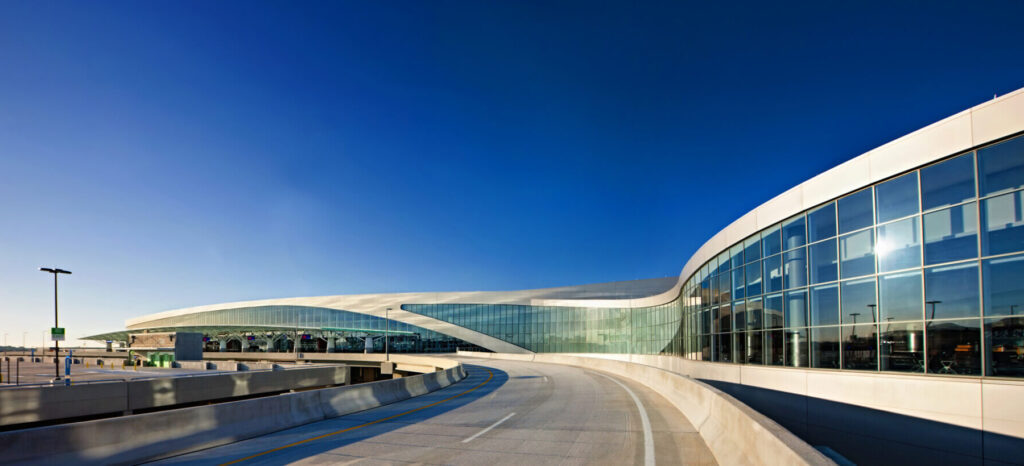
Location: Atlanta, Georgia
Annual Passengers: 100+ million
Atlanta consistently ranks as the busiest airport in the United States—and often the world. Its strategic location in the Southeast allows airlines to operate efficient hub-and-spoke networks, connecting passengers to nearly every major US city within two hours of flight time.
As the primary hub for Delta Air Lines, ATL dominates domestic connectivity while also offering robust international routes to Europe, Latin America, and Asia.
Why it’s busy:
- Central geographic location
- Massive domestic network
- Major airline hub operations
2. Dallas/Fort Worth International Airport (DFW)
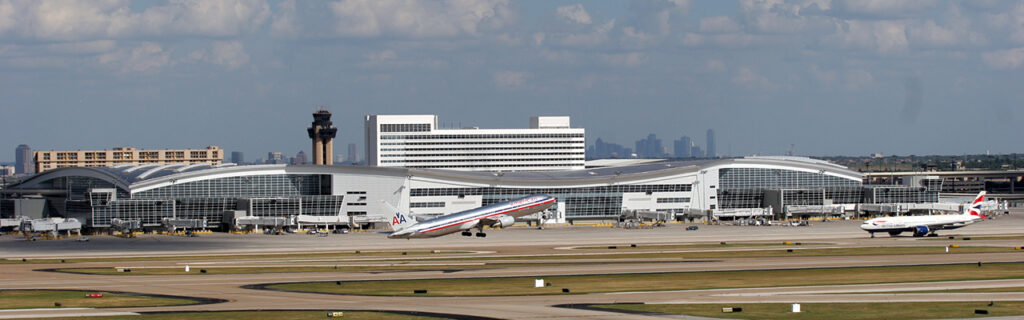
Location: Texas
Annual Passengers: 80+ million
Dallas/Fort Worth International Airport is one of the largest airports by land area in the US and a crucial hub for both domestic and international travel. It serves as the primary hub for American Airlines, providing extensive connectivity across North America, Europe, and Latin America.
Why it’s busy:
- Major connecting hub
- Strong domestic and international growth
- Strategic central US location
3. Denver International Airport (DEN)

Location: Colorado
Annual Passengers: 75+ million
Denver International Airport has experienced significant growth over the past decade. Positioned in the Mountain West, DEN functions as a powerful connecting hub linking the West Coast, Midwest, and East Coast.
Its large airfield capacity and expansion projects have enabled it to handle increasing passenger demand efficiently.
Why it’s busy:
- Rapid population growth in the region
- Expanding airline operations
- Strong domestic connectivity
4. Chicago O’Hare International Airport (ORD)

Location: Illinois
Annual Passengers: 70+ million
Chicago O’Hare remains one of America’s most important global gateways. Serving as a hub for both United Airlines and American Airlines, O’Hare connects the Midwest to Europe, Asia, and the Middle East.
Ongoing modernization projects aim to enhance terminal capacity and improve passenger flow.
Why it’s busy:
- Dual major airline hubs
- Strong international presence
- Central US business hub
5. Los Angeles International Airport (LAX)

Location: California
Annual Passengers: 70+ million
LAX is the primary international gateway on the West Coast. With extensive transpacific routes to Asia and Oceania, it plays a critical role in global aviation.
Major renovations and infrastructure upgrades have improved passenger experience and expanded international capacity.
Why it’s busy:
- Key Pacific gateway
- Strong tourism demand
- Major entertainment and business travel market
6. John F. Kennedy International Airport (JFK)

Location: New York
Annual Passengers: 60+ million
John F. Kennedy International Airport is one of the most important international entry points into the United States. It handles a high volume of long-haul international flights, particularly to Europe, Asia, and the Middle East.
JFK’s global connectivity makes it essential for international commerce and tourism.
Why it’s busy:
- Heavy international traffic
- Major global gateway
- Strong business travel demand
7. Harry Reid International Airport (LAS)
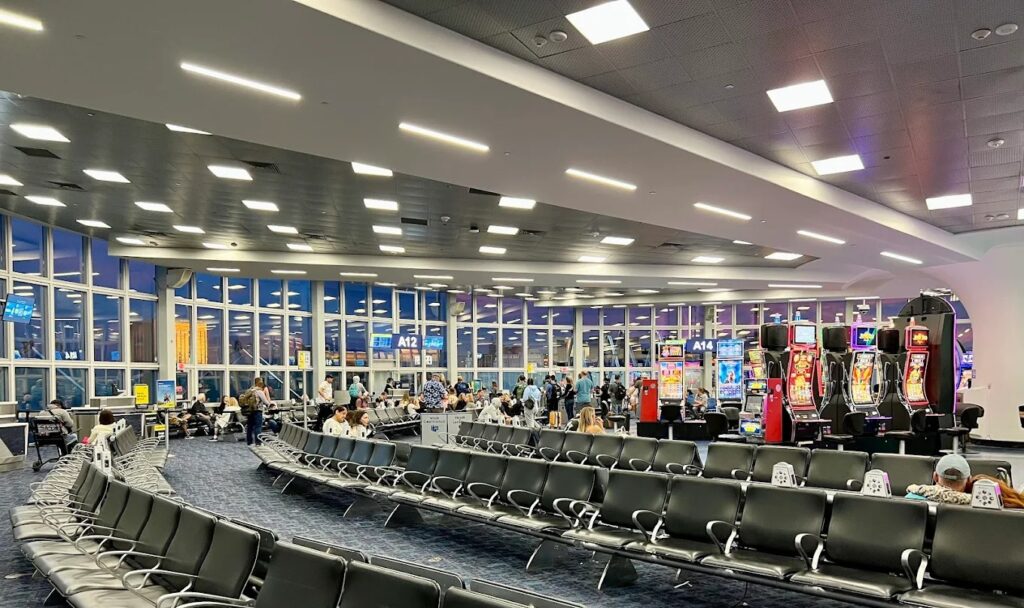
Location: Nevada
Annual Passengers: 50+ million
Serving one of the world’s most popular tourist destinations, Harry Reid International Airport benefits from year-round leisure travel demand. Las Vegas’ convention industry also drives significant passenger traffic.
Though primarily domestic-focused, the airport continues expanding its international footprint.
Why it’s busy:
- Strong tourism market
- Major convention destination
- Growing airline network
Trends Driving Growth at the Busiest US Airports
Several key factors contribute to high passenger volumes across these airports:
- Hub-and-spoke airline networks increasing connecting traffic
- Post-pandemic travel recovery boosting domestic and international demand
- Airport expansion projects improving capacity
- Population growth in major metro areas
- Increased leisure travel and tourism
As airlines expand routes and infrastructure projects continue, passenger numbers at these major US airports are expected to rise even further.
Final Thoughts
The busiest airports in the US are more than just transportation hubs—they are economic engines driving regional and national growth. From Atlanta’s unmatched connectivity to Los Angeles and New York’s global reach, these airports shape the future of American aviation.
For aviation professionals, travelers, and industry analysts alike, monitoring passenger traffic trends at these key hubs offers valuable insight into the evolving landscape of US air travel.
 Priyanshu Gautam
  Aastha Choudhary