


Delta TechOps has secured its position as the primary hub for next-generation propulsion by becoming the first North American airline MRO to offer full overhaul capability for both LEAP-1A and LEAP-1B engines.
This development grants the facility comprehensive maintenance, repair, and overhaul (MRO) authority for the power plants driving the Airbus A320neo and Boeing 737 MAX families. By achieving this status, Delta TechOps validates its standing as a CFM Premier MRO provider.

Investment in Infrastructure and Technical Capability
The certification marks the end of a multi-year capital expenditure program focused on specialized tooling and technician training. This infrastructure allows Delta to service its own fleet while capturing significant third-party revenue from global operators.
The transition from legacy CFM56 architectures to the LEAP series represents a technical shift in commercial aviation. Delta’s facility in Atlanta now serves as the central node for this transition in the Western Hemisphere.
Industry Shift from CFM56 to LEAP Engines
For decades, the CFM56 served as the backbone of narrowbody flight. However, as fuel costs and carbon mandates increase, the industry has shifted rapidly toward the LEAP-1A and LEAP-1B variants. These engines offer 15 percent better fuel efficiency and lower CO2 emissions.
Delta TechOps previously focused on the CFM56, but the sheer volume of LEAP engines entering service necessitated a radical shop floor reconfiguration. This expansion addresses the current global bottleneck in engine shop visit capacity.
Technical Specifications and Facility Capabilities
Engine Models: CFM LEAP-1A (Airbus A320neo) and LEAP-1B (Boeing 737 MAX).
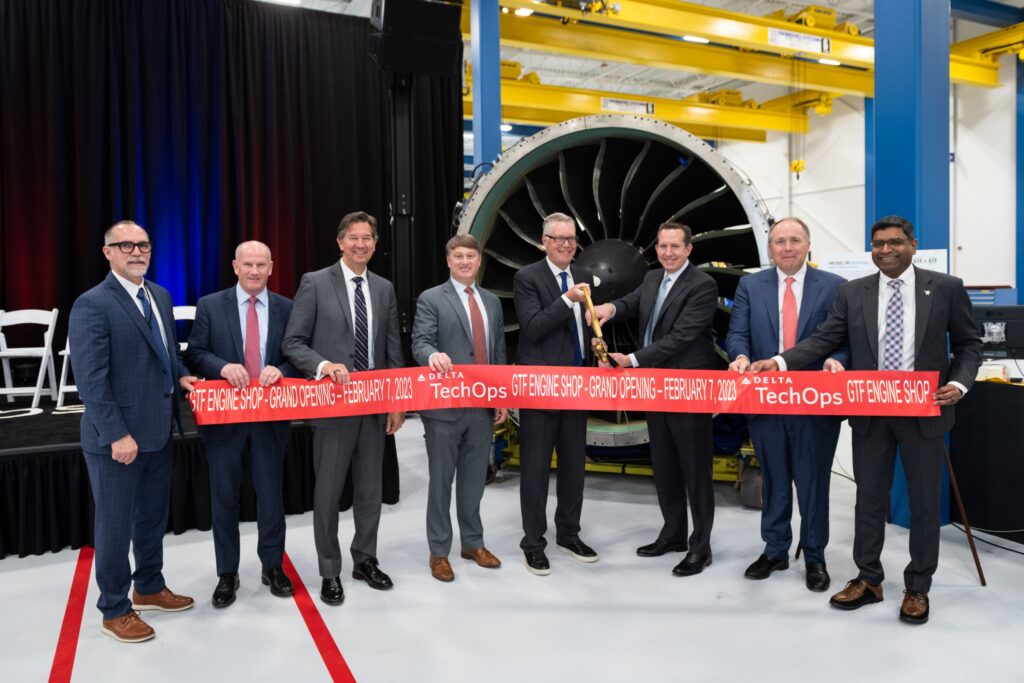
Shop Capacity: 127,000 square foot dedicated engine shop expansion in Atlanta.
Testing Capability: Multi-cell test capability with up to 150,000 lbs of thrust capacity.
Global Fleet: Over 5,000 LEAP engines in service with a 10,000+ unit backlog.
Performance Gain: 15% reduction in fuel burn and CO2 emissions over predecessor models.
Full Lifecycle Engine Maintenance Capability
This achievement enables Delta to manage the entire life cycle of the LEAP engine. This includes disassembly, cleaning, inspection, and high-tech repairs of the hot section, followed by full-power testing and certification for flight.
As global carriers recalibrate their maintenance cycles, this specific update has become a focal point of Airline News, highlighting the shift toward vertically integrated technical operations. By bringing these capabilities in-house, Delta reduces ferry time and reliance on overseas vendors.
Operational Complexity of Supporting Multiple Engine Variants
The LEAP-1A and LEAP-1B engines differ in fan diameter and bypass ratios, but they share a core architecture. Maintaining both on a single shop floor requires sophisticated logistics and a massive inventory of line-replaceable units (LRUs).
Delta’s investment includes advanced robotics for thermal spray coatings and automated inspection systems. These technologies are necessary to handle the Ceramic Matrix Composites (CMCs) and 3D-printed parts found within the LEAP core.
Strategic Importance for Long-Term Aviation Market
The strategic importance of this capability cannot be overstated. The Boeing 737 MAX and Airbus A320neo will dominate the narrowbody market for the next 20 to 30 years. Securing MRO rights early provides a long-term revenue stream independent of passenger ticket sales.
External demand for LEAP shop visits is projected to surge as the first wave of engines reaches its initial shop visit window. Delta is now positioned to capture this demand before competitors can finalize their own tooling certifications.
Operational Benefits of Airline-Owned MRO
Operational analysis suggests that having an operator-backed MRO provides higher reliability. Delta’s technicians work on the same engines that power their own 737-10 and A321neo fleets, ensuring that maintenance protocols are optimized for real-world flight cycles.
The global supply chain for engine parts remains constrained. By having full overhaul capability, Delta can better manage part scrap rates and utilize salvaged materials more effectively than shops that only perform minor repairs.
Impact on Workforce and Technical Skills Development
This milestone also impacts the broader labor market in Georgia. Delta has hired and trained hundreds of new technicians to support the LEAP line. These roles require high-precision skills in non-destructive testing (NDT) and advanced metallurgy.
Forecasting indicates that the LEAP-1B will see significant growth as the Boeing 737 MAX 10 enters service. Delta’s commitment to this engine type aligns with its own fleet orders, creating a symbiotic relationship between flight operations and technical services.
Financial and Operational Advantages of MRO Expansion
Financially, the MRO division acts as a hedge against volatile fuel prices. When fuel prices are high, airlines fly newer, more efficient engines like the LEAP, which in turn drives more maintenance cycles to the TechOps facility.
This capability also simplifies the logistics for leasing companies. Lessors prefer MRO providers who can handle multiple engine variants, as it allows them to transition aircraft between different airline customers with fewer administrative hurdles.
Advanced Engine Technology and Sustainability Implications
The technology within the LEAP engine is substantially more complex than the CFM56. It utilizes 18 carbon-fiber fan blades and a debris rejection system. Delta’s ability to overhaul these components locally reduces the carbon footprint of the maintenance process itself.
As the industry moves toward 2050 sustainability goals, the efficiency of the MRO process becomes a critical factor. Faster turn-around times (TAT) and more precise engine tuning lead to better EGT (Exhaust Gas Temperature) margins and longer time-on-wing.
Future Outlook for Delta TechOps and Global MRO Market
Delta TechOps now operates the largest engine shop in North America. This scale allows them to negotiate better pricing for raw materials and parts from GE Aerospace and Safran, the partners behind CFM International.
Looking ahead, the facility is expected to integrate further digitalization. This includes digital twins for engines and predictive maintenance algorithms that can signal a shop visit before a part fails in service.
The successful certification for both the -1A and -1B variants ensures that Delta remains insulated from the fluctuations of any single aircraft manufacturer. Whether an airline flies Boeing or Airbus, they can rely on the Atlanta hub for propulsion support.
For additional operational briefings and the latest Airline News, monitor our dedicated aviation intelligence category.