

SYNOPSIS
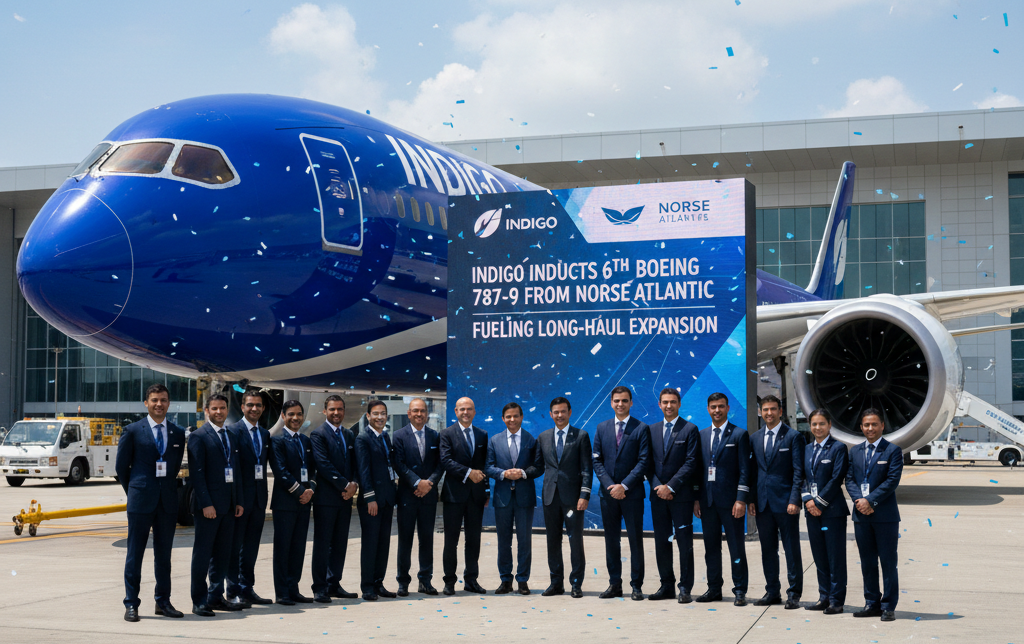
IndiGo has finalized the induction of its sixth Boeing 787-9 Dreamliner through a strategic wet-lease agreement with Norse Atlantic Airways. This addition completes the current phase of the carrier’s wide-body expansion, aimed at securing a larger share of the high-demand international travel market connecting India to Europe. The integration of this aircraft allows the airline to maintain consistent long-haul frequencies and provides a significant boost to its available seat kilometres in the global sector.
IndiGo, the largest domestic airline in India, has officially inducted its sixth Boeing 787-9 Dreamliner into active service this week. The aircraft is part of a wet-lease arrangement with Norse Atlantic Airways and is stationed to operate primarily on the high-traffic corridors between India and London. This specific induction marks the completion of the airline’s immediate wide-body capacity requirements, providing the necessary hardware to sustain daily operations from Delhi and Mumbai to the European gateway. The arrival of the sixth jet allows the airline to offer a consistent dual-class service on these routes with 338 seat capacity, catering to both economy and premium travellers. By integrating this sixth airframe, IndiGo has successfully transitioned a portion of its operations from narrow-body short-haul flights to sustained wide-body long-haul services, meeting the growing demand for international connectivity from the Indian subcontinent.
STRATEGIC FLEET INTEGRATION
The integration of the sixth Boeing 787-9 is a central element of the current operational phase for InterGlobe Aviation Ltd, the parent company of IndiGo. By utilizing the Norse Atlantic partnership, the airline has managed to scale its international footprint without the immediate financial burden of permanent fleet ownership or the delays associated with the global aircraft supply chain. This specific aircraft, which remains registered under the Norse Atlantic operating certificate, carries the commercial branding of IndiGo and fulfils a critical role in the carrier’s attempt to capture a segment of the intercontinental market previously dominated by full-service legacy airlines.
The Boeing 787-9 is suited for this task due to its advanced aerodynamics and fuel efficiency. It allows the carrier to fly directly to European gateways from major Indian metropolitan centres with a full passenger load and significant cargo capacity. The addition of the sixth unit provides the operational redundancy required to minimize schedule disruptions during routine maintenance cycles. This reliability is a major factor in the airline’s ability to compete with established global carriers that have long maintained a presence in the Indian market.
CAPACITY AND REVENUE GENERATION
Revenue management teams within the airline view the sixth Dreamliner as an essential tool to maximize yield on high-demand dates. The Boeing 787-9 features a two-class configuration, which is a departure from the traditionally single-class, low-cost model employed by IndiGo on its Airbus A320 fleet. This layout includes a premium cabin provided by the Norse Atlantic interior, which attracts a higher tier of traveller willing to pay for increased comfort on flights exceeding seven hours.
The increase in seat availability, which totals approximately 338 seats per flight, provides a significant boost to the airline’s capacity on the Istanbul route. This route serves as a primary artery for passengers connecting to North America and Western Europe through various codeshare agreements. The presence of a sixth aircraft ensures that the airline can maintain a high-frequency schedule, which is often the deciding factor for business travellers when selecting a carrier. Furthermore, the cargo holds of the 787-9 allows the airline to tap into the lucrative international freight market, providing an additional stream of revenue that was previously limited by the smaller holds of its narrow-body aircraft.
REGULATORY AND OPERATIONAL FRAMEWORK
The Directorate General of Civil Aviation (DGCA) has facilitated this expansion by granting the necessary approvals for extended wet-lease periods. While Indian aviation regulations were historically restrictive regarding the duration of such leases, the surge in international travel demand prompted a more flexible approach from the authorities. IndiGo has utilized this regulatory environment to its advantage, ensuring that its capacity growth remains aligned with national transportation goals.
The Norse Atlantic crew, including pilots and technical support staff, works in coordination with IndiGo cabin crew to deliver a hybrid service model. This arrangement has allowed the airline to bypass the extensive training and certification periods required for its own flight crews to transition to wide-body Boeing aircraft. The operational data gathered from these six 787-9 jets will serve as a foundation for the airline’s future wide-body strategy, providing insights into fuel consumption, turnaround times, and passenger preferences on long-duration flights. This experience is vital as the company prepares for the arrival of its own permanent wide-body fleet in the coming years.
MARKET COMPETITION AND INDUSTRY DYNAMICS
The arrival of the sixth Boeing 787-9 places IndiGo in a stronger position against its primary domestic rival, the Air India group. As Air India continues its fleet modernization following its acquisition by the Tata Group, IndiGo is demonstrating its ability to compete in the wide-body space through agile leasing strategies. The competition for the Indian international traveller is intensifying, with Middle Eastern carriers also vying for market share. By offering direct wide-body service at a competitive price point, IndiGo aims to retain more of the origin-and-destination traffic within its own network.
The efficiency of the 787-9, which uses 20 percent less fuel than previous generation aircraft, helps the carrier manage the impact of fluctuating global oil prices. This cost advantage is essential for a low-cost carrier operating in the long-haul sector, where fuel typically represents the largest single operating expense. The sixth aircraft ensures that the airline can sustain its market presence even as other carriers increase their capacity, preventing a loss of market share during peak travel seasons.
LONG-TERM STRATEGIC IMPLICATIONS
While the current wide-body fleet relies on leased assets, the induction of the sixth Boeing 787-9 marks a definitive shift in the airline’s long-term ambitions. The carrier is no longer restricted to short-haul regional operations. This transition has required a fundamental adjustment in ground handling, catering, and maintenance infrastructure at major airports like Indira Gandhi International in Delhi. The logistical complexity of managing a dual-manufacturer fleet is mitigated by the wet-lease structure, but the airline is already preparing for the next phase of its growth.
This future phase includes the direct purchase and operation of a permanent wide-body fleet, which will eventually replace the leased Norse Atlantic aircraft. For the current period, the sixth Dreamliner provides the airline with the scale needed to test new markets and refine its international service offering. The success of this lease program demonstrates the airline’s ability to adapt to changing market conditions and its readiness to challenge the established hierarchy of global aviation. The data collected from these operations will influence the configuration and deployment of future aircraft, ensuring that the airline remains a dominant force in both domestic and international skies.
- IndiGo has inducted its sixth Boeing 787-9 Dreamliner through a strategic wet-lease agreement with Norse Atlantic Airways, completing the current phase of its wide-body expansion.
- The aircraft is primarily deployed on high-traffic corridors between Delhi/Mumbai and Manchester/Amsterdam, enabling the airline to maintain consistent daily long-haul frequencies.
- The 787-9 features a two-class configuration with approximately 338 seats, introducing a premium cabin service that departs from IndiGo’s traditional single-class, low-cost model.
- The Boeing 787-9 provides a 20 percent increase in fuel efficiency compared to previous generation aircraft, helping the carrier mitigate the impact of fluctuating global oil prices.
- The wet-lease structure allows IndiGo to utilize Norse Atlantic pilots and technical staff, bypassing the extensive training and certification periods required for transitioning internal crews to wide-body aircraft.
 Vibhuuti Goyal
[…] flag carrier connects the continent directly to Europe with Flight QF9. The Boeing 787-9 Dreamliner traverses 9,009 miles (14,498 […]