

SYNOPSIS
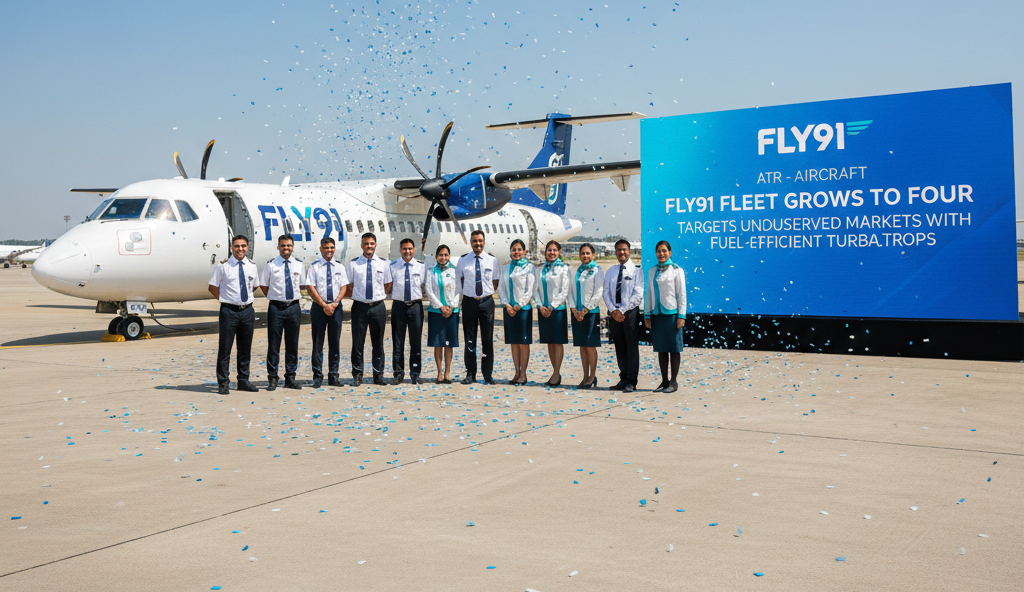
Fly91, a Goa based regional airline, has expanded its operational capacity through the induction of two additional ATR 72-600 aircraft via a leasing agreement with TruNoord. This acquisition doubles the carrier’s fleet size to four aircraft as it seeks to strengthen flight frequencies between Tier 2 and Tier 3 urban centers across India. The expansion supports the government’s regional connectivity objectives by providing essential air links to underserved markets. This strategic move positions the airline to capture growing demand in the domestic aviation sector through the use of fuel-efficient turboprop technology.
Indian regional carrier Fly91 has officially inducted two new ATR 72-600 aircraft into its fleet as part of a strategic partnership with the global aircraft lessor TruNoord. The delivery of these aircraft, which took place this week at the carrier’s primary hub at Manohar International Airport in Mopa, Goa, marks a major phase in the airline’s plan to enhance air travel accessibility for Tier 2 and Tier 3 cities. These aircraft were procured under a long-term lease arrangement intended to support the airline’s route expansion across the western and southern regions of the country. By doubling its current fleet from two to four aircraft, Fly91 is now positioned to increase its daily flight rotations and introduce new scheduled services to previously underserved destinations.
The induction comes as the airline seeks to capitalize on the increasing domestic demand for regional air travel. Fly91 management confirmed that the new aircraft will be deployed immediately to bolster existing routes and prepare for the launch of additional sectors. This development follows the airline’s successful commencement of commercial operations earlier this year, focusing on a business model that prioritizes regional reliability and cost efficiency. The use of the ATR 72-600, a fuel efficient turboprop aircraft specifically designed for short haul regional flights, allows the carrier to operate profitably on routes that may not be viable for larger narrow body jets.
STRATEGIC FLEET EXPANSION AND TECHNICAL SPECIFICATIONS
The choice of the ATR 72-600 aircraft reflects a calculated operational strategy. This aircraft model is widely regarded as the global standard for regional aviation due to its ability to operate from shorter runways often found in India’s smaller provincial airports. The ATR 72-600 is equipped with Pratt and Whitney PW127M engines, which offer superior fuel efficiency and lower CO2 emissions compared to older generation turboprops. For Fly91, the low operating costs per seat mile are essential for maintaining competitive ticket pricing in price sensitive Tier 2 and Tier 3 markets.
Each of the newly inducted aircraft is configured with a single class cabin layout capable of seating up to 72 passengers. This capacity is optimized for the current demand levels seen in regional city pairs. By utilizing a fleet consisting entirely of the same aircraft type, Fly91 benefits from significant maintenance and training synergies. Pilots, cabin crew, and ground engineers only require certification for a single platform, which reduces overhead costs and streamlines the logistics of spare parts management. The partnership with TruNoord, a specialized regional aircraft lessor based in the Netherlands, provides Fly91 with the financial flexibility to grow its fleet without the massive capital expenditure required for direct aircraft purchases.
REGIONAL CONNECTIVITY AND THE UDAN INITIATIVE
The growth of Fly91 is closely aligned with the Ministry of Civil Aviation’s Regional Connectivity Scheme, also known as UDAN (Ude Desh ka Aam Nagrik). This government initiative provides financial incentives and viability gap funding to airlines that operate routes to unserved and underserved airports. The induction of these two new aircraft enables Fly91 to fulfill its obligations under various UDAN bidding rounds, ensuring that smaller cities like Jalgaon, Sindhudurg, and Agatti in Lakshadweep remain connected to major metropolitan hubs like Mumbai, Pune, and Bengaluru.
Infrastructure development in Tier 2 and Tier 3 cities has seen significant progress over the last decade, with dozens of new airports commissioned. However, the availability of consistent and reliable flight schedules has often lagged behind. Fly91 aims to fill this gap by providing scheduled services that cater to both business travellers and the growing middle class looking for efficient transit options. The addition of these aircraft will allow the airline to provide more convenient flight timings, including morning and evening departures that facilitate same day return trips between regional centres and larger cities.
MARKET DYNAMICS AND COMPETITIVE POSITIONING
The Indian aviation market is currently the third largest domestic market in the world, characterized by intense competition and high growth rates. While major carriers like IndiGo and Air India focus on high density trunk routes and international expansion, regional specialists like Fly91, Star Air, and Alliance Air target niche markets. By focusing on the regional segment, Fly91 avoids direct competition with the large narrow body fleets of the major airlines on most of its routes.
Industry analysts suggest that the success of a regional carrier depends on high aircraft utilization and high load factors. With a four aircraft fleet, Fly91 can now manage its schedule more effectively, providing a buffer for scheduled maintenance without disrupting passenger services. The expansion also gives the airline greater leverage when negotiating with airport operators for better slots and ground handling services. The presence of TruNoord as a leasing partner indicates international investor confidence in the long-term viability of the Indian regional aviation sector. TruNoord’s portfolio focuses specifically on regional aircraft, and this deal highlights their commitment to expanding their footprint in the rapidly growing South Asian market.
The increased connectivity provided by Fly91’s expanded fleet is expected to have a direct impact on the local economies of the cities it serves. Reliable air links are often a prerequisite for corporate investment and industrial growth. By providing faster transit times, Fly91 enables local businesses in Tier 2 cities to access larger markets more efficiently. In regions like North Goa and Sindhudurg, the airline serves as a catalyst for the tourism industry, making these destinations more accessible to domestic travelers who prefer flying over long distance road or rail travel.
Furthermore, the aviation sector provides direct and indirect employment opportunities. The expansion of Fly91’s fleet necessitates the hiring of additional flight crews, ground staff, and administrative personnel. It also supports local service providers at regional airports, ranging from security agencies to catering services. As the airline increases its flight frequency, the demand for these auxiliary services grows, contributing to the broader economic development of the regions involved.
CHALLENGES AND OPERATIONAL OUTLOOK
Despite the positive momentum, Fly91 faces several challenges common to the regional aviation industry. High taxes on Aviation Turbine Fuel (ATF) in India remain a significant operational cost. While some states have reduced Value Added Tax on ATF for regional flights, fuel expenses still account for a large portion of an airline’s operating budget. Additionally, the shortage of qualified ATR pilots and technical personnel can lead to increased recruitment costs and potential operational delays.
The airline must also navigate the complexities of operating in diverse weather conditions and varied airport infrastructures. Some regional airports lack advanced navigational aids, which can impact flight operations during the monsoon season or periods of low visibility. However, the ATR 72-600 is well suited for these environments, and Fly91 has invested in training programs to ensure high safety and reliability standards. The airline’s management remains focused on maintaining a lean cost structure while ensuring service quality to build brand loyalty among regional travelers.
TRUNOORD AND INTERNATIONAL LEASING TRENDS
The deal between Fly91 and TruNoord reflects a broader trend in the global aviation industry where lessors play a central role in fleet management for emerging carriers. Leasing allows airlines to scale their operations quickly in response to market demand without the long lead times associated with direct orders from manufacturers. For TruNoord, the Indian market represents a high growth opportunity. The lessor’s focus on regional aircraft like the ATR 72 and Embraer E-Jets aligns with the specific needs of the Indian regional aviation landscape.
This transaction highlights the importance of the GIFT City (Gujarat International Finance Tec-City) in India as a hub for aircraft leasing and financing. While many leases are still handled through international jurisdictions like Ireland or Singapore, the Indian government has been encouraging domestic leasing activities to retain more of the value chain within the country. The successful induction of these aircraft demonstrates that the legal and regulatory framework for aircraft leasing in India is maturing, providing a stable environment for both lessors and lessees to operate.
FUTURE GROWTH PROJECTIONS
Looking ahead, Fly91 intends to continue its fleet expansion with a goal of reaching a double-digit number of aircraft within the next few years. The current induction of two ATR 72-600s is a foundation for this long-term growth. The airline is expected to explore new regions, potentially expanding into the northern and eastern parts of India as more regional airports become operational under the UDAN scheme.
The focus will remain on identifying city pairs that are currently underserved but have high latent demand. By providing a reliable and professional service, Fly91 aims to become the preferred choice for regional air travel in India. The airline’s ability to successfully integrate these two new aircraft into its daily operations will be a key indicator of its readiness for further large-scale expansion. As the domestic aviation sector continues to evolve, Fly91’s targeted approach to regional connectivity is expected to play a significant role in the country’s overall transport infrastructure.
 Vibhuuti Goyal
[…] ingeographically isolated regions.By subsidising routes and reviving underutilised airstrips, UDAN has done it all.Regional aviation has fostered the growth of smaller carriers and expanded route […]
[…] hybrid-electric propulsion system under development in Europe aims to cut aircraft emissions by up to 30%, marking a significant step toward decarbonising short-haul […]
[…] India’s aviation sector is undergoing a structural transformation. Once dominated by metro routes, air travel is now expanding into Tier-2 and Tier-3 cities, driven by policy reforms, infrastructure expansion, and rising demand. Regional aviation is emerging as a key pillar of inclusive economic growth, improving accessibility, boosting tourism, and integrating remote regions into the national economy. This isn’t just a national move, but a move that will change the whole structure of aviation sector globally in terms of our nation. Fly91 Fleet Grows to Four; Targets Underserved Markets with Fuel-Efficient Turboprops […]