

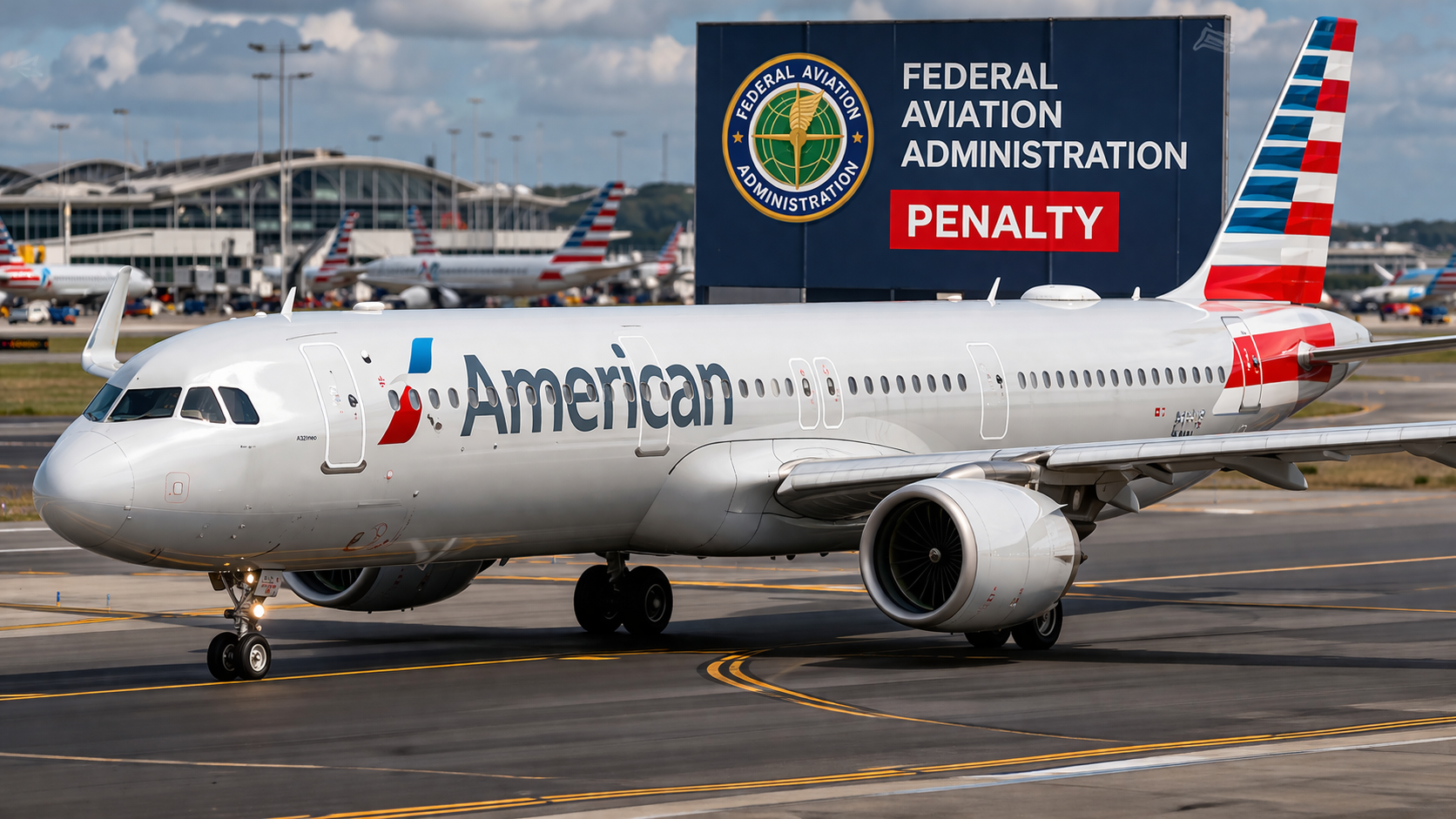
The Federal Aviation Administration (FAA) has proposed a $255,000 penalty against American Airlines after the carrier allegedly allowed 12 flight attendants who tested positive for drugs and alcohol to return to duty without completing mandatory follow-up testing. The enforcement action highlights growing regulatory pressure on U.S. airlines to strengthen compliance with aviation safety and substance-abuse rules.
FAA Accuses American Airlines Of Safety Compliance Violations
According to the FAA, the violations occurred between May 2019 and December 2023, when American Airlines permitted flight attendants who had tested positive for substances including alcohol, amphetamines, cocaine, marijuana, and methamphetamine to resume safety-sensitive duties.
Under federal aviation regulations, any airline employee in a safety-sensitive role who fails a drug or alcohol test must complete a strict Return-to-Duty process before being cleared to work again. The FAA alleges that American failed to ensure legally required follow-up tests were completed before returning these employees to active service.
The airline now has 30 days to respond after receiving the FAA’s official notice of proposed civil penalty.
What FAA Rules Require After A Positive Drug Or Alcohol Test
FAA and Department of Transportation regulations require a five-step recovery and compliance process for aviation workers who fail substance tests:
- Immediate removal from duty
- Evaluation by a qualified Substance Abuse Professional (SAP)
- Completion of recommended treatment or education plan
- Return-to-duty evaluation
- Minimum six unannounced follow-up tests within 12 months
Monitoring may continue for up to five years depending on the case severity.
Because flight attendants are responsible for emergency evacuations, cabin safety, and passenger protection, regulators classify them as safety-sensitive personnel.
American Airlines Responds To FAA Notice
A spokesperson for American Airlines said the airline is reviewing the FAA allegations and emphasized that safety remains its highest priority.
The airline stated that it takes drug and alcohol testing seriously and works closely with regulators to address compliance issues.
FAA Expands Crackdown Across U.S. Aviation Industry
The action against American Airlines is part of a broader FAA enforcement campaign targeting airline drug and alcohol testing failures.
This week alone:
- Southwest Airlines faces a proposed $304,272 fine over similar violations involving 11 employees
- Avelo Airlines was fined $65,000
- Spring City Jet received a $56,000 penalty
FAA rules require airlines to randomly test at least:
- 25% of covered employees annually for drugs
- 10% annually for alcohol
In 2024, regulators also expanded testing oversight to foreign maintenance workers servicing U.S.-registered aircraft abroad.
Why These Violations Matter For Passenger Safety
While the financial penalties may not significantly impact major airlines, the safety implications are serious.
Flight attendants may not fly the aircraft, but they are essential during emergencies such as:
- Cabin fires
- Medical emergencies
- Evacuations
- Security threats
Any impairment caused by drugs or alcohol can reduce reaction speed, decision-making ability, and emergency response effectiveness.
The FAA says stronger enforcement is intended to prevent systemic failures and ensure airlines maintain full compliance with aviation safety standards.
Rising Pressure On Airlines To Improve Tracking Systems
The American Airlines case spans nearly five years, suggesting potential gaps in internal compliance monitoring systems. Aviation experts say airlines are increasingly expected to use automated tracking tools to flag missed testing deadlines and prevent unauthorized employee clearance.
As regulatory scrutiny intensifies, carriers across the aviation sector may need to invest more heavily in digital compliance systems to avoid future penalties.
Conclusion
The proposed $255,000 FAA fine against American Airlines underscores how seriously regulators now view substance-testing compliance failures in aviation. With similar penalties hitting multiple carriers, the FAA is sending a clear message: airlines must strictly enforce drug and alcohol testing rules or face costly consequences.