

SYNOPSIS
The Federal Aviation Administration has issued technical certification for Garmin Autoland on the Cessna Citation CJ3 Gen2, marking the first time this autonomous recovery technology has been approved for a twin-engine business jet. This regulatory milestone follows the successful real-world activation of the system during a pilot incapacitation event in a single-engine aircraft, validating the software logic in a high stakes environment. The system integrates with the Garmin G3000 avionics suite to manage engine power, navigation, and landing gear deployment without human intervention. This development represents a shift in light jet safety standards by providing a redundant flight control solution for multi engine platforms.
Garmin International and Textron Aviation confirmed the formal FAA certification of the Garmin Autoland system for the Cessna Citation CJ3 Gen2 on Friday, establishing the first operational approval for the technology on a twin-engine airframe. The certification follows an incident where the system was used to safely land a general aviation aircraft after the pilot became medically unable to perform flight duties. This specific approval allows the CJ3 Gen2 to utilize its integrated G3000 avionics and digital autothrottle systems to execute a complete approach and landing at a suitable airport if the crew is unresponsive. The system assumes control of the Williams International FJ44-3A engines, manages fuel state calculations, and selects the optimal landing site based on runway length, wind conditions, and terrain proximity.
TECHNICAL ARCHITECTURE AND AVIONICS INTEGRATION
The implementation of Garmin Autoland on the CJ3 Gen2 requires a highly integrated hardware stack that includes the G3000 glass cockpit and dual GTC 575 touchscreen controllers. Unlike previous single engine installations, the twin engine configuration demands complex software logic to manage asymmetric thrust possibilities and engine synchronization during the descent phase. The system interfaces directly with the Williams International Full Authority Digital Engine Control (FADEC) units to modulate thrust during the automated approach.
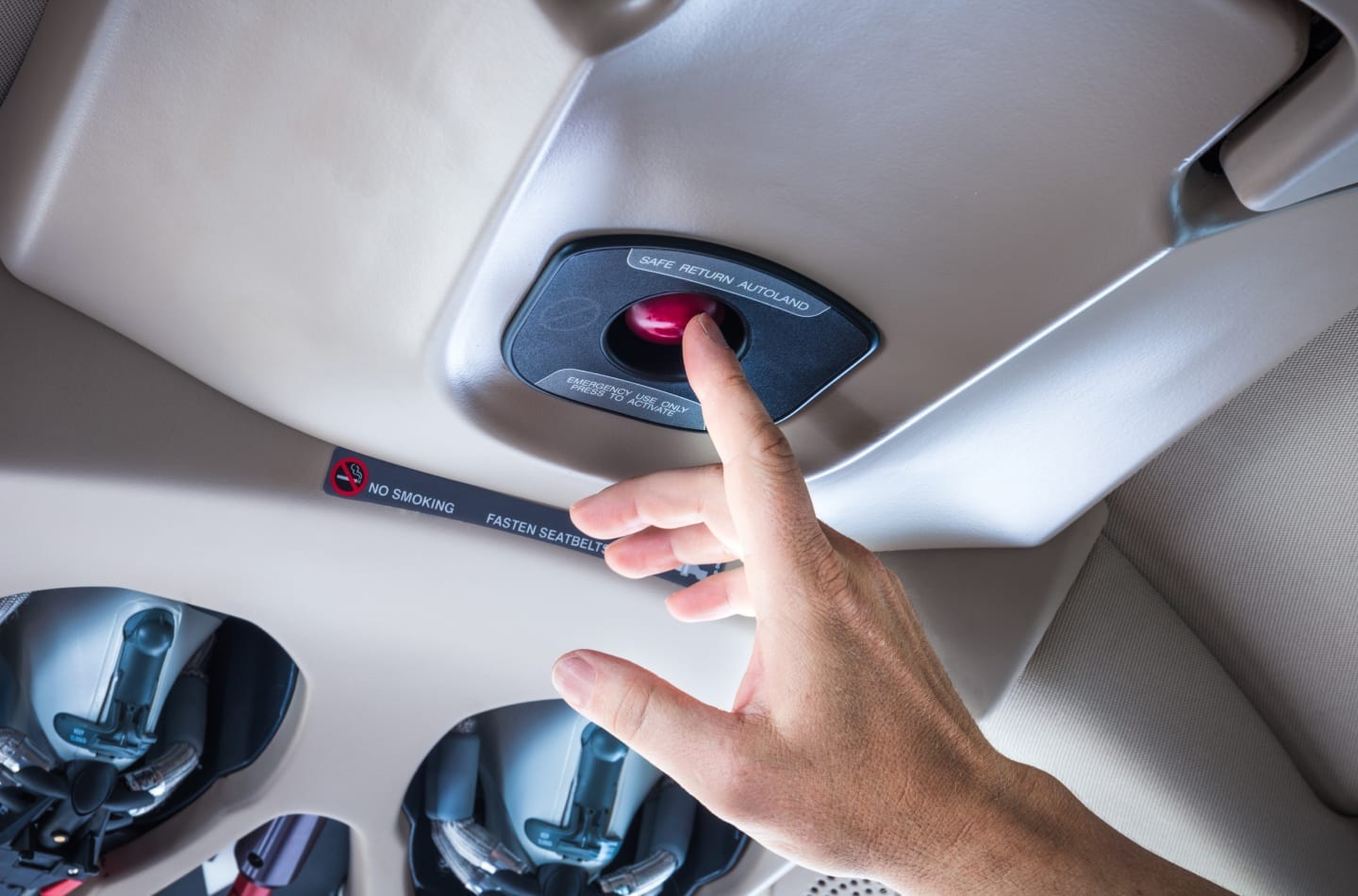
If the system is engaged, either manually by a passenger or automatically after a period of pilot inactivity, it immediately calculates a flight path to the most suitable airport. This calculation accounts for current fuel levels, vertical obstructions, and weather data received via the SiriusXM or FIS-B data links. The software is programmed to prioritize runways with GPS approaches, specifically those with Localizer Performance with Vertical Guidance (LPV) minimums. During the descent, the system provides automated audio and visual briefings to the passengers, explaining the situation and providing instructions on how to communicate with Air Quality Control using the pre-configured emergency frequency.
The push for twin engine certification gained momentum following the documented success of Autoland in a single engine turboprop during a real-world emergency. In that instance, the system maintained controlled flight and executed a precision landing, preventing a hull loss and saving all occupants. Data gathered from that event provided the FAA with necessary metrics regarding system reliability and the human-machine interface performance under stress.
For the CJ3 Gen2, the Autoland sequence includes the automated deployment of the landing gear and the activation of the emergency braking system (EBS) upon touchdown. The EBS is a critical component for the twin engine jet, as the higher approach speeds of the Citation line require precise brake application to ensure the aircraft remains within the confines of the runway. The system also manages the aircraft flaps and spoilers to optimize the aerodynamic profile for landing. Once the aircraft reaches a full stop, the engines are automatically shut down to allow for safe egress and to minimize fire risk, while the G3000 display provides instructions on how to exit the cabin.
One of the primary engineering challenges in adapting Autoland for the CJ3 Gen2 was the management of twin engine flight dynamics. The software must be capable of detecting an engine failure during the autonomous phase and adjusting the flight control laws to compensate for asymmetric thrust. Garmin engineers developed specific control algorithms that utilize the yaw damper and rudder trim to maintain directional stability if one FJ44-3A engine loses power during the emergency sequence.
The system is designed to maintain a stable glideslope even in turbulent conditions, using the GFC 700 automated flight control system. The integration of Garmin Autothrottles is mandatory for this certification, as the system must have the ability to physically move the thrust levers to manage airspeed during the flare and touchdown. This closed loop system continuously monitors airspeed against stall margins and structural limits, ensuring that the aircraft stays within its safe operating envelope throughout the entire recovery process.
REGULATORY STANDARDS AND LOGISTICS
The FAA approval was granted under a Supplemental Type Certificate (STC) following an extensive flight test program that evaluated the system in various failure modes and environmental conditions. The CJ3 Gen2 serves as the launch platform for this technology in the light jet category, setting a new baseline for Part 23 certification requirements for multi engine turbine aircraft. Textron Aviation has indicated that the Autoland system will be a standard feature on new CJ3 Gen2 deliveries, with retrofit options being evaluated for existing G3000-equipped Citation models.
Logistically, the rollout of this technology requires specific pilot training and maintenance protocols. Operators must ensure that the database subscriptions for the G3000 remain current, as the Autoland system relies on up to date navigation and obstacle data to function correctly. Maintenance intervals for the emergency braking system and the autothrottle actuators are also strictly defined by the new certification guidelines. The FAA has emphasized that while the system is highly capable, it is intended strictly for emergency use and does not replace the requirement for a fully qualified pilot in the cockpit.
The introduction of autonomous landing capabilities to the twin engine jet market addresses a significant safety gap in owner-operator flight profiles. Statistics from the National Transportation Safety Board (NTSB) indicate that pilot incapacitation, while rare, almost always results in a fatal outcome without ground-based intervention or automated systems. By automating the transition from cruise flight to a full stop on a runway, Garmin and Textron Aviation have reduced the risk profile associated with single pilot operations in high performance jets.
This certification is expected to influence future aircraft designs, as manufacturers look to integrate more robust autonomous features into the initial type certification of new airframes. The data collected from the CJ3 Gen2 fleet will provide a framework for expanding Autoland to larger, Part 25 certified business jets. The engineering data suggests that the successful integration of autonomous systems in complex twin engine platforms is now a proven reality, shifting the focus of aviation safety toward the total mitigation of human factor failures during critical phases of flight.
 Vibhuuti Goyal