
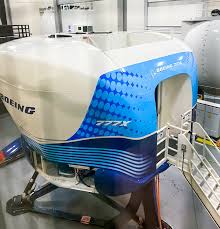
GATWICK, Regulators from the United States (FAA) and Europe granted initial qualification today for Boeing 777-9 flight training simulators. This authorization permits pilot training to commence ahead of the widebody jet’s long-delayed certification.
“Securing these approvals is an important step as we prepare for the start of flight training,” said Capt. Gary Mandy, 777X chief technical pilot.
The Federal Aviation Administration (FAA) and European Union Aviation Safety Agency (EASA) issued the certificates simultaneously. This dual approval signals a synchronized regulatory approach following years of scrutiny over Boeing’s validation processes.
“Pilots will benefit from an immersive training experience that will help ensure our customers’ operational readiness for the 777-9,” Mandy added.
Critical Path to Service
Today’s milestone removes a significant bottleneck for the 777X program, which is currently six years behind its original schedule. Airlines cannot accept delivery of the aircraft until their flight crews are legally certified to operate it.
Emirates President Sir Tim Clark publicly warned in late 2025 that deliveries might slip to 2027 due to certification hurdles.
The qualification covers a full-flight simulator and a flight training device located at Boeing’s Gatwick campus. These machines replicate the 777-9’s specific avionics, including its novel folding wingtip controls and touchscreen displays.
“The qualification of these training devices… delivers high-quality training solutions that meet the needs of global airline customers,” said Chris Broom, Boeing Global Services vice president.
Technological Leaps
The 777-9 features a flight deck that blends the legacy 777 layout with advanced systems from the 787 Dreamliner. The new simulators allow pilots to practice managing the aircraft’s 71.8-meter wingspan, which folds to 64.8 meters on the ground.
“The training devices integrate airplane systems and sophisticated simulation software that model flight dynamics,” the manufacturer stated in released documents.
Pilots transitioning from the 777-300ER will undergo “differences training” rather than a full type rating course. This shortened curriculum relies heavily on the fidelity of these CAE-manufactured devices to validate human factors and safety protocols.
“This qualification is the result of a multi-year effort between CAE and Boeing’s leading experts,” said Alexandre Prevost, CAE’s Civil Aviation President.
Regulatory Scrutiny
The FAA and EASA have intensified their review of human-machine interfaces following the 737 MAX crisis. The 777X is the first major Boeing derivative to undergo certification under the Aircraft Certification, Safety, and Accountability Act.
Section 103 of the Act mandates rigorous assessment of how pilots react to system failures, requiring high-fidelity simulator data.
This approval indicates that regulators are satisfied the simulators accurately mimic the aircraft’s performance data collected during flight tests. It follows the resolution of thrust link cracks that paused the flight test campaign in 2025.
“We’re excited to continue this strong collaboration as we deliver full-flight simulators to our mutual customers,” Prevost noted regarding the partnership.
Market Implications
Boeing faces immense pressure to begin deliveries to major customers like Emirates, Qatar Airways, and Lufthansa. The manufacturer holds over 480 orders for the 777X family, representing a backlog valued at billions of dollars.
Lufthansa, the launch customer, has awaited the aircraft since 2020 to replace its aging four-engine fleet.
The 777-9 is designed to compete with the Airbus A350-1000, offering higher capacity but entering the market years later. Delays have forced airlines to extend lease agreements on older 777-300ER and A380 aircraft to maintain capacity.
Industry analysts estimate that the cumulative delay has cost Boeing over $5 billion in abnormal production costs and penalties.
Next Steps
Regulators will now use these devices to validate the specific training courseware pilots must complete. Once the courseware is approved, airline “check airmen” will be the first to train, followed by line pilots.
“The option for dual head-up displays similar to the 787 Dreamliner,” is a key feature highlighted in the approved simulator specifications.
Full type certification for the aircraft itself is expected later this year, assuming no further technical anomalies arise. Today’s simulator approval suggests the hardware and software configuration of the jet is finally stabilizing.
The simulators also feature a “redesigned pilot seat that offers greater comfort,” addressing long-haul fatigue concerns.
Boeing’s ability to meet the 2027 delivery targets set by customers depends on the efficiency of this training rollout. Any deficiencies found during the courseware validation could trigger further software updates for the aircraft.
“Integration of portable tablet-based Electronic Flight Bag (EFB) capability,” helps modernize the cockpit workflow, according to the system description.
Global Deployment
While the first approved devices are in the UK, additional simulators are being deployed to airline hubs globally. CAE has contracts to install units in Dubai and Frankfurt to support the entry-into-service training waves.
Boeing’s Global Services division relies on this training revenue to offset slower manufacturing cash flows.
The program’s progress is now measured in regulatory documents rather than flight test hours. With the hardware approved, the focus shifts entirely to the pilots who will eventually fly the world’s largest twin-engine jet.
 Aastha Choudhary