


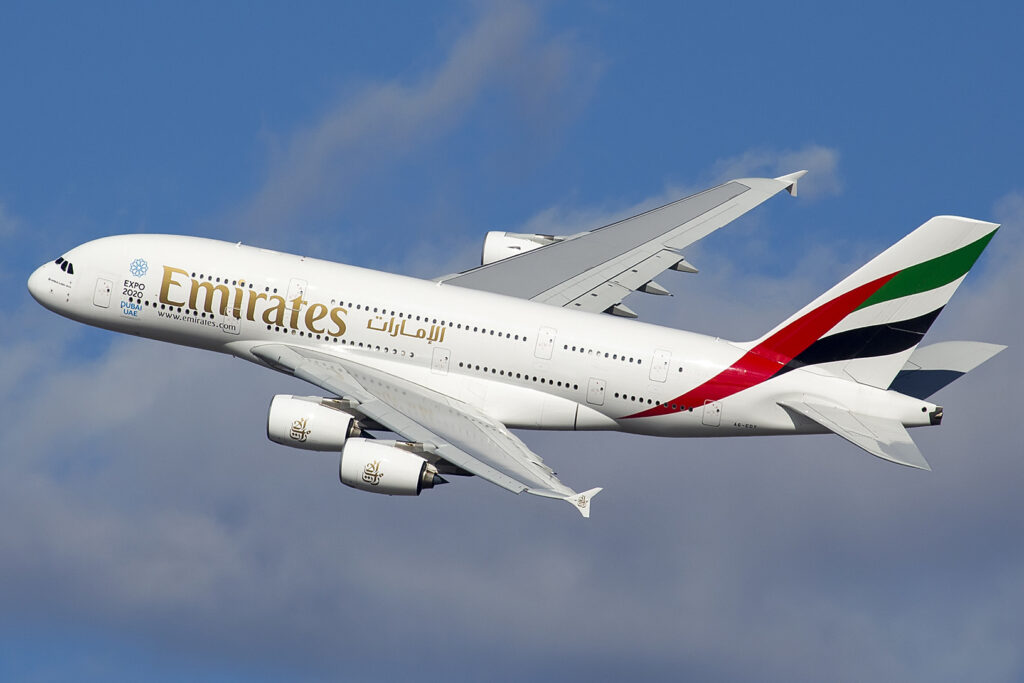
DUBAI, Emirates has commenced a calculated resumption of scheduled flight operations following a temporary grounding across its network. The carrier dispatched flight EK 805 from Dubai International Airport (DXB) to Jeddah (JED) early Tuesday, marking the first successful departure since regional airspace closures were enacted due to the intensifying conflict involving Iran.
The decision to clear EK 805 for takeoff represents a significant shift in risk assessment protocols. Operational data indicates the flight adhered to strict navigational constraints, avoiding the Persian Gulf completely in favor of overland vectors through the Arabian Peninsula. This limited service resumption suggests that civil aviation authorities have established a viable, albeit narrow, safety corridor to facilitate essential connectivity within the Gulf Cooperation Council (GCC) despite the volatile environment.
The suspension of services preceding Tuesday’s departure resulted from Notice to Air Men (NOTAMs) issuing blanket prohibitions on civil aviation transit through Iranian and immediate peripheral airspace. As the primary transit node for East-West traffic, Dubai’s operational halt created significant logistical backlogs affecting global supply chains and passenger transit.
Historically, the closure of Iranian airspace forces carriers to funnel traffic through the narrower Saudi-Egyptian corridors or the erratic Turkish-Iraqi routes. In this instance, the “Iran war” scenario has effectively sterilized the northern vectors, forcing all viable traffic south. The reactivation of the Dubai-Jeddah route acts as a pathfinder mission, testing the capacity and coordination of these congested southern airways.
FLIGHT DATA: EK 805
Operator: Emirates (EK)
Route: Dubai (DXB) to Jeddah (JED)
Date: Tuesday, March 3, 2026
Aircraft Type: A380
Vector Strategy: Immediate Southern Climb / Saudi Inland Routing
Status: Departed / Operational
Network Impact: < 5% of scheduled capacity active
The routing for EK 805 demonstrates a critical operational workaround. Rather than the standard flight paths that often graze the maritime boundaries of the Gulf, telemetry suggests a steep southern departure immediately entering Saudi airspace. This trajectory minimizes exposure to ballistic risks associated with the northern engagement zones. By utilizing the Airbus-A380, Emirates retains significant payload capacity for belly cargo—essential for maintaining medical and food supply lines—while gauging the feasibility of deploying the other widebody fleet under these restrictions.
This limited resumption serves as a stress test for ground handling and airspace coordination under heightened security protocols. While low-yield regional hops are often the first to be sacrificed during fuel crises, the prioritization of Jeddah emphasizes the necessity of maintaining diplomatic and religious transport links within the region. Industry observers tracking Airline News will identify this specific movement as a leading indicator for the potential reopening of wider European corridors via the Red Sea, assuming the security situation does not deteriorate further.
Financially, the cost of these deviations is substantial. The operational overhead for this flight likely includes surcharges for war-risk insurance premiums, which can spike by 300% during active hostilities. Furthermore, the reliance on a singular southern corridor increases air traffic density, leading to potential holding patterns and increased fuel burn. However, the fleet economics of grounding wide-body aircraft outweigh the variable costs of extended flight paths, provided safety margins remain absolute. Emirates is signaling to the market that it retains operational agility, distinct from competitors who remain entirely grounded.
For additional operational briefings and the latest Airline News, monitor our dedicated aviation intelligence category.