

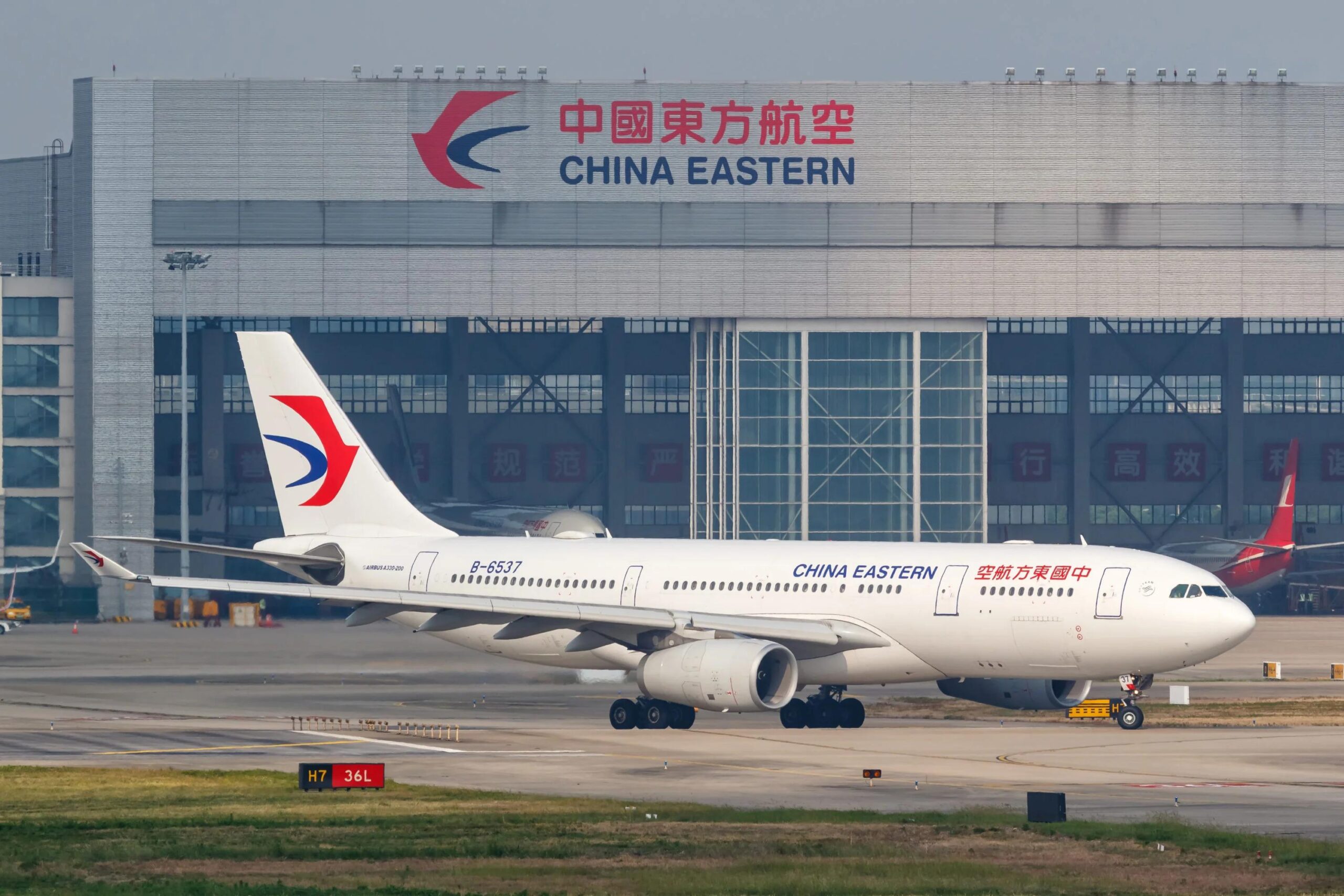
On March 25, 2026, China Eastern Airlines filed a formal disclosure to the Shanghai Stock Exchange confirming the purchase of 101 Airbus A320neo family aircraft at a list price of approximately $15.8 billion — making it one of the largest single narrowbody orders placed by a Chinese carrier in recent memory. The deal covers a mix of A320neo, A321neo, and A321XLR models, with deliveries scheduled in structured batches between 2028 and 2032.
This is not a surprise order that came out of nowhere. It is the logical next step in a procurement cycle that China Eastern has been building toward for several years — and it carries implications that stretch well beyond one airline’s fleet plan. For Airbus, it is a strategic victory in the world’s most contested aviation market. For Boeing, it is another reminder of how much ground it has lost in China. And for passengers flying China Eastern’s domestic and regional network at the end of this decade, it means a fundamentally different aircraft experience.
The Order in Detail: What China Eastern Is Actually Buying
The headline number is 101 aircraft. The more interesting detail is what sits inside that number.
The order covers three distinct variants from the A320neo family — the standard A320neo, the stretched A321neo, and the ultra-long-range A321XLR. Each serves a different strategic purpose in China Eastern’s network. The A320neo handles dense short-haul domestic routes where seat-mile costs and turnaround speed matter most. The A321neo brings additional capacity on busier corridors and select medium-haul routes across Asia. And the A321XLR is the genuinely transformative piece of this order — a jet capable of flying up to 4,700 nautical miles nonstop, which opens thin long-haul routes that previously required a widebody aircraft to operate economically.
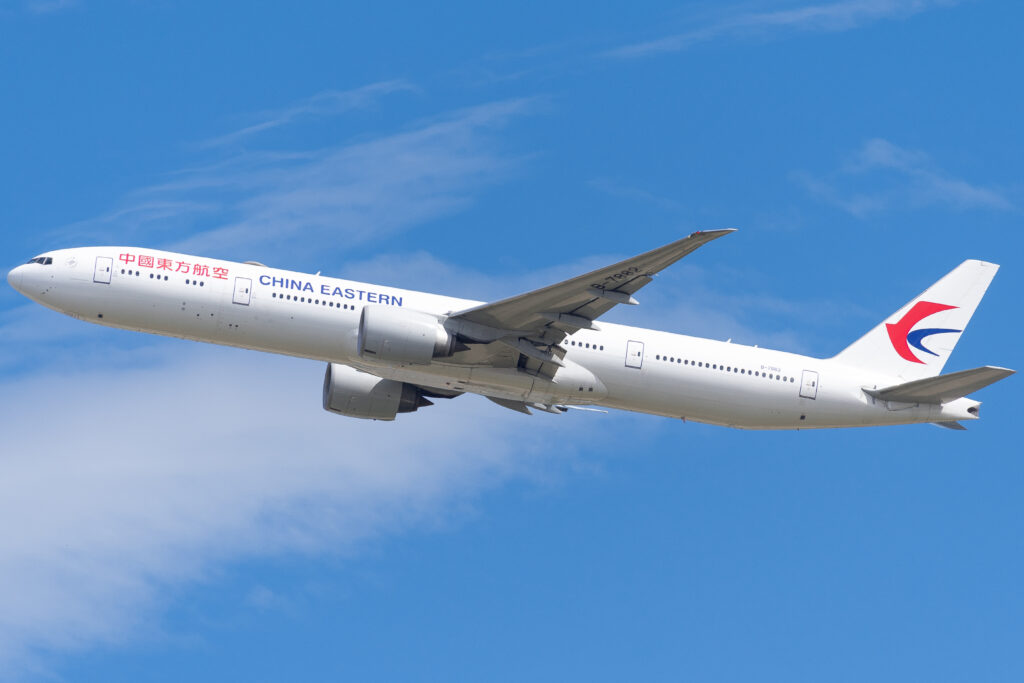
China Eastern has not broken down the exact split between the three variants publicly, but the inclusion of the A321XLR signals that the airline is thinking beyond its current domestic-dominant model. The XLR has the range to connect secondary Chinese cities directly to Southeast Asian, South Asian, and even Middle Eastern destinations without routing through a major hub — a network architecture that was simply not economically viable with previous generation narrowbodies.
The delivery schedule is methodical and clearly planned around fleet renewal rather than pure growth. Nine aircraft arrive in 2028, 19 in 2029, 30 in 2030, 27 in 2031, and 16 in 2032. The airline has been transparent about the fact that at least 53 existing Airbus A320-family aircraft will be retired between 2028 and 2032 as leases expire or aircraft reach the end of their economic lives. The net capacity addition from this order is therefore considerably smaller than the gross number suggests — but the quality of the fleet changes substantially when older A320ceo jets are replaced by fuel-efficient neo-family aircraft.
On pricing, China Eastern confirmed what everyone in the industry already understands: the $15.8 billion figure is the catalogue price, not the actual transaction price. The airline’s filing explicitly states that through commercial negotiations, the final agreed price was significantly below the standard list price — a normal feature of large aircraft orders where the buyer’s volume and strategic importance to the manufacturer gives them meaningful leverage.
Why This Order Matters: Airbus Tightens Its Grip on China
To understand the significance of this deal, you have to zoom out and look at what Airbus has been doing in China over the past six months.
In December 2025 and January 2026, four separate Chinese buyers — Air China, Spring Airlines, Juneyao Airlines, and leasing group CALC — collectively ordered 145 Airbus A320neo family aircraft in a series of deals. China Eastern was not part of that wave. Today’s order is the follow-on that analysts had been anticipating, completing what is shaping up to be a 500-aircraft Airbus cycle from Chinese operators.
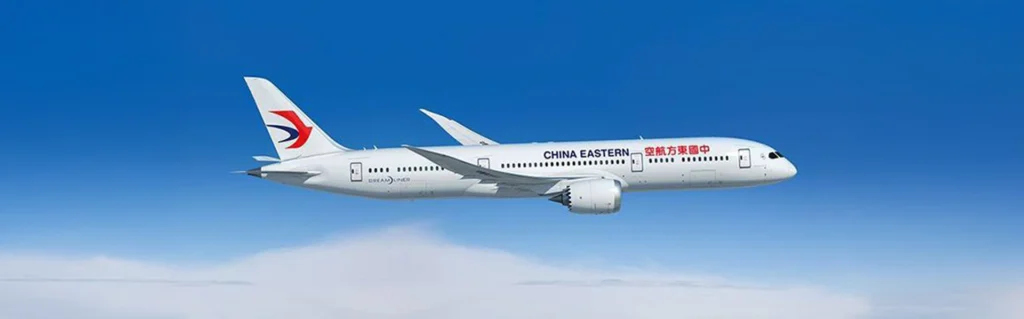
China Eastern itself placed a major A320neo order back in July 2022 as part of the “Big Three” procurement wave that also included Air China and China Southern. That 100-aircraft order is already deep into its delivery cycle — 85 A320neos and a portion of the A321neos from that batch have already been delivered. Today’s order essentially picks up exactly where that delivery schedule ends, with new aircraft starting to arrive in 2028 as the 2022 order completes.
The arithmetic of this is significant. Airbus now has China Eastern locked into its aircraft ecosystem through at least 2032 — and realistically through 2035 and beyond, given that new deliveries require pilot training, MRO infrastructure, and spare parts programmes that create multi-year switching costs. Every A320neo that lands at Shanghai Pudong with a China Eastern livery makes it marginally harder for Boeing to re-enter this customer relationship.
The Boeing Question: What Is Happening to the 737 MAX in China?
It would be impossible to write about this order without addressing the context it sits in.
China Eastern currently operates 184 Boeing aircraft — a substantial fleet. But the carrier’s procurement trajectory has tilted sharply toward Airbus in every major order cycle since 2022. The Boeing 737 MAX, which remains the direct competitor to the A320neo family in the narrowbody market, has faced a particularly difficult path in China. The aircraft was grounded globally following two fatal crashes in 2018 and 2019, and while it has returned to service in most markets, Chinese regulators were among the last to approve its return. The reputational damage in China, combined with ongoing Boeing production and delivery challenges, has created an opening that Airbus has exploited methodically.
The Boeing MAX 10 — the variant that most directly competes with the A321neo in terms of capacity — remains uncertified in the United States as of early 2026. Without MAX 10 certification, Boeing cannot offer Chinese carriers a credible like-for-like alternative to the A321neo on higher-capacity domestic routes. This is not a short-term problem. It is a structural competitive disadvantage that Airbus is capitalising on with precisely the kind of order China Eastern just placed.
Geopolitical dynamics add another layer. US-China trade tensions and tariff uncertainty have made purchasing American aircraft a more politically complex decision for state-owned Chinese carriers. China Eastern is a state enterprise. Its procurement decisions are not made in a vacuum. Against that backdrop, ordering European aircraft — particularly from a manufacturer that operates a final assembly line in Tianjin, on Chinese soil — carries a clear political logic that complements the economic and operational rationale.
China’s Domestic Aviation Growth: The Demand Story Behind the Order
The commercial logic for this order is straightforward. China’s domestic aviation market is on a sustained growth trajectory that makes the mid-2020s one of the most attractive periods in history to lock in narrowbody capacity.
China Eastern currently operates 698 aircraft and is among the three largest carriers in one of the world’s fastest-growing air travel markets. Domestic Chinese air travel demand is being driven by a combination of rising middle-class incomes, continued urbanisation, and the maturation of China’s high-speed rail network — which, rather than cannibalising short-haul air travel, has actually freed airlines to focus on routes that rail cannot efficiently serve.
The A320neo family is perfectly calibrated for this environment. The CFM LEAP and Pratt & Whitney GTF engines powering the neo variants deliver roughly 20% better fuel efficiency than the previous generation A320ceo family they are replacing. In a market where fuel represents a carrier’s largest operating cost, that efficiency gain translates directly into lower CASK — cost per available seat kilometre — which improves profitability on every route the aircraft flies.
China Eastern’s own filing referenced carbon neutrality goals as part of the rationale for the order. Every older A320ceo retired and replaced by a new A320neo or A321neo reduces the carrier’s per-seat emissions profile, supporting its sustainability targets while simultaneously cutting operating costs. This dual benefit of fuel efficiency — financial and environmental — makes the neo family an unusually easy business case to make in the current regulatory climate.
COMAC: The Wildcard in China’s Narrowbody Market
Any discussion of Chinese narrowbody procurement needs to address the domestic alternative — the COMAC C919.
China has invested heavily in building a domestically produced narrowbody that can compete with the A320neo and Boeing 737 MAX. The C919 entered commercial service with China Eastern in 2023 — and notably, it was China Eastern that operated the type’s first revenue flight. The carrier currently flies 45 COMAC aircraft, making it one of the largest C919 operators in the country.
However, COMAC’s production ramp has been significantly slower than originally projected. An expected target of 75 deliveries in 2025 was reportedly cut back to approximately 25 as supply chain issues — particularly around systems and components with international dependencies — constrained output. At current production rates, COMAC cannot supply Chinese carriers with the volume of narrowbody aircraft they need to meet demand and replace ageing fleets simultaneously.
China Eastern’s decision to order 101 Airbus jets while also operating COMAC aircraft reflects the practical reality of the Chinese market: the C919 is a strategic and political priority, but it cannot yet fill the commercial gap on its own. The two procurement streams — international and domestic — are running in parallel rather than in competition, at least for the foreseeable future.
What Happens Next
The China Eastern order is confirmed but remains subject to shareholder approval and sign-off from relevant Chinese state authorities. Given the carrier’s state-owned status and the deal’s alignment with national aviation development priorities, regulatory clearance is expected to follow in due course.
Airbus shares responded positively, rising approximately 1.6% in Paris trading following the announcement. The market reaction reflects not just this single order but what it signals about Airbus’s sustained momentum in China — a market that the manufacturer’s own long-term forecasts identify as requiring thousands of new aircraft over the next two decades.
For China Eastern, the 2028 delivery start gives the airline’s planning and MRO teams time to prepare for the fleet transition. For passengers on China Eastern’s domestic and regional routes, the practical outcome is newer, quieter, more fuel-efficient aircraft with lower operating costs — improvements that, in a competitive market, tend to flow through into better pricing and more route frequency over time.
The order is a data point in a larger story. Airbus is winning China. And today’s announcement from Shanghai is the clearest evidence yet of how durable that advantage is becoming.
 Aastha Choudhary
  Martin hope