

MIAMI, American Airlines has formally petitioned the U.S. Department of Transportation to resume nonstop flights to Venezuela.
The filing details plans for daily service from Miami to Caracas and Maracaibo using Envoy Air Embraer E175 jets.
This marks the first move by a U.S. carrier to restore connectivity since the 2019 aviation ban.
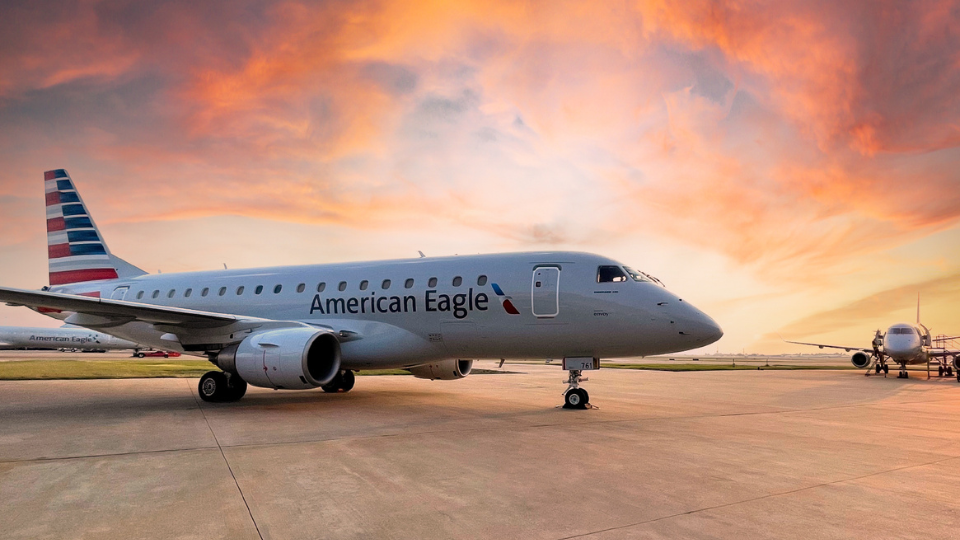
ENVOY AIR LEADS THE RETURN
The airline’s regional subsidiary, Envoy Air, submitted the exemption request on Friday to operate under the American Eagle brand.
Initial schedules propose daily rotations between Miami International Airport (MIA) and Simón Bolívar International Airport (CCS).
A second phase will reconnect Miami with La Chinita International Airport (MAR) in Maracaibo.
American selected the Embraer E175 for its optimal range and capacity balance for re-entering this sensitive market.
The 76-seat aircraft allows the carrier to gauge demand while minimizing operational risk on the revived routes.
Executives requested expedited approval to launch services as early as late March 2026.
This application follows a January 29 directive from Transportation Secretary Sean Duffy lifting the six-year suspension.
President Donald Trump ordered the policy reversal after significant geopolitical shifts in the region earlier this year.
The DOT order officially determined that prohibiting civil aviation to Venezuela is no longer in the U.S. public interest.
Federal agencies must still validate security protocols at Venezuelan airports before the first commercial flight departs.
Transportation Security Administration (TSA) teams are reportedly scheduling on-site assessments in Caracas this month.
American Airlines confirmed it is coordinating closely with both U.S. and Venezuelan authorities to ensure full compliance.
STRATEGIC MARKET REENTRY
Restoring the Miami-Caracas corridor addresses massive pent-up demand from the Venezuelan diaspora in South Florida.
American was the dominant U.S. carrier in Venezuela before the 2019 suspension, operating multiple daily frequencies.
Competitors like United and Delta have not yet filed similar requests, giving American a significant first-mover advantage.Regional carriers such as Copa Airlines currently dominate the market through connecting hubs in Panama.
Direct U.S. service will drastically reduce travel times and lower cargo costs for businesses in both nations.
Analysts predict high load factors immediately upon launch, driven by family reunification traffic.
The return of U.S. metal to Venezuelan soil requires strict adherence to new safety directives.
Crew members will likely overnight in Miami rather than Caracas during the initial operational phase.
This “turn-around” strategy minimizes ground time and exposure for flight crews in Venezuela.
The Embraer E175’s range of 2,200 nautical miles easily covers the 1,360-mile Miami-Caracas sector.
Envoy Air’s fleet of over 170 E-Jets provides the flexibility to scale frequency if demand exceeds projections.
Mainline Boeing 737 service could eventually replace the regional jets once market stability is proven.
A SHIFT IN AVIATION DIPLOMACY
The 2019 ban completely severed direct air links, forcing travelers to route through third countries.
Its removal signals a pragmatic shift in Washington’s approach to maintaining civil aviation bridges.
Aviation experts view this route resumption as a critical test case for normalizing broader commercial relations.
American Airlines’ filing emphasizes the humanitarian and economic benefits of restoring these air bridges.
The carrier aims to reclaim its historical position as the primary bridge between the Americas.
Final regulatory approval is expected within weeks, pending the successful completion of security audits.
 Vibhuuti Goyal
[…] tail of the aircraft displays a stylized American flag, depicted as if waving in the […]
[…] United States, remains the world’s largest aviation market, being the 4th largest country in the world, […]
[…] economics of airline loyalty have changed. In 2026, the American Airlines AAdvantage program rewards how much you spend, not how far you […]