

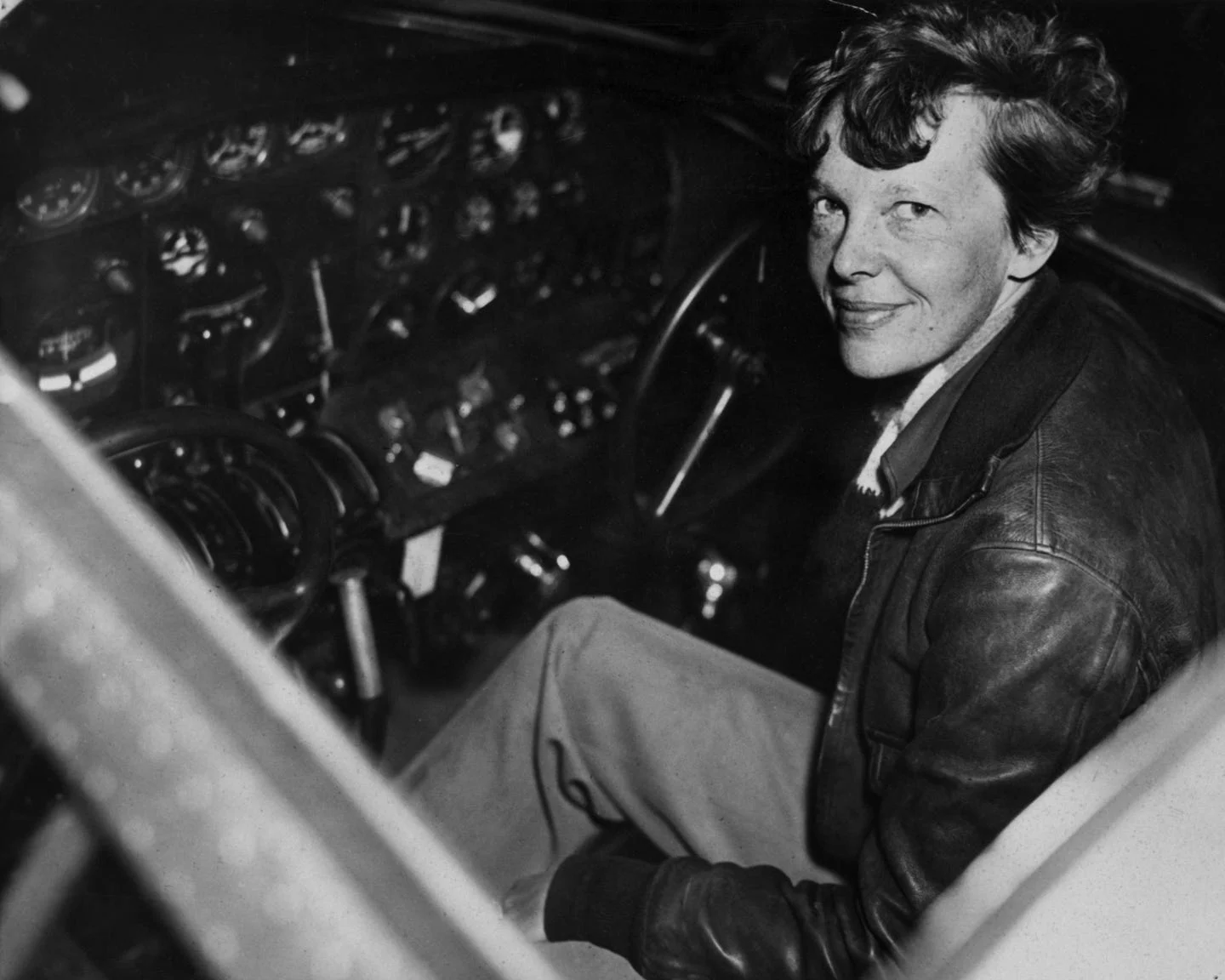
Nearly nine decades after Amelia Earhart vanished over the Pacific Ocean, the hunt for her lost aircraft is more active — and more scientifically credible — than at any point in history. In 2026, multiple expeditions are closing in on competing theories, satellite technology has revealed something genuinely extraordinary on a remote island lagoon, and the U.S. government has been ordered to declassify any remaining records tied to her final flight. The greatest unsolved mystery in aviation history is suddenly looking a lot more solvable.
What Happened on July 2, 1937
Earhart and her navigator Fred Noonan disappeared on July 2, 1937, during their ambitious attempt to circumnavigate the globe along an equatorial route. They were flying a Lockheed Model 10E Electra — a twin-engine aircraft that Purdue University had helped fund through the Amelia Earhart Fund for Aeronautical Research. The plan was for Earhart to return the plane to Purdue upon completing the trip, where it would continue to serve aeronautical research.
The final leg of their journey required locating Howland Island, a tiny strip of land roughly 2,000 miles southwest of Hawaii. Radio communication broke down. They never arrived. Despite an immediate and massive search effort by the U.S. Navy, no wreckage and no remains were recovered. The official conclusion was death by plane crash at sea, but that explanation has never fully satisfied researchers, and the evidence that has accumulated since tells a more complicated story.
The Taraia Object: The Most Promising Lead Yet
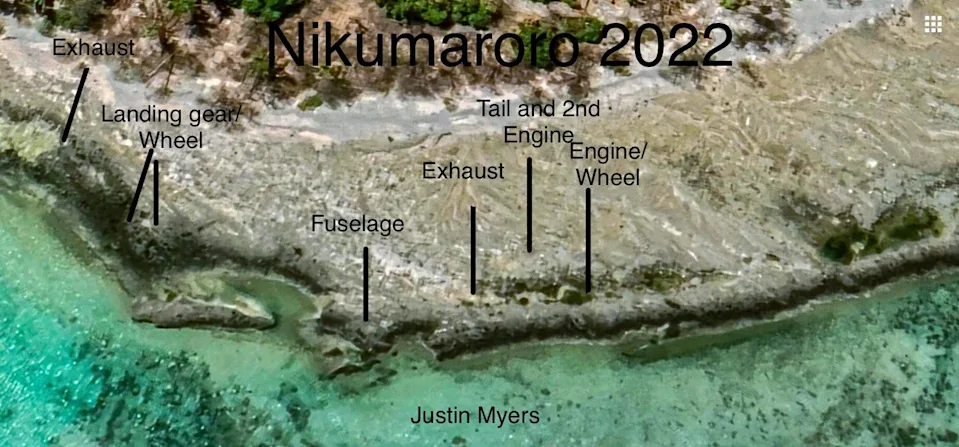
In 2020, a U.S. Navy veteran named Mike Ashmore was browsing satellite imagery of Nikumaroro — a remote uninhabited island in the South Pacific, roughly 600 miles southeast of Howland Island — when he spotted something odd in the island’s central lagoon. The object, now formally known as the Taraia Object, measures approximately 12 to 14 meters in length. That range matches almost exactly the 12.2-meter fuselage of Earhart’s Lockheed Electra.
Subsequent analysis of satellite data spanning 2009 to 2024 found that the object has remained consistent in both form and size across that fifteen-year window. Researchers believe a cyclone that struck the island around 2015 may have uncovered wreckage that had been buried under sediment for decades, which is why the object suddenly appeared in imagery that had previously shown nothing.
Purdue University’s Research Foundation and the Archaeological Legacy Institute joined forces to launch the Taraia Object Expedition — a mission to physically reach Nikumaroro and determine whether what the satellites are showing is actually the remains of the Electra. The team was originally scheduled to depart from the Marshall Islands in November 2025, but the expedition was pushed back to 2026 due to permit delays from the Kiribati government and the onset of the South Pacific cyclone season. The new departure date is set for July 28, 2026, with the team planning to spend approximately five days on the island conducting drone mapping, sonar surveys, underwater camera work, and metal detector sweeps.
The Competing Theory: Papua New Guinea
Not everyone believes Nikumaroro is the answer. A separate expedition, backed by the Palm Springs Air Museum and led by historian and adventurer Michael Carra, returned to the jungles of Papua New Guinea in 2025 in pursuit of an entirely different theory. This hypothesis holds that Earhart, unable to locate her destination, followed her documented backup plan and turned back toward land — eventually crash-landing in Papua New Guinea, where a 1945 Australian army patrol reportedly stumbled upon a downed aircraft in the jungle that has never been formally identified.
The evidence for this theory is more anecdotal, but the expeditions have produced enough intriguing material to keep the theory alive and to warrant a third dedicated search mission.
The Bones, the Artifacts, and 88 Years of Clues
The case for Nikumaroro doesn’t rest on the Taraia Object alone. In 1940, skeletal remains were discovered on the island alongside a sextant box, a woman’s shoe, a compact case, a freckle cream jar, and a medicine vial — all dating to the 1930s. The bones were initially described as belonging to a male, but a 2018 forensic reanalysis using modern techniques concluded they more closely matched Earhart’s known physical proportions than 99% of reference samples in the comparison database. The original bones were subsequently lost, making DNA testing impossible.
A separate photograph taken just three months after Earhart’s disappearance — known as the Bevington Object — appears to show what could be landing gear from the Electra on the Nikumaroro reef. Researchers have debated that image for years without resolution.
In early 2024, a private exploration company called Deep Sea Vision announced it had located an aircraft-shaped object on the seafloor near Howland Island using deep-sea sonar, scanning over 5,200 square miles of ocean floor over a 100-day search. The company believes it could be the Electra, though follow-up verification dives have not yet produced a confirmed identification.
Why 2026 Could Finally Be Different
What makes this moment different from previous searches isn’t just the technology — it’s the convergence of multiple serious, well-funded efforts all bearing down on the same question at roughly the same time. The Taraia Object Expedition has the backing of a major research university, a defined target with physical coordinates, and a suite of modern tools that earlier expeditions simply didn’t have access to.
President Trump’s directive ordering the declassification of all government records related to Earhart added another layer of public attention to the search, though officials have indicated that no classified materials on the subject are believed to remain sealed.
For now, the world waits. The July 2026 expedition to Nikumaroro represents, in the words of the team leading it, the best chance ever assembled to finally close a case that has been open for 88 years.
For additional operational briefings and the latest Airline News, monitor our dedicated aviation intelligence category.
 Aastha Choudhary
  Martin hope