


Noida International Airport (NIA) and Akasa Air have entered a strategic partnership to develop a dedicated Maintenance, Repair, and Overhaul (MRO) facility at the upcoming Jewar aviation hub.
This agreement positions the airline as a primary technical partner in the airport’s ecosystem, ensuring long-term operational readiness for its expanding narrow-body fleet.
The partnership aims to address the critical shortage of domestic MRO capacity in North India, which currently forces many carriers to outsource heavy maintenance to overseas facilities.
By establishing a localized technical base, Akasa Air intends to streamline its supply chain and reduce aircraft on ground (AOG) time. Noida International Airport, managed by Yamuna International Airport Private Limited (YIAPL), provides the necessary greenfield space to build high-capacity hangars specifically designed for modern aircraft types.
India’s aviation sector has historically struggled with a fragmented MRO landscape, characterized by high taxation and limited land availability at primary hubs like Delhi and Mumbai.
The development of NIA represents a systemic effort to create a multi-modal logistics and aviation center that rivals international standards. This facility will support the structural integrity and safety standards required for the Boeing 737 MAX aircraft that form the core of Akasa’s operational strategy.
- NIA Total Site Area: 5,000 hectares allocated for phased development.
- Initial Capacity: 12 million passengers per annum (MPPA) in Phase 1.
- Akasa Air Order Book: 200+ Boeing 737 MAX aircraft scheduled for delivery through 2032.
- MRO Market Value: Projected to reach $4 billion in India by 2030.
- Tax Incentives: Uniform 5% GST on MRO services to encourage domestic self-reliance.
Developing MRO infrastructure at a greenfield site allows for the integration of Industry 4.0 technologies, including automated parts tracking and specialized engine test cells.
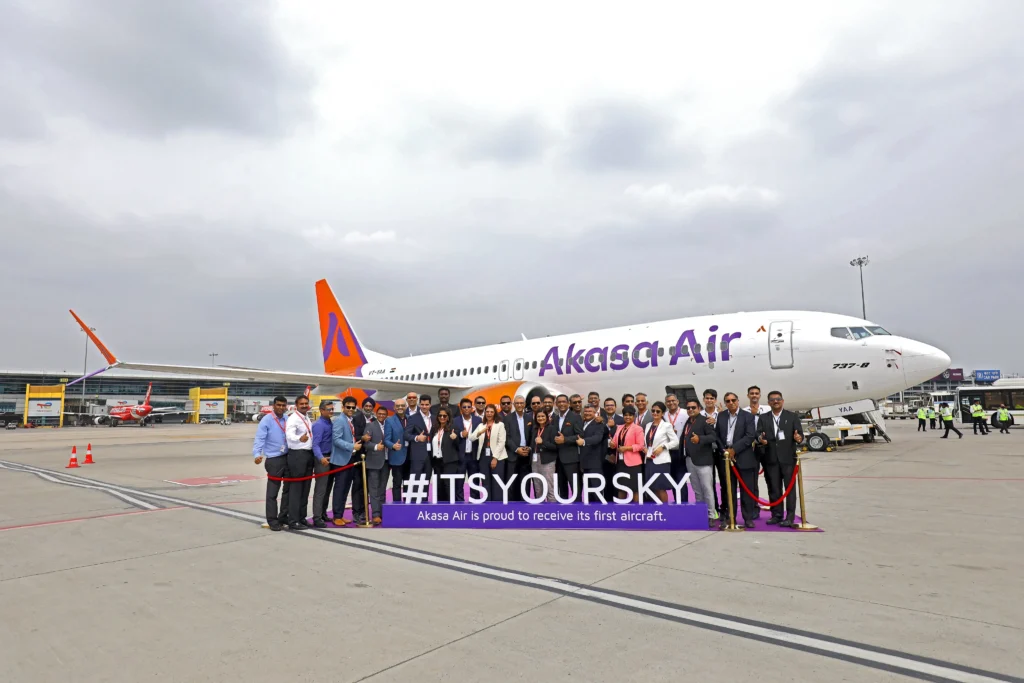
This proactive alignment between the airport operator and the carrier mitigates the risks associated with retrofitting maintenance facilities into congested existing airports. The proximity to the Western Dedicated Freight Corridor also ensures a rapid influx of spare parts and specialized tooling.
In comparison to the current MRO concentration in Hyderabad and Bengaluru, the Jewar facility will create a secondary maintenance node in the north.
This geographical diversification is essential for fleet resilience, as it provides an alternative for heavy checks during peak operational seasons or localized disruptions at other hubs. The presence of a major MRO provider at NIA will likely attract third-party maintenance contracts from regional carriers and international operators seeking cost-effective turnarounds.
The operational implication of this partnership is a significant reduction in ferry flight costs. Ferrying an aircraft to Southeast Asian or Middle Eastern hubs for a C-Check can cost upwards of $50,000 in fuel and crew expenses alone.
By localizing these services, Akasa Air can reinvest these savings into network expansion and fare competitiveness. This move is a textbook example of vertical integration where the airline secures its backend logistics to support aggressive front-end growth.
Strategic forecasting suggests that NIA will become a primary technical stop for transcontinental narrow-body routes. As narrow-body aircraft gain the range to connect secondary cities in Asia and Europe, the availability of line maintenance and quick-turnaround MRO services becomes a deciding factor for route planning.
Akasa Air’s early mover advantage in this space provides them with preferential access to hangar slots and specialized ground handling equipment as the airport scales.
The regulatory environment has also shifted to favor such developments. The Ministry of Civil Aviation’s focus on the MRO Policy 2021 has removed several bureaucratic hurdles regarding land lease tenures and royalty payments. This policy shift allows NIA to offer more competitive lease rates to Akasa Air, ensuring the MRO facility remains financially viable during the early years of the airport’s operation.
From a technical perspective, the facility must be equipped to handle complex avionics and engine overhauls. The Boeing 737 MAX features advanced CFM LEAP-1B engines which require specialized diagnostic tools and climate-controlled storage for sensitive components.
By designing the facility from the ground up, NIA and Akasa can ensure that these specific environmental and technical requirements are met without the constraints of legacy infrastructure.
Furthermore, the collaboration will likely include a training component for aviation engineers and technicians. The demand for certified Type-Rated engineers is expected to grow exponentially as India’s total commercial fleet surpasses 1,500 aircraft in the next decade. Establishing a training center within the NIA MRO zone would create a sustainable pipeline of skilled labor for both Akasa Air and the broader industry.
Operational efficiency is further enhanced by the airport’s planned digital twin technology. This allows for real-time monitoring of hangar utilization and resource allocation.
For any Airline News analyst, the integration of such high-tech infrastructure into a greenfield project demonstrates a commitment to operational excellence that exceeds the current capabilities of many established global hubs.
The long-term viability of this partnership depends on the timely completion of NIA’s first phase. Any delays in runway certification or terminal commissioning would postpone the MRO facility’s revenue generation. However, given the strategic oversight by Zurich Airport International AG and the Uttar Pradesh government, the project remains on a high-priority track for 2024-2025 operations.
The economic impact on the Jewar region will be substantial. MRO facilities are labor-intensive and require a high ratio of skilled personnel per aircraft. This will stimulate local ancillary industries, including chemical suppliers, logistics providers, and tool manufacturers.
The development of an aviation ecosystem around NIA will transform the region into a specialized industrial zone, attracting further foreign direct investment in the aerospace sector.
As Akasa Air matures, its requirement for heavy maintenance will increase as aircraft reach their initial four-year and eight-year check intervals. Having a dedicated facility at NIA ensures that the airline is not subject to the pricing volatility or scheduling constraints of third-party MRO providers. This level of control is vital for maintaining the high utilization rates required by the low-cost carrier business model.
In conclusion, the NIA-Akasa partnership is a calculated response to the projected growth of Indian aviation. It addresses the physical infrastructure gap while aligning with national goals of domestic self-sufficiency in aerospace services. The success of this facility will serve as a blueprint for future greenfield airport developments across the subcontinent.
For additional operational briefings and the latest Airline News, monitor our dedicated aviation intelligence category.
 Aastha Choudhary
  Anshum Raj
  Shaifali