

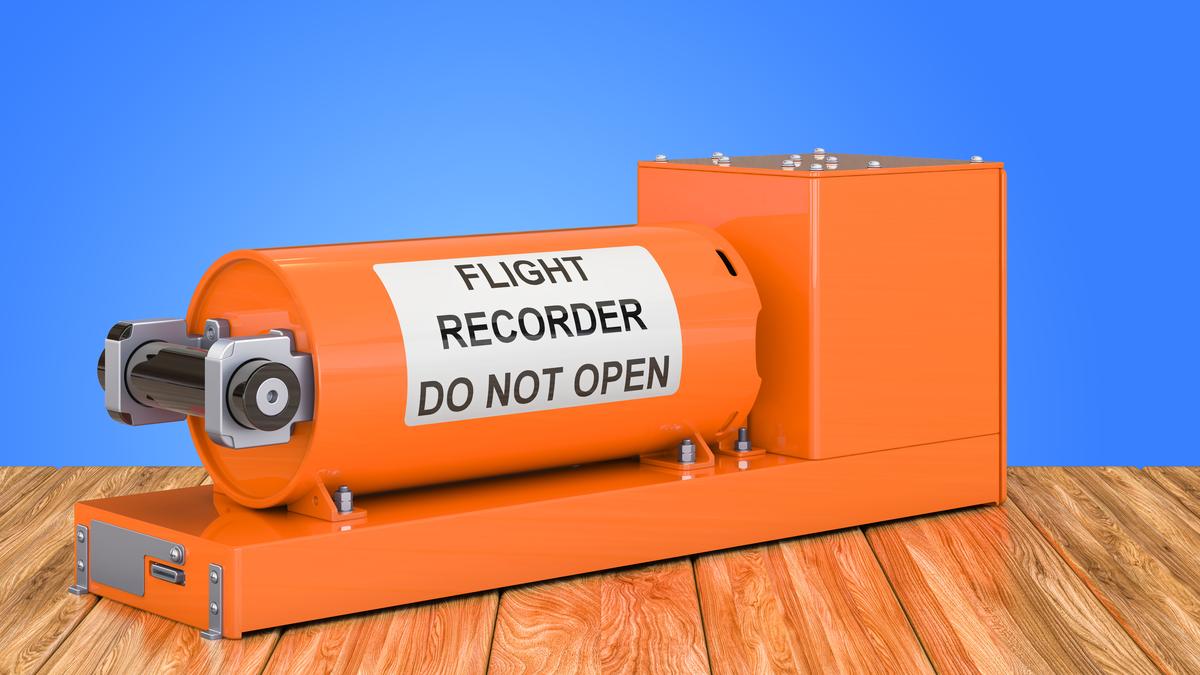
Aviation for years has been one of the safest modes of travel in the world, with millions of flights operating every year. The world really depends on modern aviation these days, yet when even a single accident occurs, investigators rely on one crucial device to reconstruct the final moments of a flight: the aircraft “black box.”
The name may not define its actual potential, but the box is actually painted bright orange to make it easier to locate after an accident. These recorders play a critical role in improving aviation safety.
Authorities such as the National Transportation Safety Board depend heavily on black box data to determine the causes of aviation incidents.
Aviation Safety Context
| Metric | Data |
|---|---|
| Global commercial flights per year | 38 million |
| Average accident rate | 1 accident per 1 million flights |
| Key investigation tool | Flight recorders (“Black Boxes”) |
| Mandatory since | 1960s |
Let’s get deeper into the components of a black box. It is a crash-protected recording system installed in commercial aircraft that stores flight data and cockpit audio.
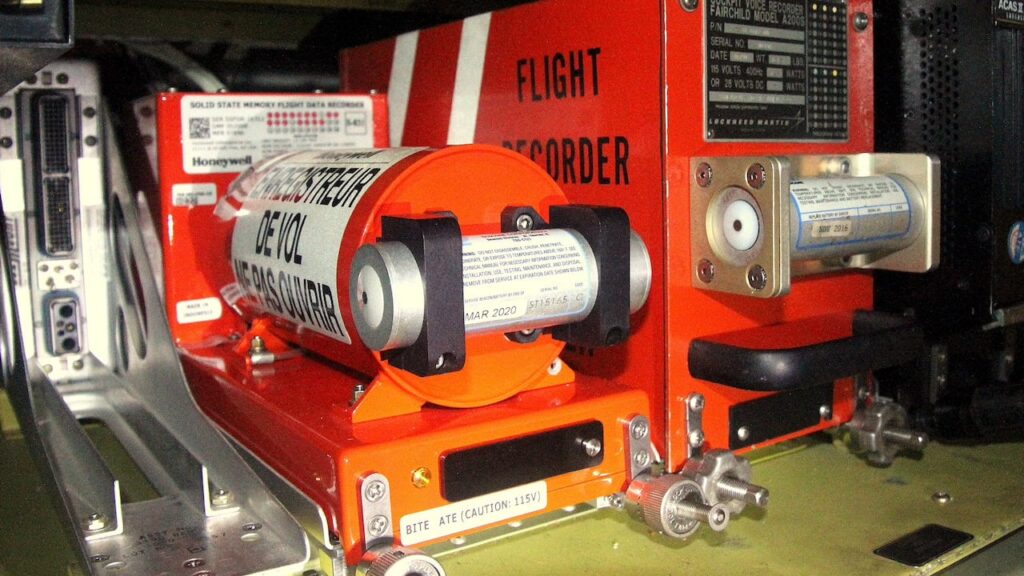
Broadly, the system consists of two primary devices:
Flight Data Recorder (FDR)
The FDR records not just hundreds but thousands of flight parameters. These can include airspeed, altitude, engine power, and more.
Modern aircraft such as the Boeing 777 and Airbus A320 can record 800–1000+ parameters every second.
Cockpit Voice Recorder (CVR)
The CVR captures cockpit audio using multiple microphones. These recorded audios include pilot conversations, alarm warnings, communication with air traffic control, and more.
Both of these recorders continuously capture data throughout the flight.
Crash Survivability
Black boxes are built inside extremely durable containers made of stainless steel or titanium.
These devices are designed to survive severe impacts during crashes, intense fires, and high ocean pressure.
Regulatory standards for these devices are defined by aviation authorities such as the Federal Aviation Administration.
Crash Protection Capabilities
| Condition | Capability |
|---|---|
| Impact resistance | 3,400 G |
| Fire resistance | 1,100°C for 60 minutes |
| Water depth survival | Up to 6,000 m |
| Pressure resistance | 5,000+ pounds |
Coming to the more specific parts of a black box, each one is equipped with an Underwater Locator Beacon (ULB).
If an aircraft crashes in water:
- The beacon activates automatically
- It emits an acoustic “ping”
- Search teams can detect the signal using sonar equipment
The beacon battery typically lasts around 30 days, providing investigators a limited but crucial period to locate the recorders.
Black boxes are extremely useful when it comes to solving accidents. For example, investigators studying the Air France Flight 447 crash relied on recovered flight recorders to determine that faulty airspeed sensor readings and pilot responses caused the aircraft to stall over the Atlantic Ocean.
Similarly, analysis of data from the Lion Air Flight 610 crash revealed problems with the aircraft’s automated flight control system.
However, it is not necessary that every investigation ends with the recovery of black boxes. In the case of the Malaysia Airlines Flight 370 disappearance, the aircraft’s flight recorders were never found, leaving many questions unanswered about the aircraft’s final moments.
These are cases that happen once in millions of incidents, so one really cannot judge aviation safety on the basis of such rare events.
Air France Flight 447 crash — 2009
Lion Air Flight 610 crash — 2018
Malaysia Airlines Flight 370 disappearance — 2014
Despite their importance, recovering black boxes can be difficult, especially when aircraft crash into deep oceans. Every time, recovery is not a desirable or easy option.
However, the aviation industry never stops innovating. Investigators are exploring new technologies to enhance flight recording systems.
These innovations include deployable recorders that automatically detach during a crash and real-time satellite data transmission that could allow investigators to access flight information without physically recovering the device.
This is complex to achieve, and organisations such as the International Air Transport Association are actively working on it.
Thus, one can say that the black box is efficient but still not the only solution for recovering aircraft data. Nevertheless, its role remains essential as the aviation industry continues to grow and improve safety worldwide.
 Aastha Choudhary
  Priyanshu Gautam
  Anshum Raj