

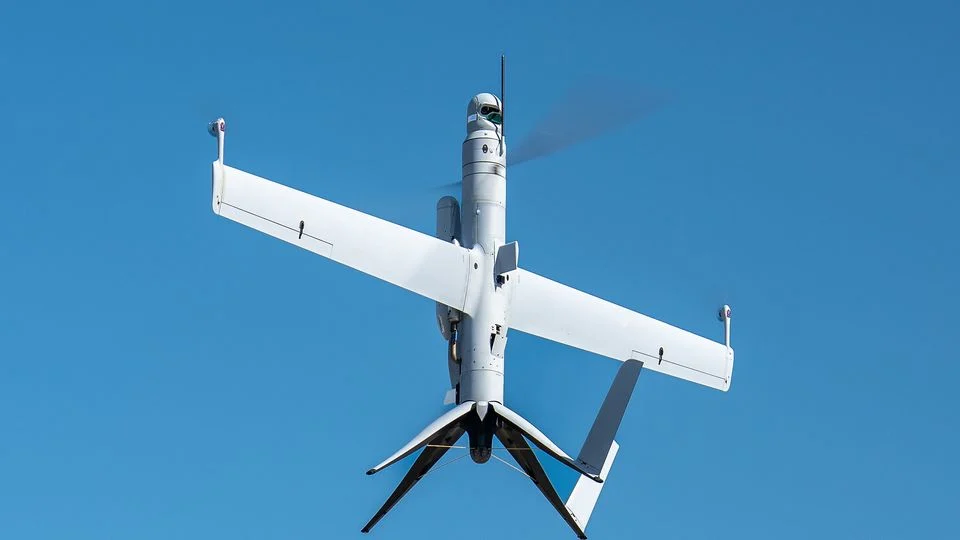
Atlanta, U.S., Airbus Helicopters has formalised a strategic contract with Garuda Technologies Inc. for the delivery of up to 18 Flexrotor Uncrewed Aerial Systems (UAS).
This agreement signals a significant shift in North American aerial surveying, as Garuda—a Delaware-based subsidiary of India’s Garuda Aerospace—deploys high-endurance tactical assets for high-stakes civil and parapublic missions.
TACTICAL UAS INTEGRATION IN NORTH AMERICA
The contract marks a decisive move for Garuda Technologies as it scales operations within the North American market. By integrating the Flexrotor, a Vertical Take-Off and Landing (VTOL) platform originally developed by Aerovel and now under the Airbus portfolio, Garuda establishes a footprint in a sector increasingly reliant on automated, long-range surveillance. The partnership targets critical needs in energy, public services, and disaster response.
Garuda Technologies functions as the American gateway for its parent company, Garuda Aerospace, which has already established a dominant presence in the Indian drone sector.
The expansion into Delaware and the subsequent acquisition of Airbus hardware suggests a mature cross-border strategy aimed at the world’s most demanding infrastructure monitoring markets. The Flexrotor’s ability to operate in austere environments provides Garuda with a distinct competitive advantage over localized drone service providers.
OPERATIONAL SPECIFICATIONS AND CONTRACT SCOPE
- FLEET VOLUME: Up to 18 Flexrotor UAS units committed under the initial contract.
- DEPLOYMENT SPEED: System transitions from stowed configuration to airborne in under 30 minutes.
- ENDURANCE PROFILE: Classified as a long-endurance light tactical UAS with significant loiter time.
- OPERATIONAL FOOTPRINT: Capable of VTOL from confined land areas and ships lacking dedicated flight decks.
- MISSION VERSATILITY: Optimized for infrastructure inspection, wildfire monitoring, and search and rescue.
THE SHIFT TO ASSET-LIGHT OPERATIONAL MODELS
Garuda’s decision to offer both dry and wet lease options reflects a sophisticated understanding of the current economic climate in utility and public service sectors. Dry leasing allows agencies with existing pilot expertise to integrate the Flexrotor into their own command structures. Conversely, wet leasing provides a turnkey solution where Garuda manages the equipment, maintenance, and flight operations, lowering the barrier to entry for local municipalities and energy firms.
This bifurcated leasing strategy addresses the capital expenditure (CAPEX) hurdles that often prevent the adoption of high-end tactical uncrewed systems. By positioning the Flexrotor as a service rather than just a product, Garuda ensures higher utilization rates across its fleet. The move mirrors broader trends where service-based aviation contracts are replacing traditional procurement cycles for specialized aerial work.
Within the broader context of current Airline News and aerospace updates, the convergence of uncrewed systems with traditional rotary-wing portfolios marks a shift toward hybrid fleet management. This integration allows major manufacturers like Airbus to maintain a presence in the low-altitude economy without cannibalizing their existing crewed helicopter markets. Instead, the Flexrotor complements crewed assets by handling high-risk or high-monotony tasks that are less efficient for traditional aircraft.
TECHNICAL VIABILITY IN CONFINED OPERATIONAL THEATERS
The Flexrotor’s expeditionary capability is a primary driver of its long-term viability. Its small physical footprint allows for transport via standard utility vehicles or small maritime vessels. Once on-site, the lack of a required runway or specialized recovery equipment simplifies the logistics chain. This is particularly relevant for the inspection of oil and gas pipelines in remote regions of Alaska or the Canadian wilderness where infrastructure is sparse.
From an engineering perspective, the Flexrotor utilizes a unique transition mechanism that allows it to take off vertically like a helicopter and then tilt into horizontal flight for maximum fuel efficiency. This hybrid approach solves the range limitations inherent in traditional multi-rotor drones. For railway and power line inspections, where sensors must track linear assets over hundreds of miles, this endurance is the difference between a successful mission and one requiring multiple battery swaps.
THE PARAPUBLIC FRONTIER
Looking toward the next decade, the demand for wildfire monitoring and disaster relief assets is expected to accelerate. The Flexrotor’s ability to carry a wide array of sensors, including thermal imagers and high-definition optical payloads, makes it an ideal platform for real-time fire perimeter tracking. Law enforcement agencies also stand to benefit from a platform that can loiter over a scene for extended periods without the noise profile or operational cost of a light turbine helicopter.
Garuda’s entry into the North American market via Delaware also highlights the geopolitical nature of the UAS supply chain. As Western markets move away from certain foreign-manufactured drone components, the partnership between a European aerospace giant (Airbus) and an Indian-American service provider (Garuda) offers a secure and reliable alternative. This supply chain integrity is critical for contracts involving national energy grids and sensitive public safety infrastructure.
For additional operational briefings and the latest Airline News, monitor our dedicated aviation intelligence category.
 Aastha Choudhary
  Anshum Raj