

SYNOPSIS
Air India Express is projected to achieve its first profitable quarter since its privatization and subsequent acquisition by the Tata Group. The low-cost carrier has utilized a massive fleet expansion strategy and the integration of AIX Connect to optimize its cost structure. This financial turnaround is driven by increased capacity on short-haul international routes and a modernized fleet of Boeing 737 MAX aircraft.
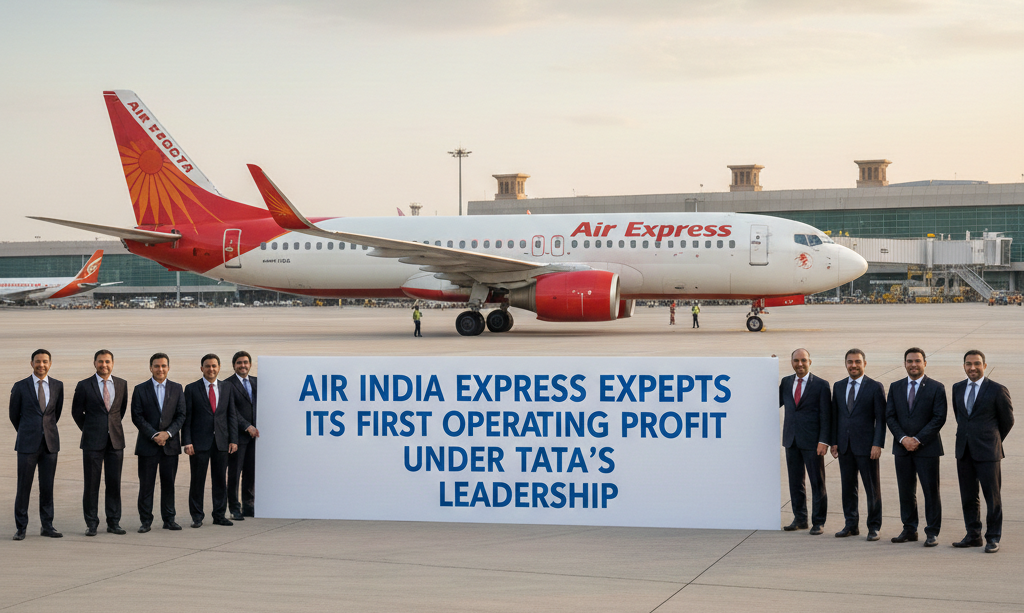
Air India Express management has confirmed that the airline expects to report a net profit for the current fiscal quarter ending March 2024. This marks the first period of profitability since the Tata Group assumed operational control in early 2022. The transition from a loss-making entity to a profitable subsidiary follows the aggressive induction of new aircraft and the successful merger of operations with AIX Connect, formerly known as AirAsia India. Managing Director Aloke Singh stated that the airline has reached a critical size where economies of scale are beginning to offset the high costs associated with rapid expansion and rebranding. The airline is currently operating over 350 daily flights with a fleet that has grown to 67 aircraft, representing a significant increase in Available Seat Kilometers (ASK) across its domestic and international networks.
FLEET RECAPITALIZATION AND ENGINE EFFICIENCY
The primary driver of the improved financial performance is the induction of the Boeing 737-8 and 737-10 variants. Air India Express is currently receiving new airframes at a rate of approximately three aircraft per month from the existing order book. These aircraft are equipped with CFM International LEAP-1B engines, which provide a 15 percent reduction in fuel consumption and carbon emissions compared to the CFM56-7B engines utilized in the older 737-800 Next Generation fleet.
The technical specifications of the LEAP-1B include a 69-inch carbon fiber fan and a high-pressure compressor with a 22:1 pressure ratio. These engineering advancements directly impact the Cost per Available Seat Kilometer (CASK) by reducing the fuel burn per block hour. Fuel costs typically constitute 40 percent of the operating expenses for a low-cost carrier in the Indian market. By lowering the average age of the fleet, the airline also reduces maintenance, repair, and overhaul (MRO) expenses. The new aircraft feature a dual-class configuration with a focus on high-density seating to maximize Revenue Passenger Kilometers (RPK) while maintaining a competitive weight-to-thrust ratio for short-field performance at restricted airports.
The consolidation of AIX Connect into Air India Express has allowed for the unification of flight codes, crew scheduling, and ground handling operations. This merger has eliminated redundant administrative overhead and streamlined the supply chain for aircraft spares. The carrier has transitioned to a single Air Operator Certificate (AOC) process, which simplifies regulatory compliance with the Directorate General of Civil Aviation (DGCA).
Operationally, the airline has synchronized its route network to act as a feeder for Air India’s long-haul international services. This hub-and-spoke integration utilizes the Air India Express fleet to transport passengers from Tier 2 and Tier 3 Indian cities to major gateways such as Delhi, Mumbai, and Bengaluru. The synchronization of the Narrow Body fleet with the Wide Body operations of the parent company has improved the Passenger Load Factor (PLF) across the combined network. The airline has also implemented a unified reservations system and a common web platform, which reduced distribution costs and improved the direct-to-consumer sales ratio.
REVENUE MANAGEMENT AND UNIT ECONOMICS
The anticipated profit is also attributed to a shift in revenue management strategies. Air India Express has focused on high-yield international routes to the Gulf Cooperation Council (GCC) countries and Southeast Asia. These routes benefit from high migrant labor traffic and increasing tourism, providing a stable floor for Revenue per Available Seat Kilometer (RASK). The airline has optimized its pricing algorithms to adjust fares dynamically based on real-time demand elasticity and competitor pricing.
Ancillary revenue streams have been expanded to include pre-booked meals, seat selection fees, and excess baggage charges. These high-margin revenue sources are critical for the low-cost carrier model, where base fares are often kept low to stimulate demand. The introduction of the “Xpress Biz” class on certain Boeing 737 MAX aircraft allows the carrier to capture premium demand on short-haul routes without the high overhead of a traditional full-service business class product. This sub-fleet strategy targets corporate travelers on domestic trunk routes between major metros.
INFRASTRUCTURE AND CREW TRAINING CAPACITY
To support the fleet expansion, Air India Express has invested in localized training infrastructure. This includes the establishment of a centralized training facility in Gurugram equipped with CAE-built Boeing 737 MAX full-flight simulators. By bringing pilot training in-house, the airline has reduced the costs associated with overseas training programs and lowered the turnaround time for Type Rating and Recurrent Training.
The logistics of crew positioning and base management have been restructured to minimize hotel and transport expenses. The airline now operates multiple bases across India, including Kochi, Kozhikode, Kannur, and Mangalore, which allows for more efficient crew utilization. This decentralized basing strategy ensures that aircraft can be deployed on first-wave departures from regional airports, maximizing daily aircraft utilization to over 13 hours per day. High utilization rates are essential for amortizing the fixed costs of aircraft leases and insurance premiums.
REGULATORY AND MARKET CHALLENGES
While the financial outlook is positive, the airline must navigate several external variables. Fluctuations in the price of Aviation Turbine Fuel (ATF) and the volatility of the Indian Rupee against the US Dollar remain significant risks to sustained profitability. Most aircraft lease rentals and maintenance contracts are denominated in dollars, creating a currency mismatch with Rupee-denominated domestic revenue.
Competition within the Indian low-cost sector remains intense, with other carriers also expanding their narrow-body fleets. Air India Express has addressed this by focusing on its primary strength in the India-Gulf corridor, where it maintains a significant market share and historical brand recognition. The airline is also expanding its footprint in the Northeast and Southern regions of India to capture emerging travel demand. The stabilization of the supply chain for aircraft parts is also a focus area, as global bottlenecks for engine components have grounded several aircraft in competing fleets. Air India Express has mitigated this risk by securing comprehensive support agreements with original equipment manufacturers (OEMs) for its new fleet.
The goal for the next fiscal year is to continue the trajectory of growth by adding over 50 more aircraft to the fleet. This will involve the introduction of longer-range variants that can reach destinations in Central Asia and deeper into Southeast Asia. The technical capability of the Boeing 737-8200, a high-capacity version of the MAX 8, is being evaluated for high-density domestic routes to further drive down unit costs.
The airline’s expansion is supported by the broader transformation of the Air India Group under the Vihaan.AI initiative. This multi-year plan focuses on reclaiming market share and improving operational reliability. For Air India Express, the focus remains on being the low-cost engine of the group, providing efficient and reliable connectivity while maintaining a lean cost structure. The successful reporting of a profitable quarter would serve as a verification of the current management’s strategy and the effectiveness of the integration process between the two low-cost subsidiaries.
 Vibhuuti Goyal
[…] announced by Boeing and the Vietnam-based carrier on February 18, marking a significant step in the airline’s fleet expansion […]