

SYNOPSIS
Air France will aggressively expand its North American operations for the Summer 2026 season, adding significant capacity to the critical Paris-New York corridor. The French flag carrier confirmed it will operate up to 11 daily flights between Paris-Charles de Gaulle and New York City hubs in partnership with Delta Air Lines. This expansion includes a new second daily service to Newark Liberty International Airport and increased frequencies to John F. Kennedy International Airport. The move targets the lucrative summer travel surge with “shuttle-level” frequency.
Air France officials announced the expanded schedule on Monday, positioning New York as the airline’s undisputed premier long-haul market. Starting June 1, 2026, the carrier will double its presence at Newark Liberty International Airport (EWR), moving from one daily flight to two. This second daily rotation targets business travellers requiring later departure options from Manhattan’s western suburbs.
Simultaneously, operations at John F. Kennedy International Airport (JFK) will reach new density levels. Air France will operate up to six daily flights of its own to JFK. When combined with joint venture partner Delta Air Lines, the alliance will offer nine daily connections between JFK and Paris-Charles de Gaulle (CDG). This brings the total daily lift between the two cities to 11 flights, offering a departure roughly every two hours during peak windows.
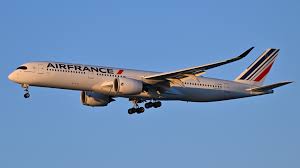
The aircraft deployment signals a focus on premium revenue. The new Newark frequency will utilize the Airbus A350-900, equipped with the airline’s latest business class cabins featuring sliding doors. Meanwhile, the JFK route will see heavy utilization of the Boeing 777-300ER. Four of the six daily JFK sorties will feature the ultra-exclusive La Première first-class suites, ensuring high-yield inventory matches the frequency hike.
INVESTIGATIVE ANALYSIS
This expansion is a calculated strike against competitors United Airlines and the JetBlue-Norse Atlantic low-cost pressure. By saturating the schedule, Air France and Delta effectively create an “air bridge” that neutralizes the schedule advantage of rivals. Corporate contracts often hinge on schedule flexibility; 11 daily options create a formidable moat around high-value corporate accounts.
The choice of Newark for growth is particularly strategic. For years, Air France neglected the New Jersey hub, leaving it as a fortress for United Airlines. Returning to double-daily service at EWR signals an intent to recapture the pharmaceutical and finance traffic based in New Jersey and Lower Manhattan. It offers a viable alternative to the often-congested JFK, appealing to travelers who prioritize efficiency over the flagship lounge experience available at Terminal 1.
Product consistency remains the linchpin of this strategy. Air France is rapidly standardizing its onboard hard product. The A350-900s deployed to Newark feature the “staggered” business class configuration, eliminating the dreaded “middle seat” issues of older jets. Furthermore, the carrier confirmed that its fleet rollout of Starlink high-speed Wi-Fi is nearing completion. Free, streaming-quality internet creates a significant differentiator against legacy U.S. carriers that still charge for connectivity on transatlantic sectors.
Air France is also testing niche ultra-premium markets within this summer schedule. The airline will operate special nonstop flights between JFK and Nice in June to support the Cannes Lions Festival. This tactical deployment bypasses the Paris hub entirely, directly serving the media and advertising elite attending the French Riviera event. It demonstrates a willingness to break hub-and-spoke orthodoxy to chase high-yield event traffic.
Looking ahead, the density of this schedule puts immense pressure on ground infrastructure. The carrier recently upgraded its lounge offerings at JFK, but handling six widebody departures daily will test terminal capacity. If the Summer 2026 gamble pays off, expect Air France to solidify this frequency permanently, effectively treating New York City as a domestic station in terms of operational scale. The transatlantic market is not just recovering; it is becoming a battleground for frequency supremacy.
 Vibhuuti Goyal