


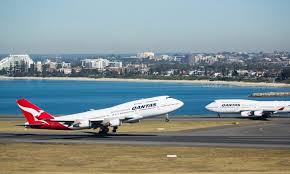
Australia’s flag-carrier, Qantas Airways, is in the midst of a serious route expansion boom. Mixing in new long-haul destinations, boosting regional links, and adding capacity on existing routes, the airline is capitalising on strong post-pandemic travel demand, a fleet of newer jets, and well-timed strategy to truly revamp its global reach.
The most significant and eye catching thing is the Qantas’s decision to launch the first-ever non-stop flight between Sydney and Las Vegas ,a route that historically never existed without connections. From 29 December 2026 to March 2027, Qantas will operate three weekly return services between Sydney (SYD) and Las Vegas (LAS) using Boeing 787 Dreamliners. This seasonal service cuts up to five hours of total travel time compared to existing one-stop options, making it a material time-saver for business travellers, events attendees and tourists alike.
Route Snapshot: Sydney–Las Vegas
- Aircraft: Boeing 787-9 Dreamliner
- Frequency: 3x weekly (seasonal)
- Estimated flight time: 14 15 hours
- Time saved vs one-stop routes: Up to 5 hours
- Qantas North America network: 8 destinations
- Pre-pandemic Australia–North America traffic: 4+ million passengers annually.
It is not just focusing on long-haul services. In early 2025, it launched a new Darwin-Singapore route operating four times weekly, adding more than 70,000 seats annually and creating a seamless gateway into Asia and Europe via Singapore.
Route Snapshot: Darwin-Singapore
Frequency: 4 flights per week
Additional annual capacity: 70,000+ seats
Singapore onward connections: 100+ global destinations
While much attention often goes to brand-new destinations, the real strategic weight of Qantas’s network lies in its Sydney–Los Angeles corridor arguably the airline’s most important long-haul route. The trans-Pacific link between Australia and the United States has historically been one of Qantas’s highest-yield and most competitive markets, connecting business travellers, students, tourism flows and onward passengers across North America.
From a revenue perspective, Sydney–Los Angeles is more than a point-to-point leisure service. It captures premium corporate traffic, film and entertainment industry movement, tech sector travel and high-spending tourism.
Premium load factor trend (2019–2022): ~75–80% average on the SYD–LAX corridor (industry benchmarking).
Revenue per Available Seat Kilometre (RASK): Premium long-haul routes like SYD–LAX often deliver 10–15% higher yields versus leisure short-haul sectors.
Estimated annual seat capacity: ~800,000+ seats (across A380 & 787 operations).
behind these network moves lies financial resilience. In its recent reporting period, Qantas delivered underlying pre-tax profits exceeding A$1 billion, supported by strong demand recovery and disciplined cost management.
Liquidity reserves: A$12.6+ billion.
Planned fleet capital expenditure:
- FY2026 forecast: A$4.3 billion
- FY2027 forecast: A$5.4 billion
Long-haul profit contribution: Long-haul operations (including North America and Europe) historically account for 40–50% of Qantas Group revenue, despite being roughly 20% of total flights.
The strategic role within the broader network is something to look into, as the route also allows Qantas to deploy aircraft strategically. During peak Australian summer travel months, the Airbus A380 maximises seat supply. During shoulder seasons, the 787-9 offers lower trip costs and improved fuel efficiency, reducing exposure to volatility in fuel prices and demand fluctuations.
In network planning terms, Sydney–Los Angeles functions as both an origin-destination market and a connecting superhighway. Every additional frequency not only carries point-to-point passengers but also feeds secondary markets across North America.
looking ahead, the Sydney–Los Angeles corridor is expected to grow steadily rather than explosively. Industry projections suggest trans-Pacific traffic could expand at an average annual rate of 3–5% through 2028, driven primarily by leisure demand, visiting-friends-and-relatives travel and gradual corporate recovery.
In aviation, certain routes become symbolic. Sydney–Los Angeles is one such corridor. It is not simply a flight path across the Pacific; it is an economic artery linking two continents, industries and millions of travellers each year. its scale, revenue mix and network connectivity provide stability that supports newer North American ventures.
Frequently Asked Questions (FAQs)
1. What is the 80-hour rule for Qantas?
The “80-hour rule” generally refers to long-haul flight time limitations applied to ultra-long-range operations. For Qantas, it relates to crew duty and flight time management to ensure safety on extremely long flights, particularly under its ultra-long-haul expansion plans. These rules help regulate how many hours pilots and cabin crew can operate within a specific period to prevent fatigue and maintain operational safety.
2. What is the strategy of Qantas?
The strategy of Qantas focuses on:
- Expanding ultra-long-haul international routes under “Project Sunrise”
- Strengthening its domestic market leadership in Australia
- Investing in fuel-efficient, next-generation aircraft
- Enhancing premium travel experiences
- Maintaining strong operational safety and reliability standards
The airline aims to connect Australia directly with major global cities while improving efficiency and customer experience.
3. What routes will Qantas use the A350 on?
Qantas plans to use the Airbus A350 (A350-1000 variant) primarily for ultra-long-haul “Project Sunrise” routes, including:
- Sydney to London
- Sydney to New York
These aircraft are specially configured to operate non-stop flights exceeding 19–20 hours.
4. What is Qantas airlines’ longest flight?
The longest scheduled flight operated by Qantas is the non-stop route between Perth and London. The Perth to London service covers approximately 14,500 kilometers and takes around 17 hours.
Under Project Sunrise, even longer flights (such as Sydney to London and Sydney to New York) are expected to surpass this duration once fully operational.