
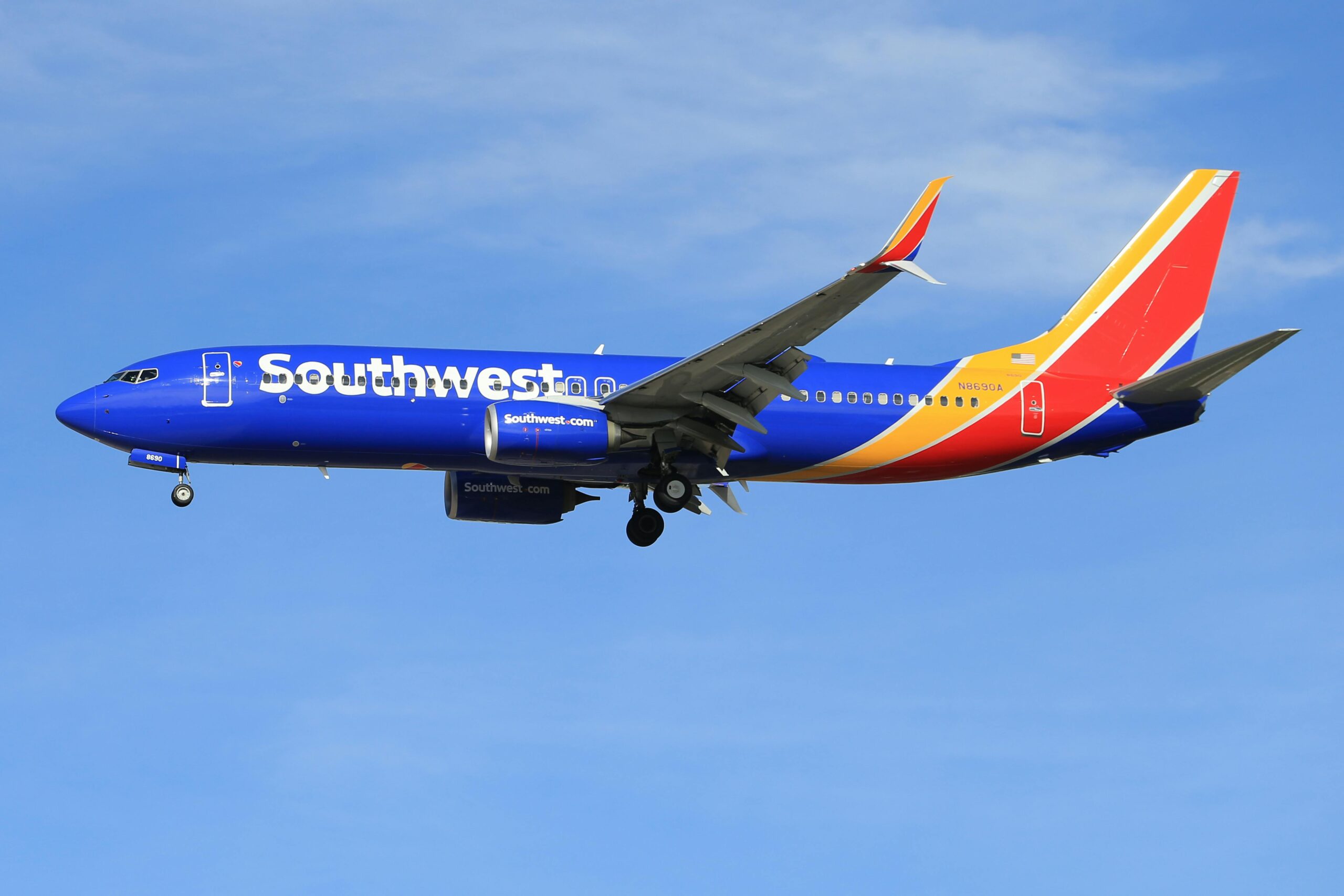
DALLAS— The operational disruption now unfolding at Southwest Airlines was not entirely unexpected. Just three weeks after transitioning from its long-standing open seating model to an assigned seating system, the airline is already revising its boarding procedures for the second time. The quiet policy adjustment, introduced midweek, is an attempt to stabilize rising aircraft turn times that have exceeded the carrier’s traditional 35-minute benchmark. What was once one of the most efficient turnaround operations in U.S. domestic aviation is now facing mounting pressure from extended gate congestion, slower passenger boarding, and dissatisfaction among high-value Rapid Rewards frequent flyers.
The shift to assigned inventory , a structural change in Southwest’s low-cost carrier model has disrupted the airline’s historically streamlined boarding process. Industry analysts note that changes to boarding groups, seat allocation logistics, and carry-on baggage flow are contributing to operational inefficiencies. As turnaround delays ripple across the network, the airline’s operational reliability and on-time performance metrics are coming under increased scrutiny.
The friction point is not the seats themselves, but the aisles. By dismantling the “cattle call”—a chaotic but hyper-efficient self-sorting mechanism—Southwest has inadvertently introduced a structural bottleneck it appears ill-equipped to manage: the “upstream swim” for overhead bin space.
The Operational Paradox
On January 27, Southwest officially transitioned to assigned seating, yielding to years of pressure from activist investor Elliott Management to modernize its revenue stack. The logic was sound on paper: monetize the cabin real estate to drive Revenue per Available Seat Mile (RASM). However, the execution has collided with the physical reality of the Boeing 737 narrowbody configuration.
Under the legacy model, passengers self-regulated. If a bin was full, a passenger simply took a seat in a row with open space. Today, a passenger assigned seat 4B who finds the forward bins saturated must walk to row 10 to stow their bag, then fight against the flow of boarding traffic to return to row 4.
This “bi-directional flow” in a single-aisle aircraft is an operational death sentence for turn times.
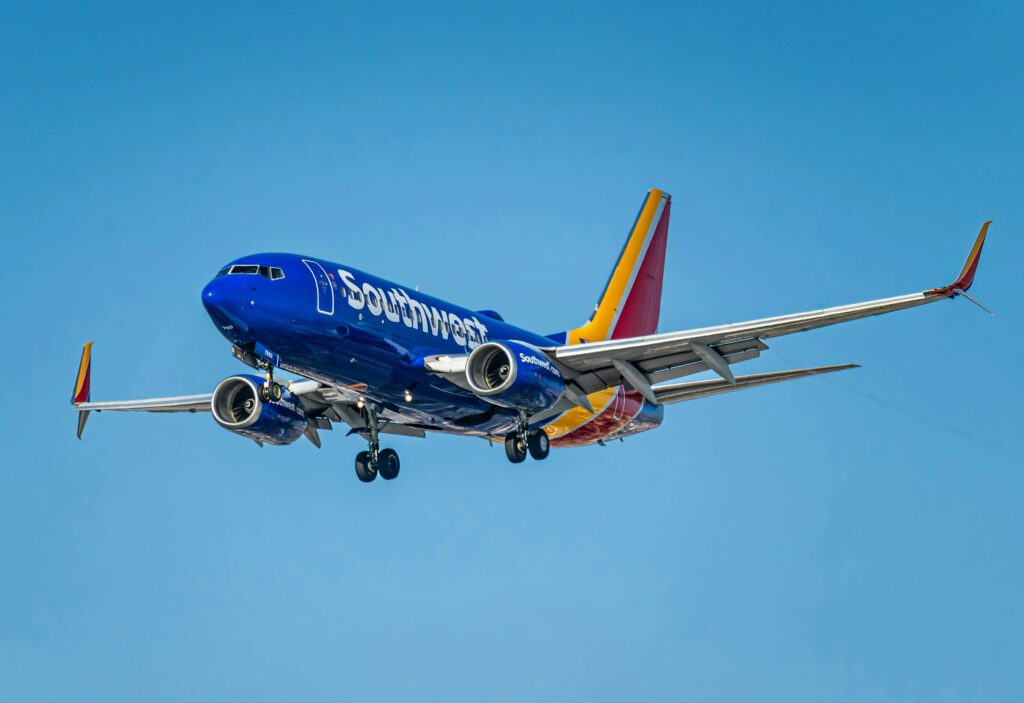
Dispatch logs from key hubs like Dallas Love Field (DAL) and Denver (DEN) indicate that gate dwell times have spiked by an average of 12 minutes per flight since the transition. In an airline network designed around high asset utilization—where planes only make money in the air—a 12-minute drag per turn creates a cascading schedule collapse that no amount of padding can absorb.
The seeds of this congestion were sown in May 2025, when Southwest effectively ended its “Bags Fly Free” policy for non-elite fares. The introduction of checked bag fees ($35-$45) triggered an immediate behavioural shift. Internal memos leaked last week admit that gate-checked carry-on volume has increased fivefold since the policy change.
When assigned seating launched last month, it removed the urgency to board early for a seat, replacing it with an urgency to board early for bin space. This has created a severe “gate lice” phenomenon, where passengers crowd the boarding lanes long before their zones are called, overwhelming gate agents and obstructing the jet bridge.
The February 18 rule change was a reactionary attempt to fix this. Southwest revoked Group 1 boarding status for most “extra legroom” passengers (rows 4-15), pushing them to Group 2 to preserve bin space for the front three rows. The result? High-value customers who paid a premium for early access were demoted, while the bin congestion simply shifted five rows back.
The Cost of Congestion
- Turn Time Decay: Average ground time per aircraft has risen from 38 minutes (Q4 2025) to 51 minutes (Feb 2026).
- Carry-On Load Factor: 94% of passengers now board with a roller bag, up from 72% in 2024.
- Net Promoter Score (NPS): Southwest’s NPS among “A-List” members has dropped 18 points since January 27.
- Fleet Retrofit Status: 100% of the fleet has been reconfigured with extra legroom, but only 40% of the -700/800 fleet has been retrofitted with larger “Space Bins,” leaving the majority of aircraft with insufficient volume for the new carry-on density.
1. Cascading Delays
From a dispatch perspective, the loss of the “self-sorting” passenger is catastrophic. The open-seating model masked the inefficiencies of the Boeing 737 fuselage. Passengers were fluid cargo; they filled the vessel from back to front or front to back based on path of least resistance. Assigned seating makes passengers static cargo.
The current “Group 1 through 8” boarding pillars are failing because the boarding logic does not account for bin velocity. When Group 2 (Extra Legroom) boards, they occupy the front of the aircraft but fill the bins immediately. Group 3 (A-List/Preferred) then boards, finds the front bins full, and begins the “upstream swim” described earlier.
This creates a choke point at row 5. The aisle is blocked. Boarding stops. The dispatch clock keeps ticking. A 10-minute delay on the first flight of the day out of BWI translates to a two-hour delay for that aircraft by the time it reaches Phoenix in the evening.
2. The Economic Miscalculation
Southwest’s management, under intense pressure to increase CASM (Cost per Available Seat Mile) efficiency, bet that ancillary revenue from seat selection would offset the operational drag. They miscalculated the infrastructure gap.
Legacy carriers like Delta and United spent a decade retrofitting their fleets with pivot bins (Space Bins) that allow roller bags to be stored on their sides (increasing capacity by 40-60%) before maximizing carry-on density. Southwest has inverted this process. They increased carry-on pressure (via bag fees) and fixed passenger locations (via assigned seating) before the fleet was physically capable of absorbing the volume.
3. Safety and Regulatory Implications
The Federal Aviation Administration (FAA) requires that an aircraft be capable of evacuation in 90 seconds. While boarding congestion does not directly violate this certification, the chaotic cabin environment raises safety concerns regarding egress paths during the boarding process. Flight attendants, now tasked with policing bin disputes rather than focusing on safety checks, are reporting record levels of fatigue and passenger non-compliance.
Furthermore, the “forced gate check” procedure—where agents seize bags at the door once bins are presumed full—is causing delays in pushback, as ramp crews struggle to load 60-70 gate-checked bags per flight, compared to the 10-15 typical in the open-seating era.
The backlash is not merely a customer service issue; it is a threat to the carrier’s fundamental business model. Southwest cannot operate a high-frequency, point-to-point network with 50-minute turn times. The economics of their fleet utilization rely on the 35-minute envelope.
Unless Southwest accelerates the installation of high-capacity bins or dramatically revises the boarding order (perhaps boarding window seats first, regardless of premium status—a move that would further alienate high-paying business travelers), the airline faces a year of schedule reductions. They will simply have to fly fewer segments per day per plane to account for the new, slower reality of their cabin operations.
The “Freedom to Fly” has become the “Fight for a Bin,” and currently, the aircraft is winning.
 Priyanshu Gautam
  Aastha Choudhary