
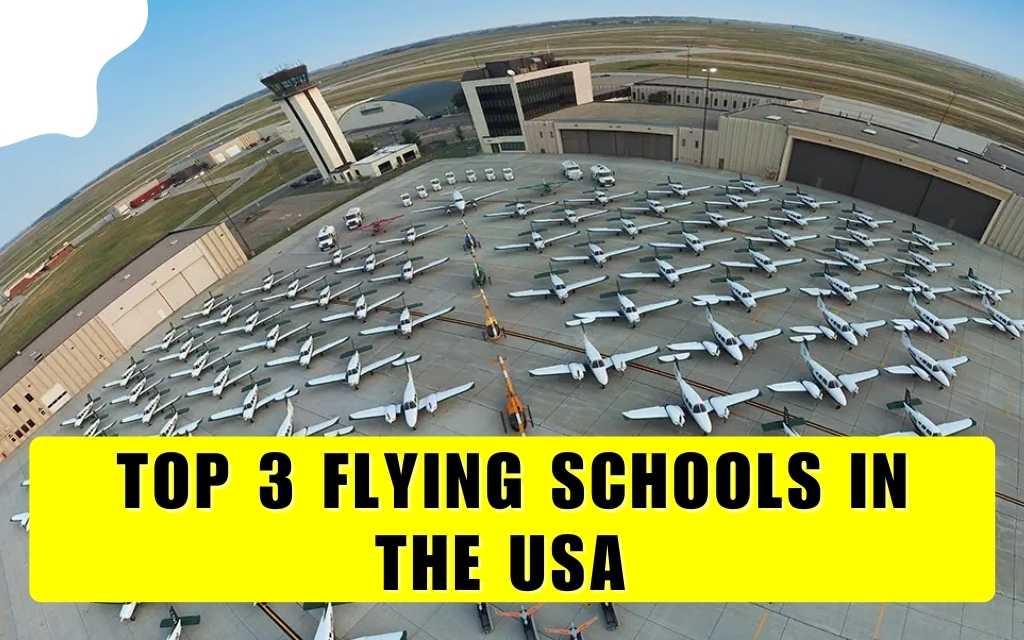
When prospective pilots search for the top 3 flying schools in the USA, they often assume the Federal Aviation Administration publishes an official ranking. It does not. There is no FAA leaderboard, no government-issued “FAA score,” and no quality grading system for flight academies. The FAA certifies schools under Part 141 or oversees training under Part 61 for regulatory compliance only. Any list of the best flight schools in USA 2026 is based on fleet size, airline hiring pathways, training efficiency, cost structure, and alumni outcomes — not federal ranking data.
The Reality of FAA Flight School Rankings
The U.S. Federal Aviation Administration (FAA) does not rank flight schools. No government-issued leaderboard exists. No official quality score is assigned to training centres.
Public perception often confuses FAA certification with a quality gradient. This is a market fallacy. The FAA acts solely as a regulatory compliance body. It ensures safety standards, syllabus adherence, and instructor qualifications. It does not grade instruction quality or publish student pass rates.
Schools claiming “Top FAA Ranking” or advertising themselves among the best FAA flight schools in USA 2026 reference independent marketing lists, not government data. Prospective pilots must ignore these claims when evaluating professional pilot training programs.
Evaluate schools based on fleet scale, airline hiring agreements, verified pilot training cost, and structured airline pilot pathway programs.
1. Embry-Riddle Aeronautical University (ERAU)
ERAU commands the highest brand recognition in global aviation education and frequently appears on independent lists of the best flight schools in USA.
The university operates two main residential campuses in Daytona Beach, Florida, and Prescott, Arizona.
Fleet and Facilities
ERAU maintains a fleet exceeding 100 instructional aircraft. The Daytona campus predominantly utilizes Cessna 172 Skyhawks equipped with Garmin G1000 avionics. Multi-engine training occurs in Diamond DA42-VI aircraft.
Market Position
Tuition is the primary barrier. Total pilot training cost for a four-year degree and flight training can exceed $200,000.
However, graduates benefit from the largest alumni network in the aerospace sector.
Airline Pathways
ERAU holds restricted airline transport pilot (R-ATP) authority under FAA regulations. Graduates qualify for airline employment at 1,000 flight hours rather than the standard 1,500-hour ATP requirement.
Major carriers like Delta and United recruit directly from the flight line. The program emphasizes academic rigor alongside practical stick-and-rudder skills.
2. University of North Dakota (UND) Aerospace
UND Aerospace operates the largest collegiate training fleet in North America and is frequently cited in discussions of top aviation universities in the United States.
The program is based at Grand Forks International Airport.
Training in North Dakota offers a distinct environmental advantage: harsh winter operations. Airlines value pilots with experience in icing conditions and crosswinds.
Fleet Specifications
The fleet consists of over 110 aircraft. Primary training utilizes Piper Archers. Multi-engine instruction is conducted in Piper Seminoles.
The university also operates advanced simulation centers with Canadair Regional Jet (CRJ) training devices.
Financial Data
2025 estimates place total costs for out-of-state students between $120,000 and $150,000. In-state residents pay significantly less.
Flight course fees are distinct from academic tuition. Students must budget for both.
Hiring Outcomes
UND maintains a direct pipeline to major regional carriers. SkyWest, Endeavor, and Republic Airways recruit heavily here.
The curriculum mirrors airline operating procedures from day one, reducing the gap between graduation and airline new-hire training.
3. ATP Flight School
ATP is the largest vocational flight school in the United States and markets itself as a direct zero-to-airline pilot pathway.
It operates on a strict airline factory model across 85 locations nationwide.
Program Structure
The Airline Career Pilot Program takes students from zero experience to commercial pilot in seven months.
Instructors adhere to a rigid syllabus. The pace is intense and not suitable for all learning styles.
Cost Analysis
The 2026 tuition for the zero-to-airline program is fixed at $116,995.
This price includes flight time, ground school, and books. It excludes housing and examiner fees, which can add approximately $15,000.
Fleet and Partnerships
ATP owns a massive fleet of Piper Archers and Cessna 172s. It is the world’s largest operator of Piper Seminoles.
The school holds 38 airline hiring partnerships, including United Aviate and Frontier Airlines Direct.
Industry Analysis: The “FAA Score” Myth
The term “FAA Score” is widely misused in online aviation forums and flight school marketing.
Regulatory Role
The FAA issues Pilot School Certificates under Title 14 CFR Part 141. To maintain certification, FAA approved flight schools must achieve an 80% pass rate on first-attempt checkrides.
However, the FAA does not publish individual school pass rates. A school with an 81% rate holds the same certificate as one with a 99% rate.
There is no official FAA flight school ranking system.
The Gold Seal Distinction
The only official quality indicator is the Gold Seal instructor rating. This applies to individual instructors, not the school entity.
Schools marketing an FAA ranking are misrepresenting regulatory compliance data.
Part 61 vs. Part 141
Part 141 schools follow a strict, FAA-approved syllabus with structured ground training and stage checks.
Part 61 schools offer flexible training schedules, often preferred by working students.
Airlines do not formally prefer Part 61 vs Part 141 training. They prioritize total flight hours, safety record, and completion of ATP or R-ATP requirements.
Market Context: Pilot Shortage 2026
The aviation labor market remains tight. Boeing’s Pilot and Technician Outlook 2025–2044 forecasts a need for 660,000 new pilots globally.
Retirement Waves
U.S. legacy airlines face a mandatory retirement cliff at age 65.
Approximately 17,000 captains will retire from Delta, United, American, and Southwest by 2030.
Wage Inflation
Regional airline first officer pay has tripled since 2019. Entry-level salaries frequently exceed $90 per hour.
This wage growth directly impacts the return on investment for commercial pilot training programs.
Tuition ROI
A $100,000 pilot training loan is now serviceable with year-one regional airline earnings. Previously, this debt-to-income ratio was financially unstable.
Strategic Recommendation for Aspiring Airline Pilots
Students comparing the best flight schools in USA 2026 should prioritize the following operational metrics:
- Instructor Availability — High student-to-instructor ratios delay training timelines.
- Fleet Maintenance — Request aircraft availability data and out-of-service logs.
- DPE Availability — Ask about Designated Pilot Examiner scheduling capacity.
- Housing Proximity — Fatigue management is a safety factor in accelerated pilot programs.
Final Assessment
For a university aviation degree with R-ATP eligibility, UND and Purdue offer strong long-term alumni networks and structured airline pathways.
For the fastest route to a regional airline cockpit, ATP Flight School provides the most streamlined training pipeline.
For international students requiring visa sponsorship and license conversion, Phoenix East and Florida Flyers provide structured FAA-to-EASA transition programs.
 Vibhuuti Goyal
  Shaifali