

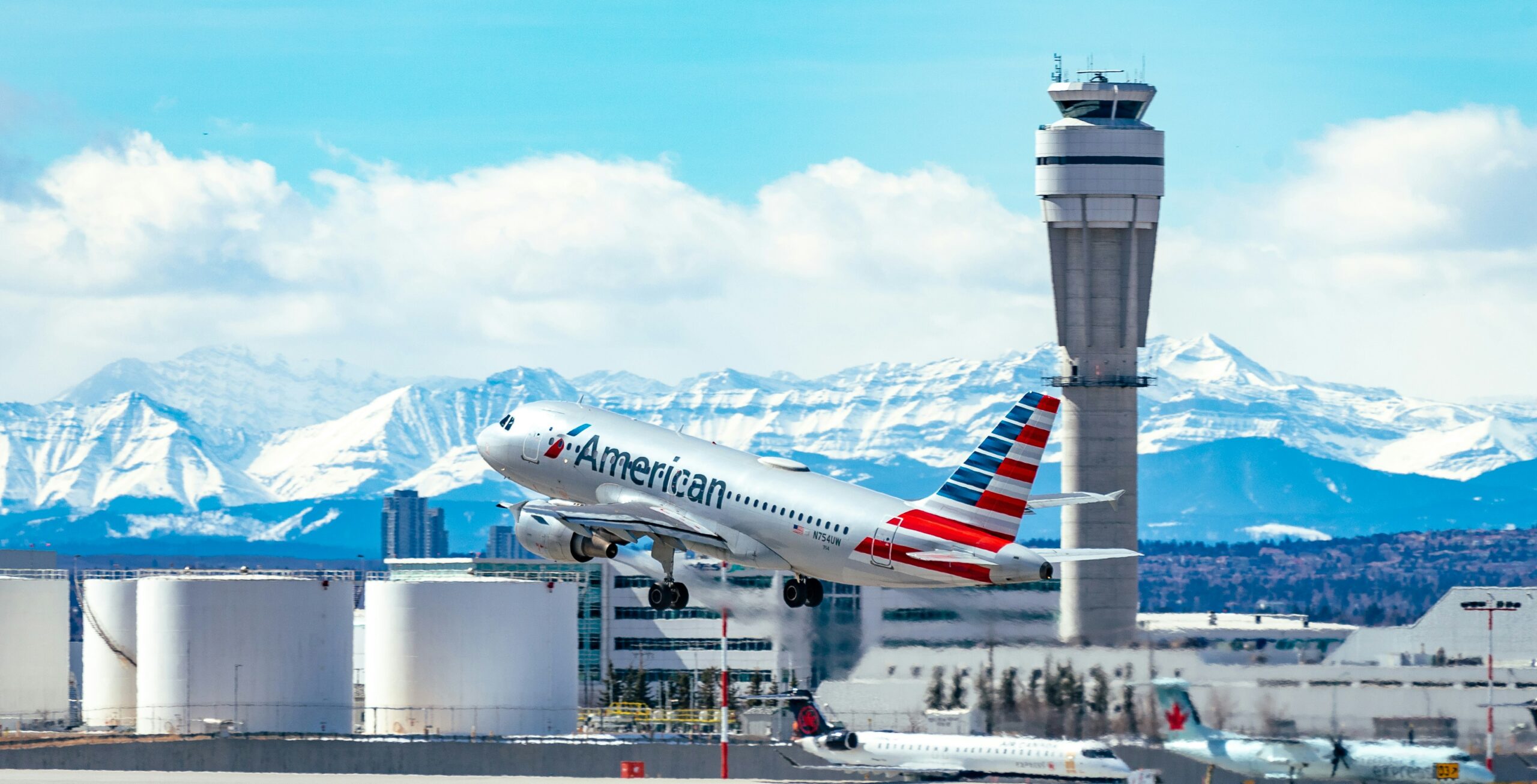
American Airlines solidified its narrowbody fleet strategy today by selecting CFM International engines for 155 new Airbus aircraft.
The deal covers 120 Airbus A321neo and 35 long-range A321XLR jets scheduled for delivery through 2032. This agreement extends the carrier’s reliance on the LEAP-1A engine, avoiding the geared turbofan technology offered by rival Pratt & Whitney.
“We are proud to be under wing powering American’s modernized fleet,” said Larry Culp, CEO of GE Aerospace.
CFM International, a joint venture between GE Aerospace and Safran Aircraft Engines, will also provide long-term maintenance support.
American currently operates 84 A321neos and five A321XLRs, making it the youngest fleet among U.S. legacy carriers.
Industry analysts view this decision as a vote of confidence in conventional engine architecture over recent geared alternatives.
Pratt & Whitney’s GTF engines faced significant headwinds in 2025, with nearly one-third of the global fleet grounded for inspections.
American’s choice ensures operational stability as it expands premium transcontinental and transatlantic routes using the A321XLR.
The airline holds options for 116 additional A320neo family aircraft, which would also utilize LEAP-1A propulsion if exercised.
Engine Market Dominance
The selection reinforces CFM’s commanding position in the single-aisle market, where it holds approximately 72% of the global share.
Orders for the LEAP engine family rose 28% in 2025, driven by carrier demand for proven dispatch reliability.
The LEAP-1A offers a 15% improvement in fuel efficiency compared to the previous generation CFM56 engines.
“Maximize the power of our fleet investments to deliver the best network,” said Robert Isom, CEO of American Airlines.
Competitor Pratt & Whitney continues to struggle with supply chain bottlenecks and durability fixes for its GTF program.
Data from 2025 indicated that durability issues forced airlines to ground hundreds of GTF-powered Airbus A320neos worldwide.
American avoided these disruptions by adhering strictly to the CFM platform for its Airbus deliveries.
Operational Strategy
The new A321XLRs will allow American to service secondary European markets from hubs like Philadelphia and New York.
The carrier recently launched A321XLR service from JFK to Edinburgh, capitalizing on the jet’s 4,700-nautical-mile range.
Narrowbody aircraft are increasingly replacing widebodies on thinner long-haul routes to improve profitability and frequency.
GE Aerospace reported a 32% increase in total orders last year, reflecting the sector’s robust recovery.
The LEAP-1A engines utilize ceramic matrix composites, allowing them to withstand higher temperatures with less weight.
Maintenance costs for the new fleet will be predictable under the signed long-term service agreement.
The global engine maintenance market is projected to reach $690 billion over the next decade.
Financial Implications
Terms of the deal were not disclosed, but list prices for 310 engines typically exceed several billion dollars.
GE Aerospace stock ticked higher in early trading following the announcement of the secured order backlog.
Analysts estimate that engine contracts account for roughly 20% of an aircraft’s total lifetime value.
Safran Aircraft Engines, the French partner in the CFM venture, also sees its production outlook strengthened by the commitment.
American’s decision mirrors a broader industry trend of prioritizing “time-on-wing” over theoretical efficiency gains.
Fleet Modernization
The 155 aircraft covered by this engine order originate from the airframe purchase agreement signed in March 2024.
American plans to retire older A319 and Boeing 737-800 aircraft as these new, efficient models enter service.
The airline aims to reduce its carbon intensity by 45% by 2035, relying heavily on fleet renewal.
LEAP-1A engines generate 15% lower carbon emissions than the legacy engines they replace.
This efficiency gain is critical for American to offset rising labor and fuel costs in a competitive domestic market.
Supply Chain Context
Aviation supply chains remain fragile, making the reliability of engine deliveries a top priority for airline planners.
GE Aerospace increased its material input from priority suppliers by 40% in 2025 to meet delivery targets.
The ability to deliver engines on time was likely a deciding factor in American’s negotiations.
Airbus has struggled to meet production rates, partly due to delays in receiving engines from sub-tier suppliers.
Securing a firm production slot for engines mitigates the risk of “gliders” finished aircraft sitting without engines.
United Airlines and Delta Air Lines maintain mixed fleets, utilizing both CFM and Pratt & Whitney powerplants.
Pratt & Whitney has countered reliability concerns by introducing the “GTF Advantage” upgrade, promising greater durability.
However, American’s single-source strategy simplifies maintenance, pilot training, and spare parts logistics.
The airline’s technical operations team at Tulsa Maintenance Base is already extensively trained on CFM products.
Future Outlook
The first of these new engines will be installed on A321neos arriving later this year. American expects the A321XLR to be a “game changer” for its premium product offering on coast-to-coast flights.
The aircraft features lie-flat seats in business class, a configuration made economically viable by the efficient engines.
As the industry stabilizes from post-pandemic shortages, reliability has become the premium currency for fleet managers. CFM’s conservative design approach has paid dividends, securing the majority of recent narrowbody contests.
American Airlines has now effectively locked in its propulsion strategy for the next decade of narrowbody growth.
 Aastha Choudhary
[…] busiest domestic routes in the United States reflect the country’s economic geography, tourism flows, and airline […]
[…] between robust global demand and persistent supply chain bottlenecks, specifically regarding Pratt & Whitney engine availability for the A320neo family. Chief Executive Guillaume Faury characterized 2025 as a […]
[…] American Airlines has formalized the propulsion architecture for its next decade of narrowbody deliveries, selecting […]
[…] NEW YORK, Feb 23: A historic blizzard has forced New York City officials to ban most travel, as severe winter weather continues to disrupt transportation across the United States. The storm has led to thousands of flight cancellations nationwide, with major airports in the Northeast facing significant disruptions. […]
[…] to Atlanta at approximately 6:45 p.m. ET. During the initial climb phase, the aircraft’s left CFM56-7B turbofan engine experienced a mechanical malfunction. Witnesses and passengers reported an audible […]